NVIDIA’s November 16, 2026, MLPerf Endpoints technical report compares its Vera Rubin NVL72 platform with the previous GB300 NVL72 across multi-turn AI workloads. The reported DeepSeek-V4.1-Flash configuration produces 307.36 tokens per second per user at 1,024 concurrent queries, versus 56.65 on the GB300 configuration. The newer result was provisional in NVIDIA’s publication. For AI infrastructure operators, the comparison connects serving responsiveness with system design rather than relying on processor peak arithmetic ratings alone, as in our report on the Vera CPU rack.
Three matched-concurrency comparisons
The MLCommons methodology tests live model-serving endpoints. End-to-end average interactivity describes the token delivery rate experienced by users. Comparing two systems at the same query concurrency within each workload helps isolate a practical responsiveness question. The number of accelerators and provisioned power can still differ, so the results are system comparisons rather than per-chip benchmarks.
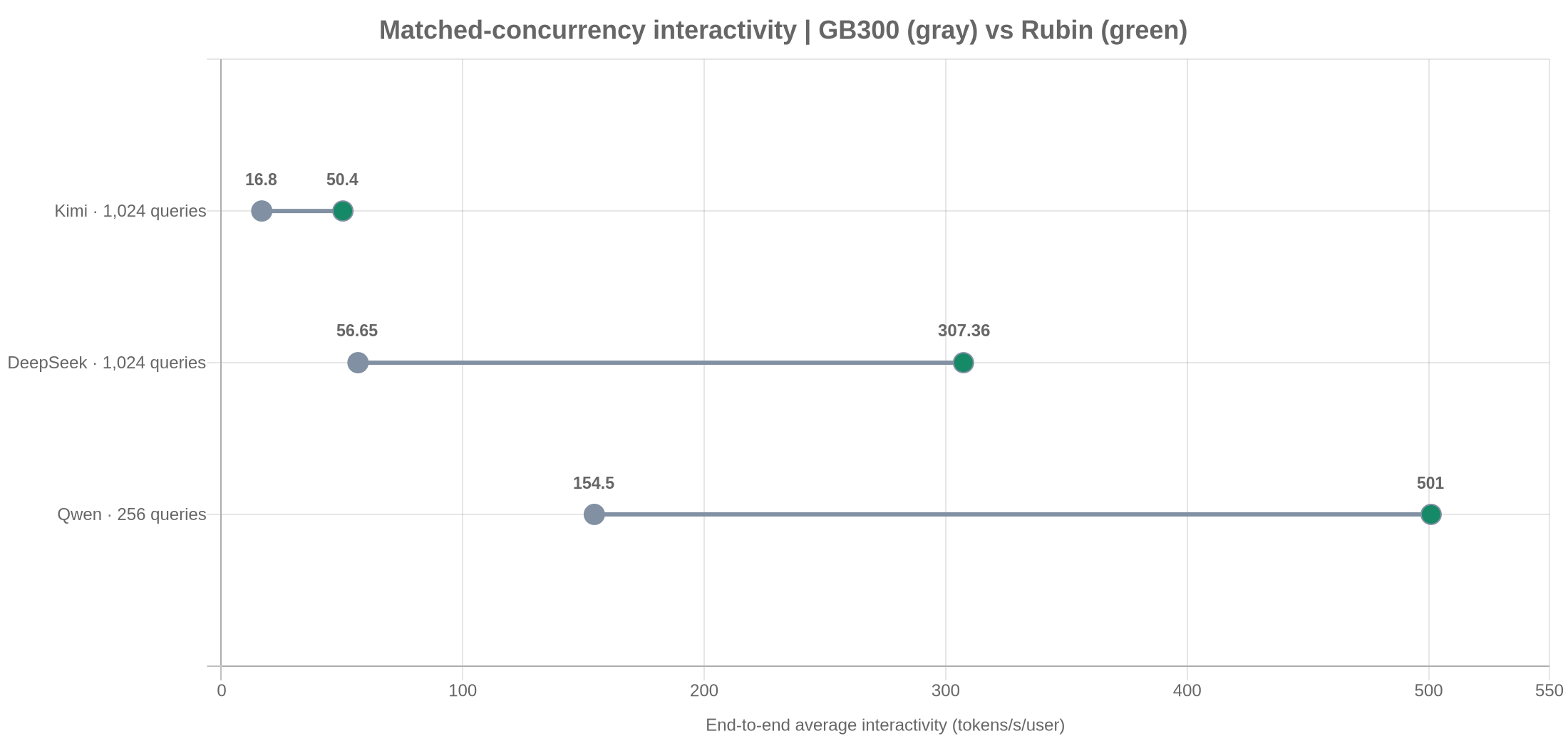
Kimi K3 increases from 16.8 to 50.4 tokens per second per user at 1,024 queries. DeepSeek moves from 56.65 to 307.36 at the same concurrency. Qwen3.6-35B-A3B increases from 154.5 to 501.0 at 256 queries. The differences show why performance gains depend on the selected workload and operating point. They do not establish an identical acceleration factor for every model or configuration.
Throughput, power and responsiveness are different metrics
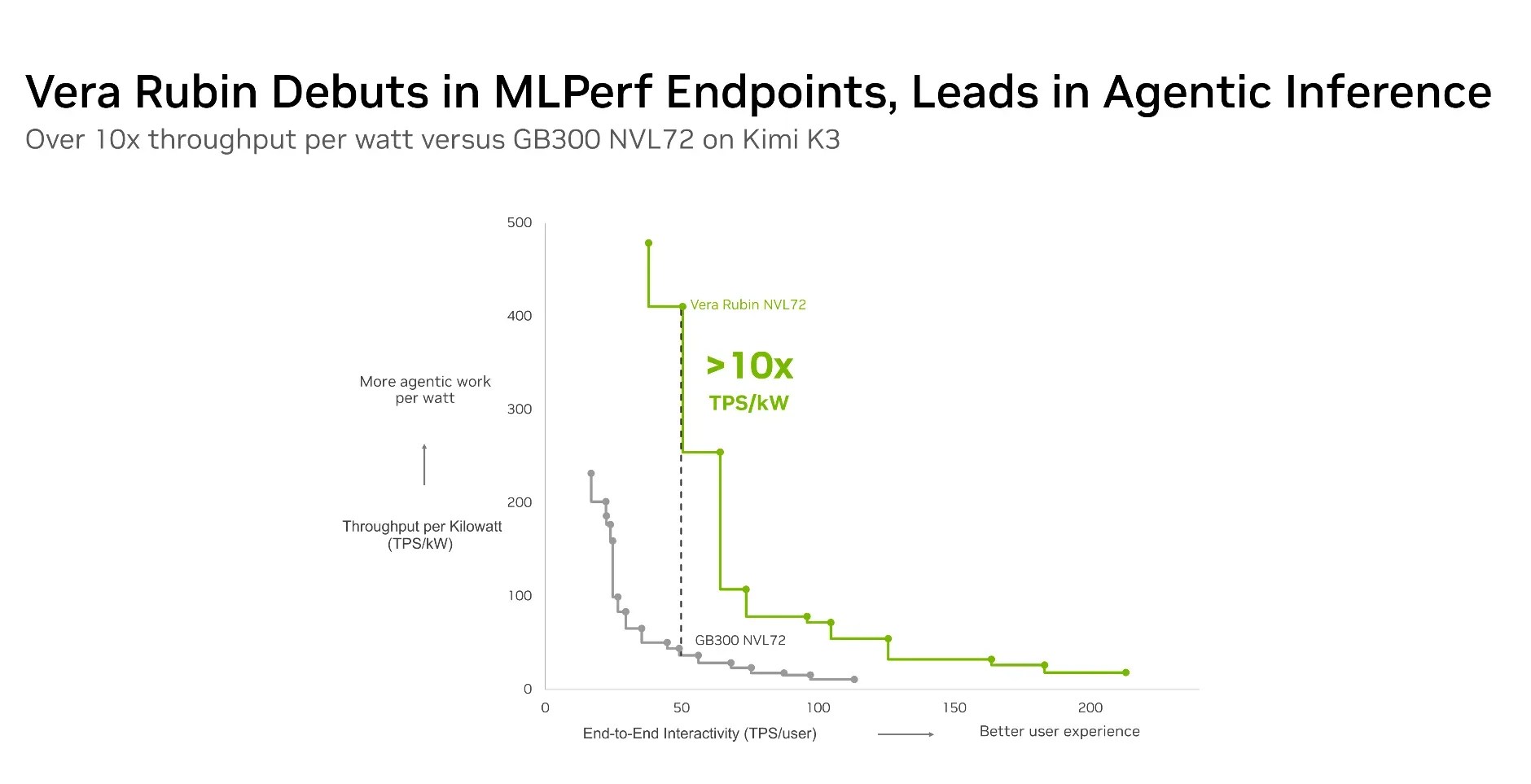
A separate Kimi K3 comparison selects the best reported throughput per provisioned kilowatt above a common minimum interactivity requirement of 50 tokens per second per user. NVIDIA lists 41,414.2 system tokens per second and 100.89 kW for its provisional Rubin run, versus 2,210.4 tokens per second and 60 kW for GB300. Division gives approximately 410.5 and 36.8 tokens per second per kilowatt, respectively. The ratio is approximately 11.1, but the runs have different concurrency and accelerator counts. It is not a measurement of facility-wide electricity consumption.
Why serving architecture matters
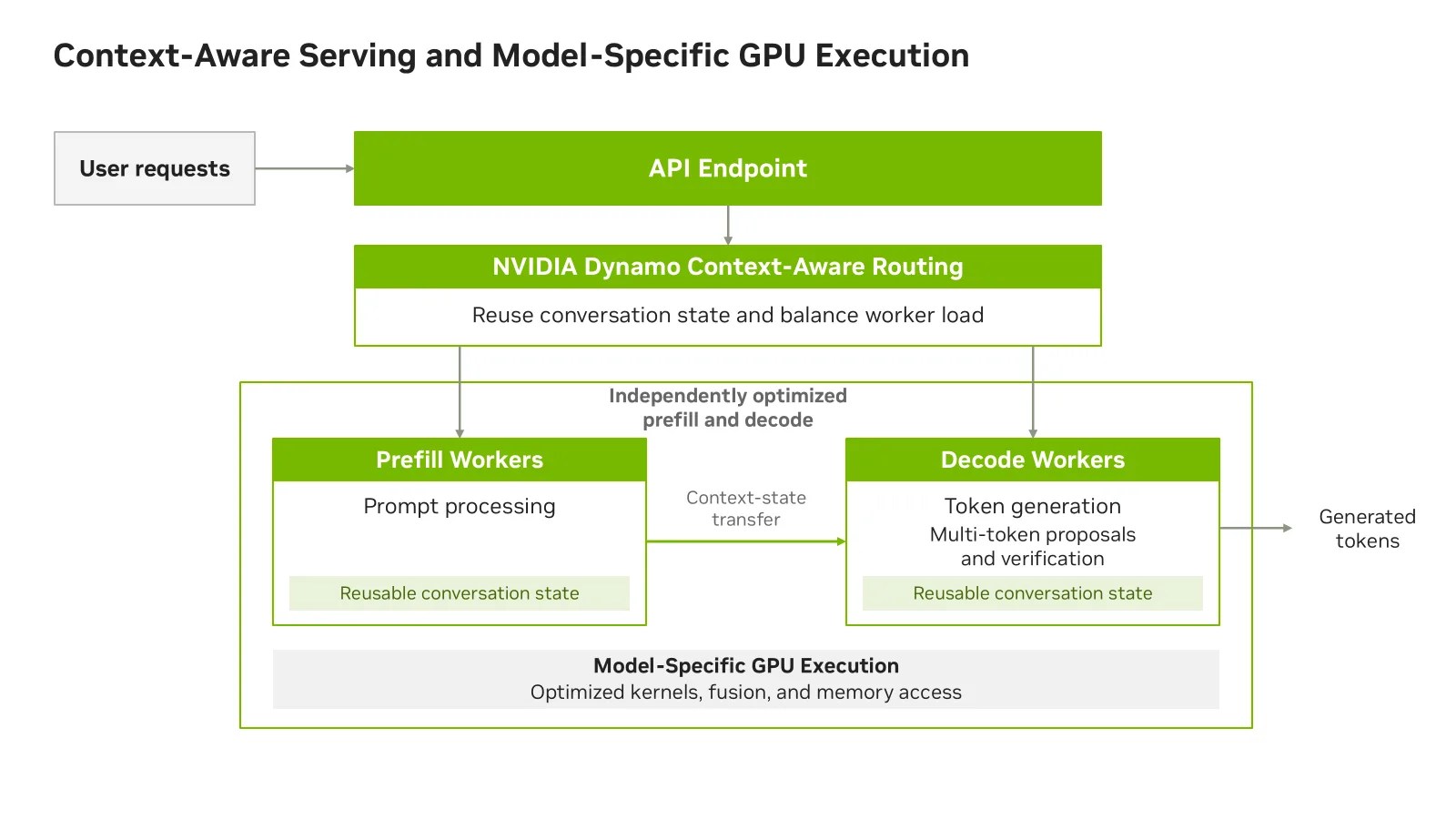
Multi-turn workloads accumulate context as models call tools and process their outputs. Prefix caching avoids redundant processing, while separating prompt processing from token generation can allow each stage to use resources more effectively. Memory bandwidth and interconnect performance influence how rapidly workers can exchange state. The engineering considerations differ from the floating-point simulation workloads described in our Intel D270 report.
Operators must also size electrical and cooling systems for real equipment, not just benchmark power, as demonstrated by the planned Akashi high-density AI campus. The public MLPerf results explorer provides changing verification status and comparable submissions. SmartChart 14, documented in our chart atlas, was selected to show the paired measurements directly. Buyers should validate latency distributions, task quality, operating power and service costs before translating a provisional result into a procurement forecast.


Leave a Reply