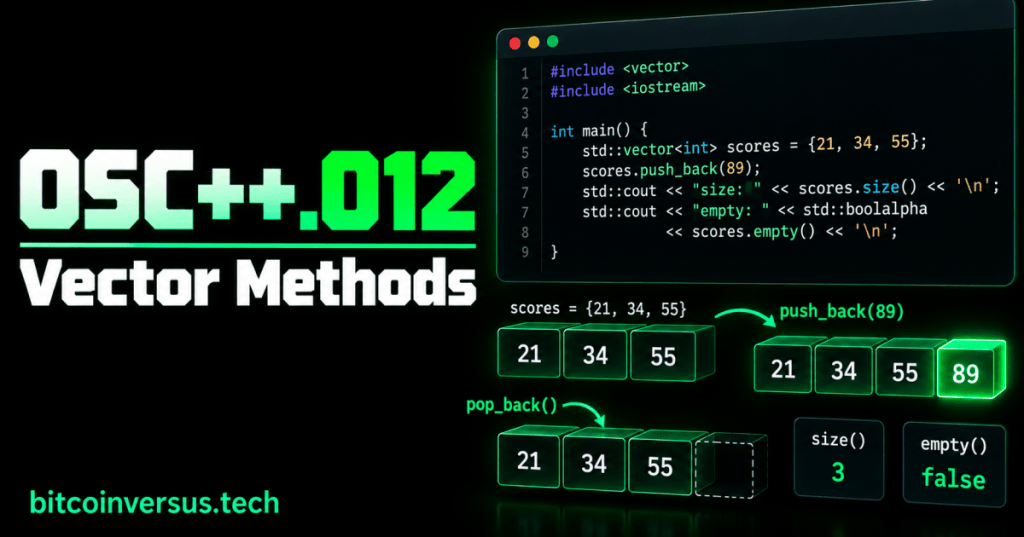
A C++ vector is a container that can hold multiple values. In OSC++.010, we introduced vectors. In OSC++.011, we looped through them. Now we will learn four simple vector methods that let us add, remove, count, and check items.
Start With a Vector
#include <iostream>
#include <vector>

int main() {
    std::vector<int> scores = {21, 34, 55};
}
Our vector is named scores. It currently contains three numbers.
push_back(): Add an Item
scores.push_back(89);push_back() adds a new item to the end of the vector. The vector is now {21, 34, 55, 89}.
Video: C++ Vector Methods
This beginner C++ vector walkthrough demonstrates common vector operations including push_back(), pop_back(), and size().
pop_back(): Remove the Last Item
scores.pop_back();pop_back() removes the last item. If the last value was 89, the vector returns to {21, 34, 55}. Only call it when the vector is not empty.
size(): Count the Items
std::cout << scores.size();size() returns the number of elements in the vector. For {21, 34, 55}, the result is 3.
empty(): Is Anything There?
if (scores.empty()) {
    std::cout << "No scores yet";
}
empty() returns true when the vector has no elements and false when it contains at least one element.
Gaming Example
std::vector<int> lapTimes;
lapTimes.push_back(72);
lapTimes.push_back(68);

std::cout << "Laps: " << lapTimes.size();
A racing game could add each completed lap time to a vector and use size() to count how many laps have been recorded.
Bitcoin Mining Example
std::vector<int> minerTemps;
minerTemps.push_back(61);
minerTemps.push_back(64);
minerTemps.push_back(63);
A simple monitoring program could store temperature readings from a Bitcoin mining machine in a vector as new readings arrive.
Practice
- Create a vector containing three numbers.
- Use
push_back()to add a fourth number. - Print the result of
size(). - Use
pop_back()once. - Check the vector with
empty().
Key Takeaway
push_back() adds an item, pop_back() removes the last item, size() counts the items, and empty() checks whether the vector contains anything. These four methods make vectors much more useful in everyday C++ programs.


Leave a Reply