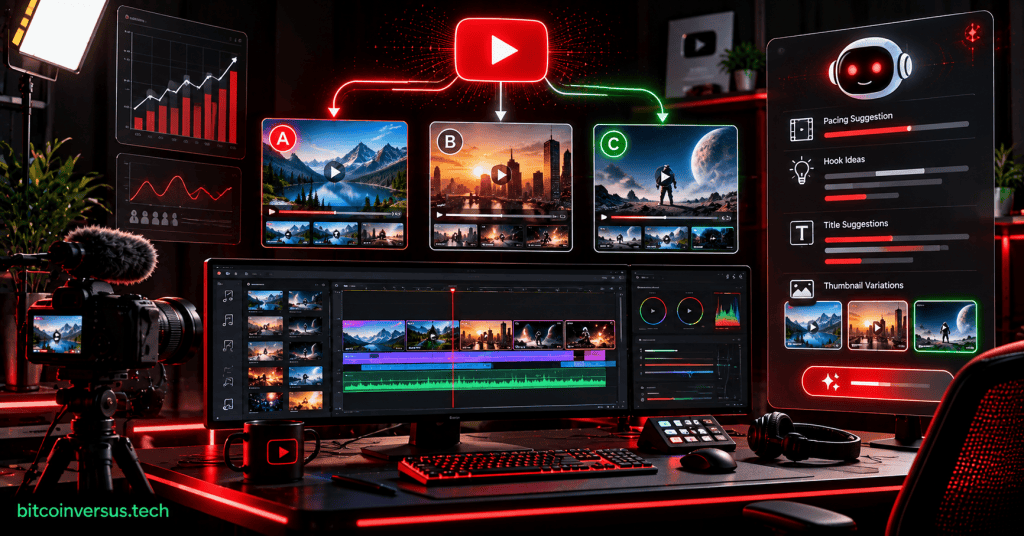
YouTube is turning Studio into something closer to an AI-assisted production room, with new tools that can critique draft videos, generate channel-matched thumbnails, test different cuts, and explain why content is performing the way it is.
In its Made On YouTube creator-tool announcement, YouTube said its new draft-feedback feature can review unpublished videos and give personalized advice on pacing, structure, storytelling, and other creative decisions before a creator hits publish.
The algorithm is moving upstream into the editing process
Creators have spent years reacting to analytics after a video goes live. YouTube’s new tools move that feedback loop earlier. Ask Studio can help brainstorm ideas, generate titles and thumbnails, and use a creator’s own channel history to make suggestions before the final upload is locked.
That is a meaningful shift in creator culture because optimization is no longer just about reading a retention graph after the fact. The platform itself is increasingly offering guidance on what the hook should be, how the packaging should look, and which version of the video might perform best.
TechCrunch independently reported that creators will be able to test up to three video cuts to compare opening hooks, while dynamic thumbnails can show different thumbnail options to different audience segments instead of forcing every viewer to see the same image.
YouTube says creators have already run 40 million tests
YouTube says creators have run more than 40 million A/B tests on titles and thumbnails since those tools officially launched in 2024. The next step is applying the same experimentation model to the video itself.
Instead of changing one title or thumbnail, a creator could prepare three different openings and let YouTube compare which hook keeps viewers watching. That effectively turns experimentation into part of the standard editing workflow.
BitcoinVersus has already covered YouTube bringing AI voice translation to live streams, another example of the platform using AI to change how creators reach audiences rather than simply adding a chatbot on top of the service.
Dynamic thumbnails can personalize the same video for different viewers
Dynamic Thumbnails takes a different approach from a traditional winner-take-all A/B test. Creators can provide multiple thumbnail options, and YouTube can recommend different images to different audience segments based on what it predicts will resonate.
That creates a new creative tension. A thumbnail is part of a video’s identity, but the platform is moving toward a system where the same upload can present a different visual pitch depending on who is looking at it.
That tension fits a broader cultural shift around algorithmic creative tools. BitcoinVersus recently covered the Processing Fellowship backing artists who build open-source creative tools, where creators are also negotiating how much of the artistic process should be shaped by software and automation.
Made On YouTube shows the A/B testing workflow
YouTube’s official Made On YouTube deep dive demonstrates the new video A/B testing and dynamic-thumbnail workflow directly. The feature is designed to give creators more experimental options without requiring them to publish separate copies of the same video.
AI is becoming part of creator strategy, not just content generation
The most interesting part of YouTube’s update is that the AI is not primarily being used to generate the finished video. It is being used to analyze creative decisions around the video: the hook, pacing, thumbnail, title, audience response, and even older uploads that might benefit from refreshed packaging.
That is a different kind of automation from fully synthetic media. BitcoinVersus recently covered the debate over whether AI-generated artists should compete directly with human musicians. YouTube’s creator tools sit on another point of the spectrum: human-created work increasingly optimized by machine analysis.
If these tools become standard, creators may spend less time guessing why one thumbnail, hook, or edit worked and more time running controlled experiments before publication. The upside is faster feedback. The risk is that creators begin optimizing toward the same machine-readable patterns.
Either way, the creator economy is moving into a phase where the platform is not just hosting the work. It is becoming part of the creative decision-making process itself.
BitcoinVersus.Tech
Advertisement
Editor’s Note:
We volunteer daily to ensure the credibility of the information on this platform is Verifiably True. If you would like to support to help further secure the integrity of our research initiatives, please donate here: 3C9o19EH5HSiwEPyCTmEKzxhNCbo2X6TTb
BitcoinVersus.tech is not a financial advisor. This media platform reports on financial subjects purely for informational purposes.


Leave a Reply