New Hampshire has two high-profile data center prospects and a much smaller, established colocation market, but nothing approaching the gigawatt-scale campuses being developed elsewhere in the country. The largest potential project is tied to preliminary grid discussions in Bow. An AI infrastructure firm has applied to build a compact facility in Concord, while FirstLight already operates a commercial data center in Manchester. Their differences show why a proposed power figure should never be confused with a completed building.
These are the three largest identifiable New Hampshire data center projects or facilities with a publicly reported site-level power figure: Bow’s 350-megawatt grid feasibility study, Concord’s roughly 15 MW-class proposal, and FirstLight Manchester’s listed 2 MW fully built-out capacity. They are ranked by the scale of the publicly associated figures—not by electricity being consumed today. The Bow figure has not been established as a data center’s committed load, and the Concord and FirstLight figures describe different stages and measures of capacity.
3. FirstLight Manchester — 2 MW Fully Built-Out Capacity, Operating
At 77 Sundial Avenue in Manchester, FirstLight Fiber operates one of New Hampshire’s documented commercial colocation facilities. Independent industry directory Data Center Map lists 2 MW of fully built-out power and approximately 15,000 square feet of available white-space capacity. FirstLight’s own facility page specifies 14,400 square feet, a Tier 2-standard configuration, two utility power feeds, dual uninterruptible power supplies and a backup generator. The area figures are not necessarily measured on identical bases.
The data center serves the practical needs of companies that require secure rack space, power backup and fiber connectivity rather than a single vast AI training installation. FirstLight describes a regional fiber network connecting its colocation locations across the Northeast. This existing operation is more mature than either New Hampshire proposal in the ranking, even though its published megawatt capacity is much lower.
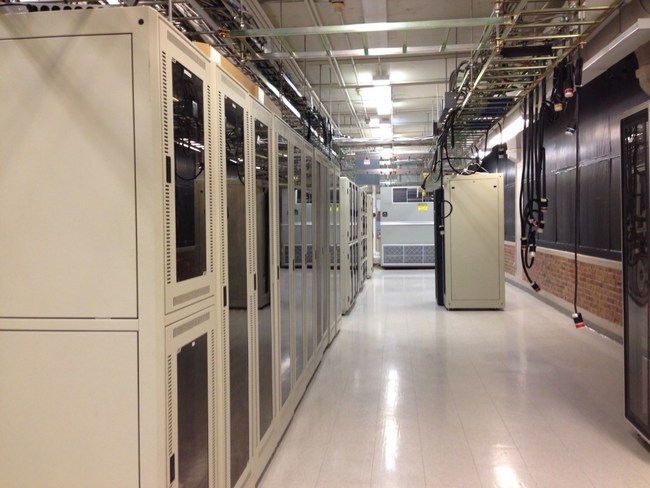
A fully built-out power specification is a facility-design or service-capacity figure, not proof that every megawatt is continuously used. It nevertheless gives FirstLight a measurable, operating presence while New Hampshire’s larger possibilities remain under review.
2. Concord Locke Road — Roughly 15 MW Proposed, Decision Deferred
The City of Concord’s public application identifies a proposed 8,160-square-foot building at 52 Locke Road, including approximately 7,220 square feet of data center space, an office, garage and caretaker residence. Northpoint Engineering submitted the plan for landowner Granite Municipal Manufacturing & Sales. AI infrastructure company Levitate is providing the design and cooling approach.
Levitate CEO Ryan Howard describes the design as part of a 15 MW class of micro data centers using single-phase immersion cooling. In October 26 reporting by New Hampshire Public Radio and the Concord Monitor, Howard estimated approximately 13.5 MW of IT power, excluding overhead electrical use. Those figures are related but not interchangeable: 13.5 MW describes the prospective servers, while approximately 15 MW describes the wider facility class. Neither is measured operating demand.
The application is real, but it has not won final approval. After hearing opposition on October 21, Concord’s Planning Board continued the public hearing to November 18, 2026 and requested more information on electricity needs, noise, expansion potential and environmental controls. Residents raised questions about wetlands and the regional grid. The project team argues that immersion cooling, heat reuse and a relatively small building footprint can reduce some conventional data-center impacts.
The debate illustrates the distinction between land-use permission and permission to build. City staff classified the proposal’s data-processing activity as a permitted use in the industrial zone, but the site plan and associated wetland-buffer restoration remain subject to review. A modest building can still have a sizable electrical load, making independent utility analysis especially important.
WMUR-TV’s March 29, 2026 report, “NH’s Business: Potential data centers in NH,” examines the state’s broader data-center discussion. The video predates Concord’s October planning-board hearing.
A reasonable test for the proposal is whether independent evidence confirms the expected electrical service, noise, cooling and drainage performance. The company’s technology claims deserve consideration, but the Planning Board is right to evaluate the actual site-specific engineering rather than relying on the word “micro.”
1. Bow Merrimack Station — 350 MW Grid Study, Data Center Not Confirmed
The largest number attached to a possible New Hampshire data center concerns the retired Merrimack Station site in Bow. Owner Granite Shore Power requested a preliminary grid feasibility assessment involving Eversource and a potential 350 MW electrical connection. New Hampshire Bulletin’s September reporting and WMUR’s review of the filings established that the regulatory paperwork does not explicitly identify a data center or even definitively designate the proposed facility’s location.
The reason Bow appears in this ranking is the connection between those filings and publicly acknowledged local discussions about a possible large data center. New Hampshire Consumer Advocate Donald Kreis also relayed a utility executive’s mention of a project of up to 200 MW. This is a separate account of a possible data-center size, not confirmation that the project’s final capacity will be 200 MW or 350 MW. The owner has not publicly identified a committed developer, tenant, site plan, water demand or construction schedule for a hyperscale campus.
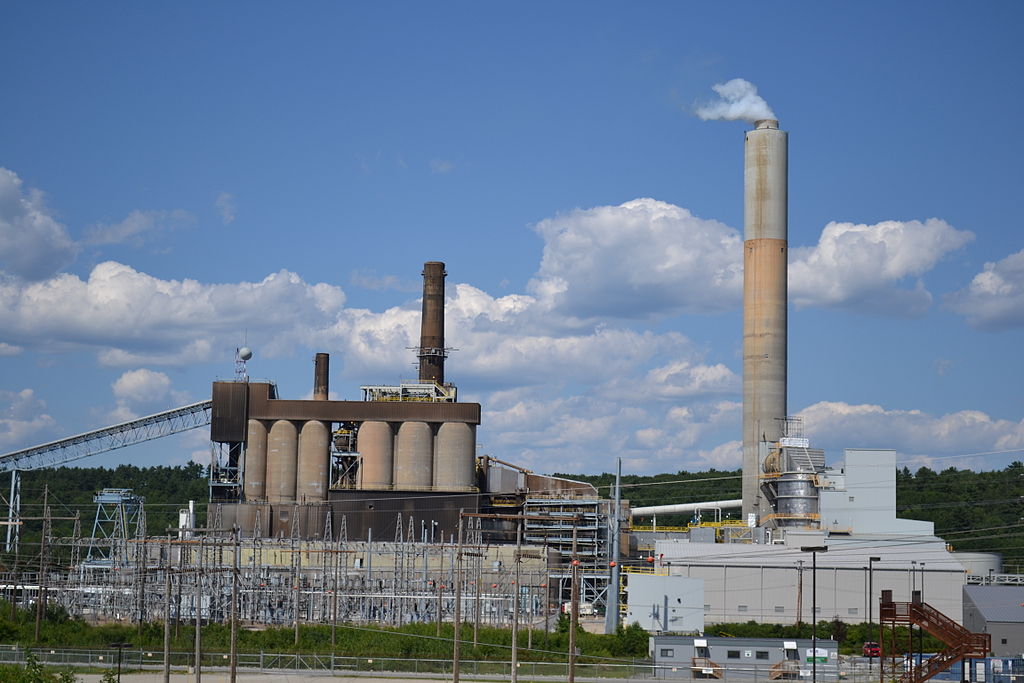
Granite Shore Power’s wider plan for the former coal site emphasizes energy redevelopment, including solar and battery storage, and its utility interconnection makes the location attractive for other industrial uses. Bow officials have said potential proposals would be reviewed through normal local procedures. Public opposition has focused on electricity prices, noise, environmental impacts and the possibility of committing large amounts of grid capacity before the costs are understood.
The potential benefit is also significant. Reusing industrial land near existing transmission infrastructure could preserve property-tax revenue and avoid developing untouched land. A project of this scale might support construction and specialized infrastructure work. But those possibilities are conditional. The critical next step is a named applicant filing a real development plan that establishes how much electricity would be used, who would pay for grid upgrades and what the town would gain.
What the New Hampshire Numbers Actually Mean
These three projects cannot be treated as three comparable commitments. FirstLight’s 2 MW is a published fully built-out figure for an existing colocation facility. Concord’s 13.5 MW IT estimate and approximately 15 MW facility class describe a proposed design awaiting approvals. Bow’s 350 MW describes an exploratory grid study, with no confirmed 350 MW data-center load. Adding them together would manufacture a false picture of operating computing capacity.
New Hampshire is also weighing how much control communities should exercise over future developments. NHPR reported in September that Governor Kelly Ayotte and legislative leaders had voiced support for a statewide construction pause, while Nottingham voters approved a local moratorium after an earlier proposal was withdrawn. That withdrawn Nottingham proposal is not included among these current projects.
The economic case for data centers is real: dependable computing supports medical systems, business networks, research, cloud services and increasingly AI. So is the obligation to account for power, cooling, land use and customer-funded grid upgrades. In New Hampshire, the decisive milestones will be Concord’s November hearing and any formal Bow filing—not the size of a preliminary study.
For context, BitcoinVersus.Tech’s Maine, Massachusetts, Nebraska, and Nevada reports show how wide the gap can be between a power study, a marketed campus and a fully operating facility. Our data center capacity-planning lesson explains why demand forecasts must be tied to demonstrable electrical headroom.
BitcoinVersus.Tech
BitcoinVersus.Tech Editor’s Note: We volunteer daily to ensure the credibility of the information on this platform is Verifiably True. If you would like to support our work and help further secure the integrity of our research initiatives, please scan the QR code below to donate 5,000 sats. For best results, scan the QR code from a laptop or larger screen.
Bitcoin address: 3C9o19EH5HSiwEPyCTmEKzxhNCbo2X6TTb. Confirm the destination address before sending.

BitcoinVersus.tech is not a financial advisor. This media platform reports on financial subjects purely for informational purposes.
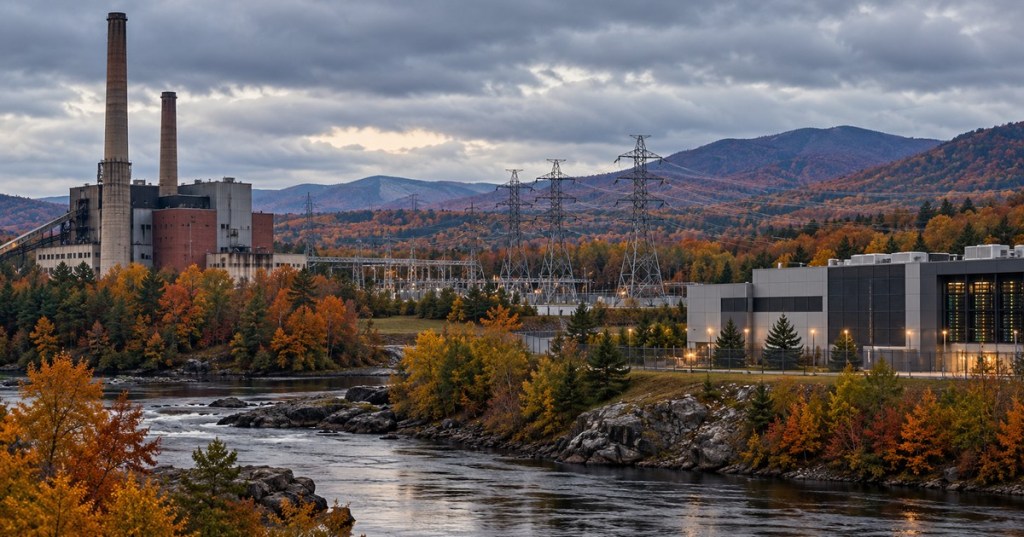
Featured image: Original editorial illustration showing possible power and computing infrastructure in a New Hampshire autumn landscape.


Leave a Reply