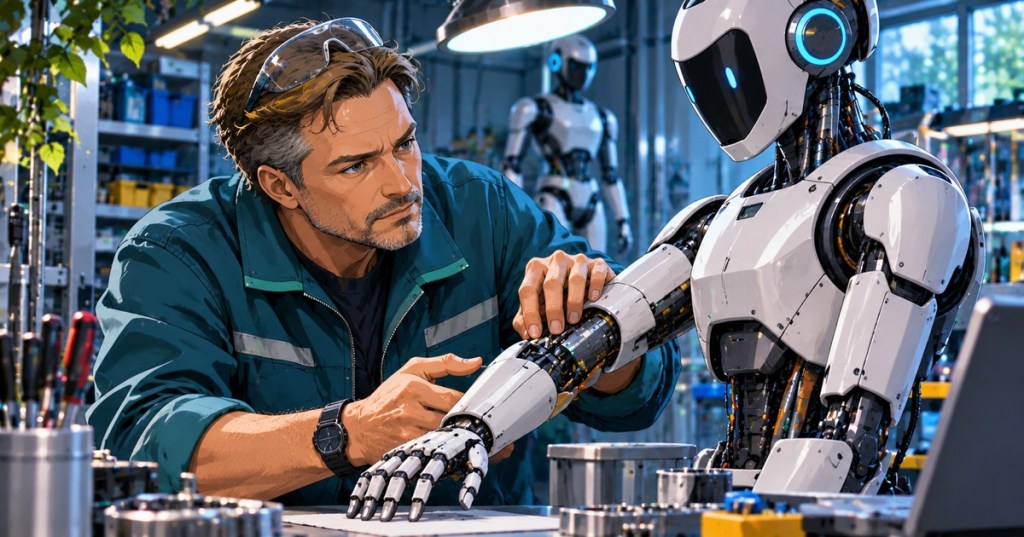
Meta Platforms has reportedly built a humanoid robot prototype with Shanghai-based Fourier Intelligence as it explores robots for homes. The Information reported October 31 that the roughly 106-pound machine, internally called Max, was completed in about three months and that a second version is already in development.
Reuters relayed the report but said it could not independently verify the prototype details. Meta told The Information its Fourier collaboration is for internal research and experimentation, with no plan to sell those units. There is no announced consumer launch date.
What Meta and Fourier Are Building
Additional reporting describes a machine about 1.5 meters tall, powered by an Nvidia Jetson Thor computing module, with five-fingered hands and a face display. Those specifications have not been independently demonstrated. A successor reportedly adds improved manipulation hardware and sensors intended to assist navigation.
Official Fourier demonstration of its existing GR-3 humanoid, not video of Meta’s reported Max prototype.
Fourier already manufactures humanoids for research and interactive applications. Its published GR-3 specifications list a 71-kilogram platform with 55 degrees of freedom and a three-kilogram single-arm payload. Those figures describe the GR-3, not Max.
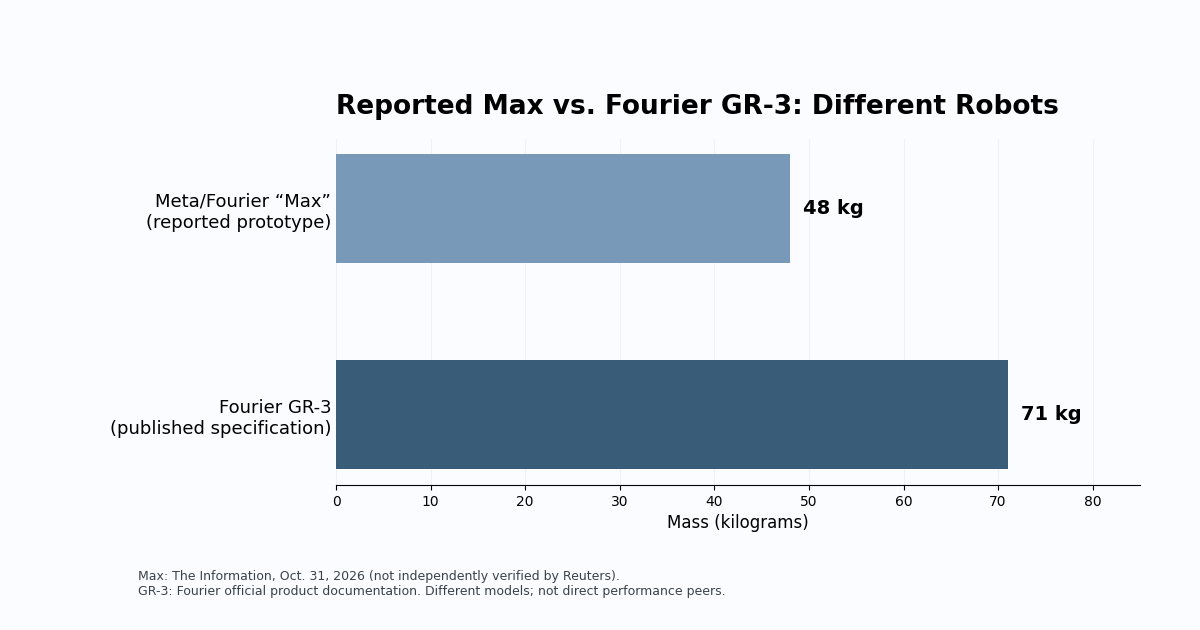
Reported Max mass versus Fourier’s documented GR-3 mass. They are different robots, and the Max figure remains independently unverified.
Why the Partnership Matters
The work suggests Meta is pairing AI software research with a specialized hardware manufacturer instead of relying solely on in-house mechanical development. A physical prototype offers a test bed for perception and robot training, movement, manipulation and interaction, but building a machine quickly is not proof it can reliably perform household chores.
BitcoinVersus.Tech previously examined Meta’s SPIDER motion-data project, humanoids already doing paid work and Agility’s industrial robot pilot. The challenge in each case is translating laboratory movement into reliable tasks with measurable safety and uptime.
Fourier presents the GR-3 design and interaction concept. This is contextual manufacturer footage, not a verified demonstration of Max.
What Comes Next
Meta and Fourier have not publicly released independent task benchmarks, runtime figures or detailed validation results for Max. Until such evidence appears, the clearest development is a reported research collaboration and rapid prototype cycle—not a finished robot ready for consumers.
Support BitcoinVersus.Tech
We volunteer daily to ensure the credibility of the information on this platform is Verifiably True. Please scan the original QR code below to donate 5,000 sats if you would like to support our independent reporting. For best results, open this page on a laptop or larger screen.

On mobile, display the QR code on another screen to scan it with a Bitcoin wallet; alternatively, use a wallet’s saved-image QR-scanning feature if available. Bitcoin donation address: 3C9o19EH5HSiwEPyCTmEKzxhNCbo2X6TTb.
BitcoinVersus.tech is not a financial advisor. This media platform reports on financial subjects purely for informational purposes.


Leave a Reply