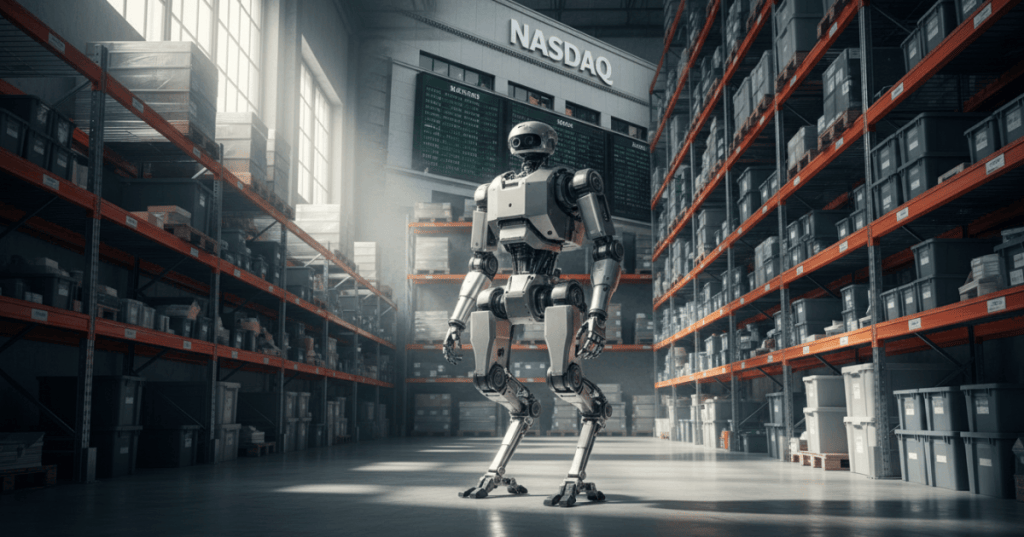
Agility Robotics began trading on the Nasdaq Stock Market on November 5 under the symbol AGLT, becoming what the company describes as the first U.S. publicly listed pure-play humanoid robotics business with active commercial deployments. The Oregon-based company completed its merger with Churchill Capital Corp XI on November 4, raising approximately $465 million in gross capital through the transaction and associated financings before expenses. Warrants trade under AGLTW.
The first trading session marks a separate milestone from the merger closing reported earlier. Agility reached public markets through a special-purpose acquisition company, or SPAC, rather than a conventional initial public offering. Its listing gives investors direct exposure to a company specializing in two-legged robots designed for warehouses and factories.
Digit Already Works in Commercial Warehouses
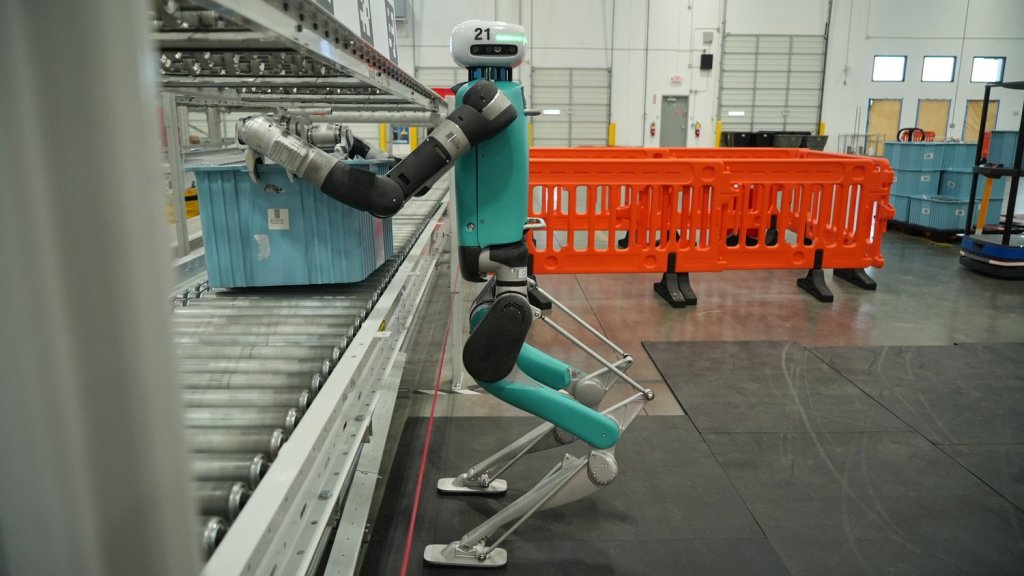
Agility reports more than 65,000 hours of real-world robot operation. Its Digit platform has handled more than 100,000 totes at a GXO warehouse in Georgia, and the companies plan expansion to two additional U.S. facilities in early 2027. Existing operations also involve Schaeffler and Toyota Motor Manufacturing Canada.
The humanoid form is intended to navigate spaces designed around human workers, potentially reducing the need to rebuild every workstation. However, repetitive tote movement in controlled environments is not equivalent to general human-level dexterity or reliable performance across arbitrary factory tasks. Earlier coverage of working humanoid robots distinguishes operating deployments from demonstrations.
Orders Are Not Revenue
Agility disclosed more than $300 million in committed multi-year orders for Digit 5, subject to contractual milestones, product features and specifications. The amount is prospective order value, not recognized sales or cash already collected. The company says early customer access is planned for the first half of 2027, with general availability targeted for the end of 2027.
Digit 5 is designed for repetitive lifting up to 50 pounds, interchangeable end effectors and closer human-robot cooperation. Agility also plans to use NVIDIA IGX Thor computing and Halos safety technology. Its partnership with Nyobolt targets nine-minute charging and more than 20 productive operating hours per day; both remain performance targets rather than independently verified fleet averages. Prior reporting examined Digit 5 charging claims and industrial safety integration.
Public Capital Brings New Tests
The company operates RoboFab, a 70,000-square-foot Salem manufacturing facility designed for annual capacity of up to 10,000 robots. Designed capacity is not actual production, and neither the $465 million gross raise nor the reported orders establish profitability.
Scaling a humanoid robot fleet requires reliable actuators, service technicians, replacement parts, software updates, safety validation and customers willing to pay for measurable productivity. A planned AGCO manufacturing pilot illustrates the difference between an announced trial and sustained deployment.
Investors will now be able to evaluate Agility through public filings, cash consumption, delivery schedules and realized revenue. Its listing establishes a market milestone, while broader humanoid adoption remains contingent on economics, reliability and workplace safety.
Editor’s Note. Reporting is based on Agility Robotics’ November 5 Nasdaq announcement and its October 30 transaction disclosure. All commercial-order, capacity and future-performance statements are attributed to the company. The embedded videos are earlier official demonstrations, not footage of the stock-market debut. Public-view player rendering and independent playback are separate checks.

Scan the original BitcoinVersus.Tech QR code to support independent research.
We volunteer daily to ensure the information on this platform is Verifiably True. If you would like to support the research, please scan QR code.


Leave a Reply