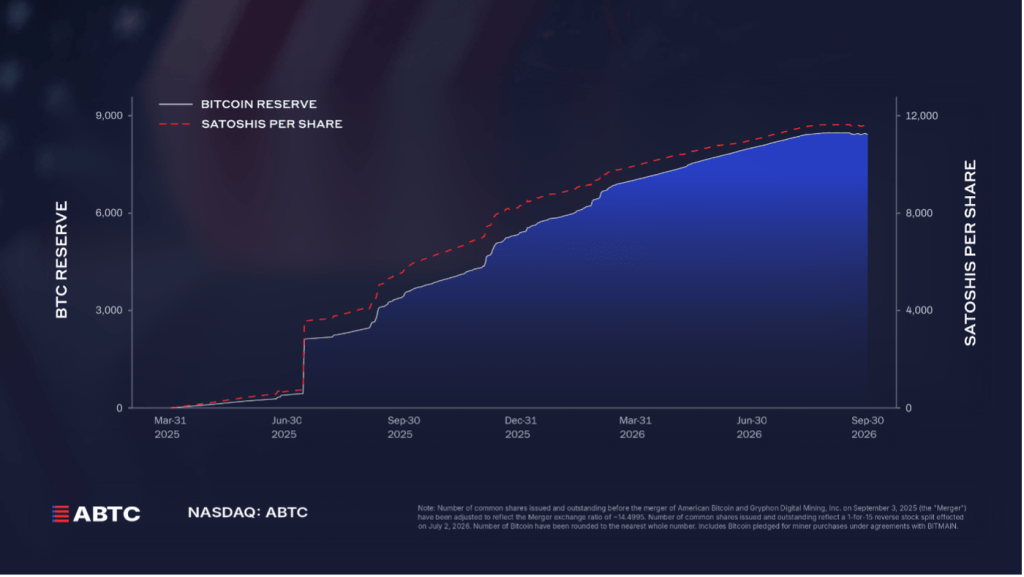
American Bitcoin Corp. reported on November 4, 2026, that its Bitcoin reserve increased to approximately 8,427 BTC at September 30, even as quarterly mining output and profitability from mining weakened. The Miami-based, Hut 8-controlled company produced about 891 BTC during the third quarter, down from 932 BTC during the second quarter. Its original earnings release attributes the pressure primarily to higher seasonal electricity costs, while its reserve continued growing through mining.
Company-reported holdings increased by about 425 BTC from 8,002 in June, a roughly 5.3% rise. The balance includes approximately 3,090 BTC pledged under miner-purchase agreements with Bitmain, meaning the headline total should not be confused with wholly unencumbered coins. American Bitcoin sold some of its mined output to fund operations and reported no Bitcoin purchases during the quarter. Its earlier 11,298-machine ASIC expansion in Alberta provides background on the operating fleet behind the reserve strategy.
Mining costs rose faster than revenue could absorb
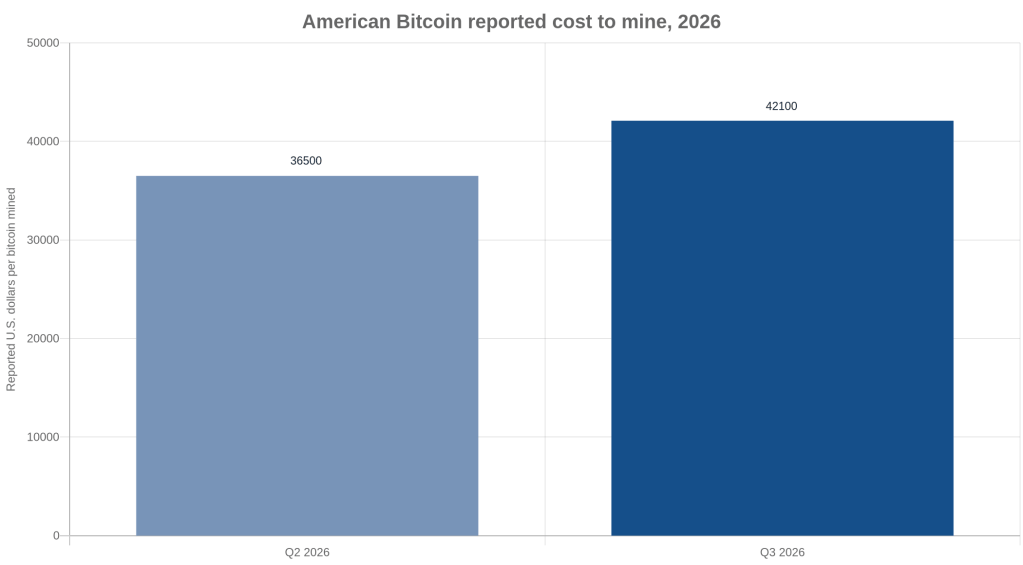
The company reported $63.4 million in third-quarter mining revenue, versus $67.0 million in the previous quarter, a decline of about 5.4%. Bitcoin production declined approximately 4.4%. Its reported average cost to mine one BTC increased from roughly $36,500 to $42,100, or about 15.3%, and gross margin contracted from approximately 49% to 41%. Seasonal power conditions, rather than a reported change in owned mining capacity, were identified as the principal cost driver.
Bitcoin miners measure performance in several ways. A mining machine’s joules per terahash does not by itself include site cooling, electrical conversion and operating overhead, a distinction explained in our guide to ASIC efficiency versus site efficiency. Similarly, American Bitcoin’s $42,100 company-defined mining cost is not a comprehensive total cost including depreciation, financing, corporate administration or changes in asset value.
Its September-quarter production would rank among larger publicly traded mining operators, although the relevant comparison must use the same three-month period. The site previously ranked public Bitcoin miners by second-quarter output; a Q2 table cannot establish a Q3 rank until competitors finish reporting. Different operators also report installed hashrate, energized hashrate and active average hashrate, which need not match.
Reported net income was dominated by market revaluation
American Bitcoin reported about $126 million in GAAP net income and $221 million in adjusted EBITDA, compared with a $57.2 million net loss in Q2. However, the quarterly financial statement includes an approximately $197.3 million gain from changes in the value of held digital assets, partially offset by a $64.3 million derivative loss. The earnings headline therefore cannot be interpreted as cash generated by mining hardware alone. The non-GAAP adjusted EBITDA calculation also requires its stated reconciliation.
For context, Canaan reported average power costs of 4.3 cents per kilowatt-hour for its September mining fleet, using a different reporting method and operating portfolio. Directly comparing that electricity rate with American Bitcoin’s dollars-per-coin figure would mix cost units. Meaningful comparisons require electricity consumption, uptime, hashrate, difficulty, curtailment proceeds and consistent accounting definitions.
More Bitcoin per share, with important caveats
American Bitcoin said its satoshis per share rose from approximately 10,989 to 11,572, an increase of about 5.3%. Its calculation divides total BTC holdings by shares outstanding, after conversion to satoshis; the reported figures reflect the company’s July 2026 reverse stock split. No shares were sold through its at-the-market issuance program in Q3, according to management, but that narrow assertion does not exclude every source of possible dilution in later periods. Investors assessing Bitcoin treasury strategies and dilution should distinguish a rising BTC balance from a rising BTC balance per share.
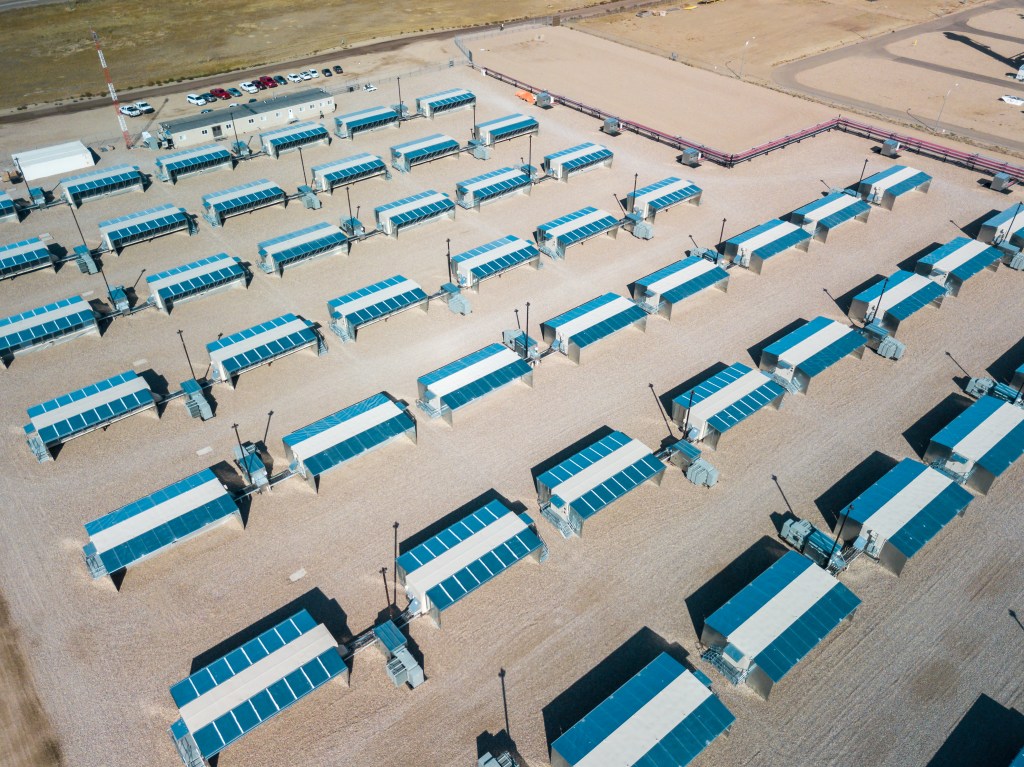
The company ended the quarter with approximately 89,242 owned machines representing 28.1 exahashes per second of capacity. Owned or installed equipment is not evidence that every miner was energized for the entire reporting period. Subsequent earnings updates will show whether cooling-season costs ease, productive hashrate improves and reserve growth continues without diluting investors.
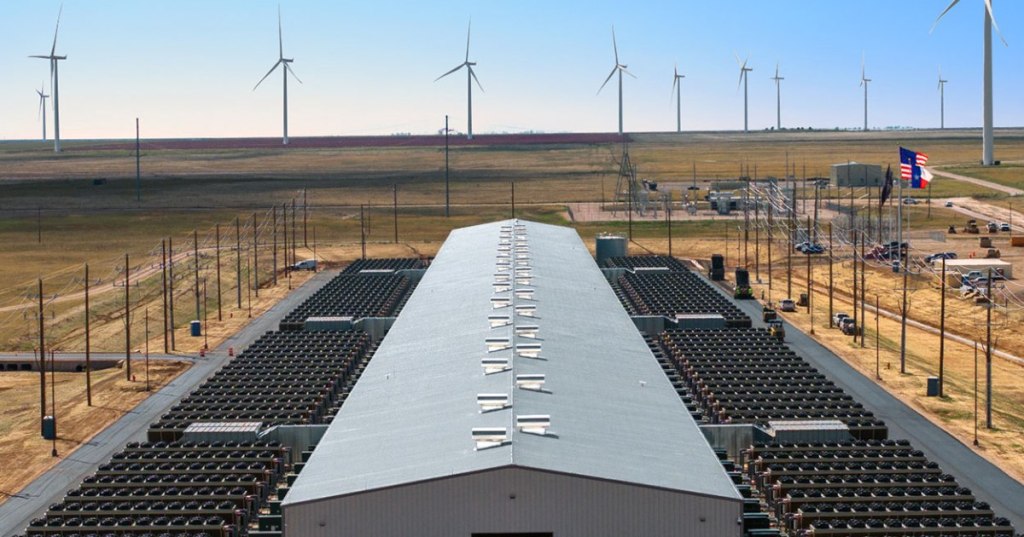
Editor’s Note. All third-quarter figures are company-reported and approximately rounded. The financial statement separates mining revenue from noncash Bitcoin valuation changes; cost to mine is not a fully loaded accounting cost. The featured photograph and Hut 8 image are archival facility imagery, while the graphics show historical earnings figures rather than prospective performance.

Scan the donation code from another device if your phone cannot scan its own screen.
We volunteer daily to improve the credibility of the information on this platform. If you would like to support the research, please donate here: 3C9o19EH5HSiwEPyCTmEKzxhNCbo2X6TTb
BitcoinVersus.tech is not a financial advisor. This media platform reports on technical and financial subjects purely for informational purposes.


Leave a Reply