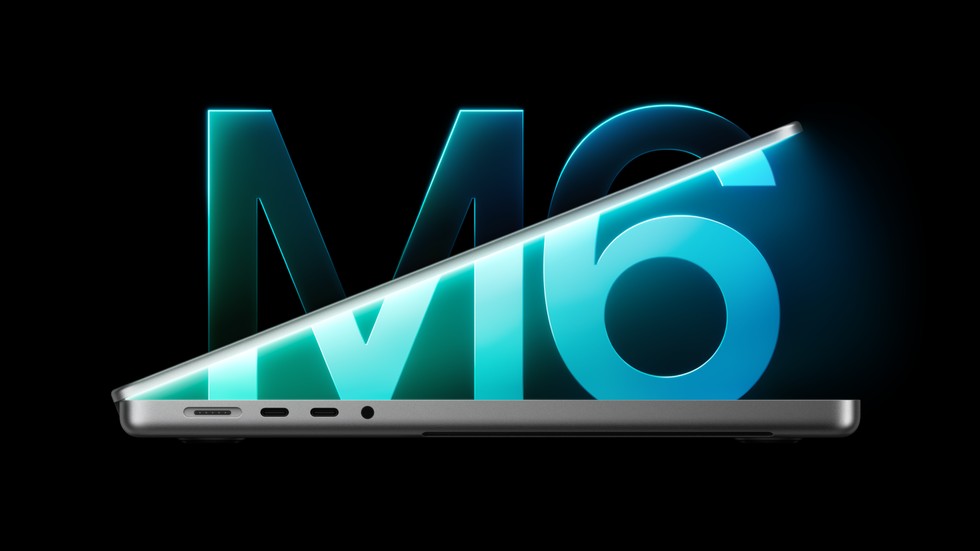
Apple’s 14-inch MacBook Pro with M6 reaches its announced retail availability date on November 6, 2026, starting at $1,999 in the United States. Unveiled October 27, the laptop pairs a 12-core CPU and 12-core GPU with Wi-Fi 7 and Bluetooth 6. The standard M6 model retains a mini-LED display and conventional keyboard-and-trackpad interface; it is not Apple’s separately announced touchscreen OLED MacBook Pro.
According to Apple’s October 27 announcement, the new machine ships with 16 GB of unified memory and 1 TB of SSD storage as its starting configuration, runs macOS 27, and offers up to 24 hours of video playback under Apple’s test conditions. The official technical specification sheet lists a 72.4-watt-hour battery, 14.2-inch 3024-by-1964 display and three Thunderbolt 4 ports.
More CPU cores, but measured performance matters
Apple’s M6 contains two super cores, four performance cores and six efficiency cores. Its 12-core GPU incorporates Neural Accelerators, alongside a dual 16-core Neural Engine for machine-learning workloads. As a system-on-chip, M6 integrates compute, graphics and shared memory access into a tightly coupled platform, limiting data movement between separate components. The design follows Apple’s transition away from Intel-based Mac processors, which began in 2020.
Apple claims up to 30% faster graphics and 25% faster AI workloads versus M5 in selected tests, but those percentages are not universal improvements. Independent testing by Tom’s Hardware on November 5 measured a roughly 10% Geekbench 6 single-core gain and just over 18% multi-core improvement over its comparison M5 machine. Its file-transfer test, meanwhile, found practically unchanged SSD throughput. Different software and configurations can produce different results.
Apple specifies 153 GB/s memory bandwidth for the 16 GB configuration, increasing to 170 GB/s on 24 GB and 32 GB models. Faster CPU and GPU cores cannot eliminate memory-capacity limits: large language models, software builds and memory-intensive creative tasks still require sufficient RAM. BitcoinVersus.Tech previously covered the M6 iMac’s local-AI capabilities and the compact M6 Mac mini, both emphasizing Apple silicon’s wider deployment across desktop systems.
The non-touch model keeps familiar hardware
The M6 laptop uses Apple’s Liquid Retina XDR mini-LED screen, with up to 120 Hz refresh, 1,600-nit peak HDR brightness and a 1,000,000:1 specified contrast ratio. It does not adopt the tandem-OLED touchscreen, Thunderbolt 5 or larger configuration ceiling of the more expensive PROLED XDR line. Prior BitcoinVersus.Tech reporting examined Apple’s departure from its longstanding opposition to touchscreen Macs; the M6 base model offers a different engineering and pricing trade-off.
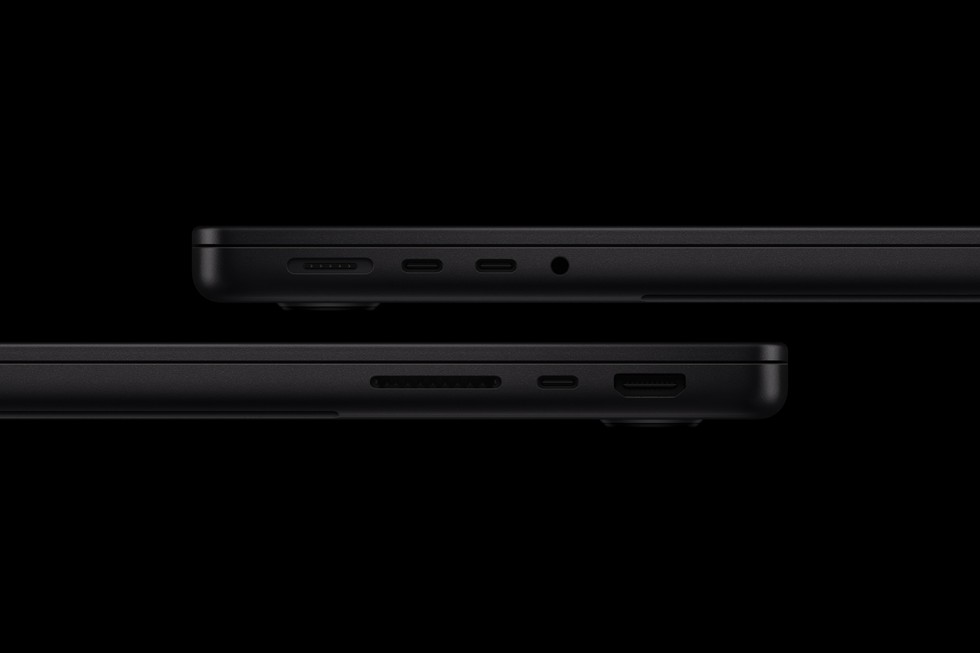
Buyers also receive HDMI, an SDXC card reader, a headphone jack and a 12-megapixel Center Stage camera. The new wireless platform adds Wi-Fi 7 and Bluetooth 6, although real wireless performance depends on network equipment, spectrum conditions and peripheral compatibility. A Tom’s Guide review recorded 19 hours and five minutes of battery life in its own test, below Apple’s best-case video-playback figure but still a strong result.
Cost remains a central constraint. The $1,999 entry price is higher than the preceding generation, while buyers who need advanced displays, greater memory or heavier GPU capacity may instead compare Apple’s high-end Mac Studio configurations or the OLED MacBook Pro. Owners of recently purchased M5 laptops may find performance gains too small to justify replacement. For older Intel and M1 systems, the larger accumulated improvements make the November 6 release more consequential.
Editor’s Note: Apple announced the standard M6 MacBook Pro on October 27, 2026, with availability beginning November 6. Primary sources: Apple Newsroom and Apple technical specifications. Independent measured results are attributed to Tom’s Hardware and Tom’s Guide, and must not be confused with Apple’s selected marketing benchmarks. The 14-inch M6 mini-LED model differs from the M5 Pro/Max PROLED XDR touchscreen line. Product photographs and chip graphic are official Apple Newsroom assets. The official Apple YouTube video is included with native responsive Gutenberg markup; player rendering and playback are separate checks.

To donate 5,000 sats, open the article on a second screen and scan the original QR code with a compatible Bitcoin wallet. Mobile readers whose wallets support importing QR images may save the image to scan. Verify the destination before sending: 3C9o19EH5HSiwEPyCTmEKzxhNCbo2X6TTb.
We volunteer daily to ensure the information on this platform is Verifiably True. If you would like to support the research, please scan QR code.
BitcoinVersus.tech is not a financial advisor. Product coverage, manufacturer claims and pricing are presented for informational purposes, not as purchase or investment advice.


Leave a Reply