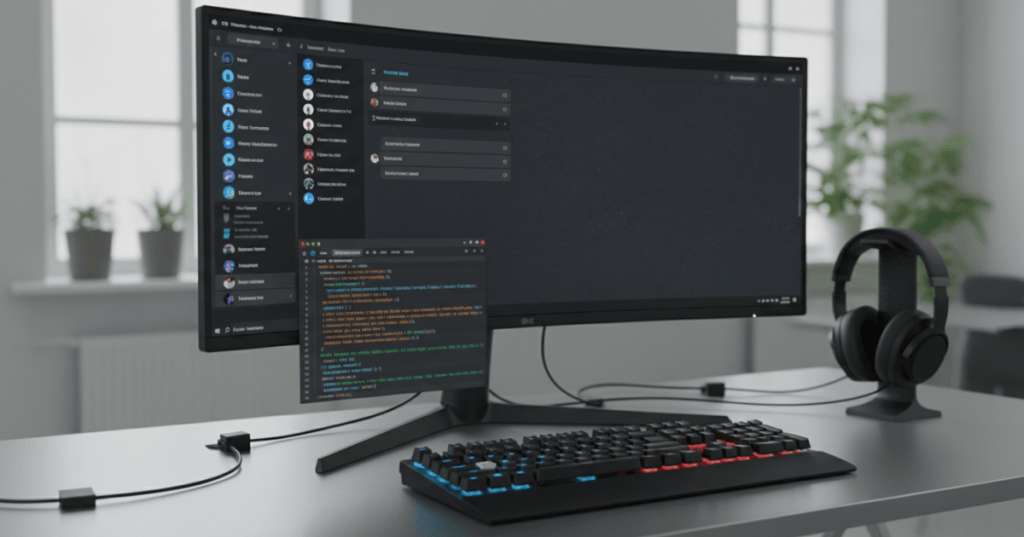
Discord is rebuilding its desktop application in Rust and replacing the Electron framework, co-founder and chief technology officer Stanislav Vishnevskiy confirmed on November 4, 2026. The redesign, internally identified as Discord Phoenix, uses the GPU-accelerated GPUI interface framework and aims to reduce memory consumption while preserving the chat, voice and gaming features users already know.
The company also plans to retire React Native from its mobile clients while retaining operating-system-native interfaces and sharing underlying Rust code with desktop. Vishnevskiy said user testing could begin soon, but provided no release date. The announcement describes software under development, not a publicly released replacement.
A 290 MB Screenshot Is Not a Benchmark
A Windows Task Manager screenshot shared by Vishnevskiy showed Discord Phoenix consuming approximately 290.2 MB of RAM. He said the development client was running two accounts simultaneously. The result is encouraging, but a single screenshot cannot establish average memory consumption, performance under voice and video load, or comparable results across Windows, macOS and Linux.
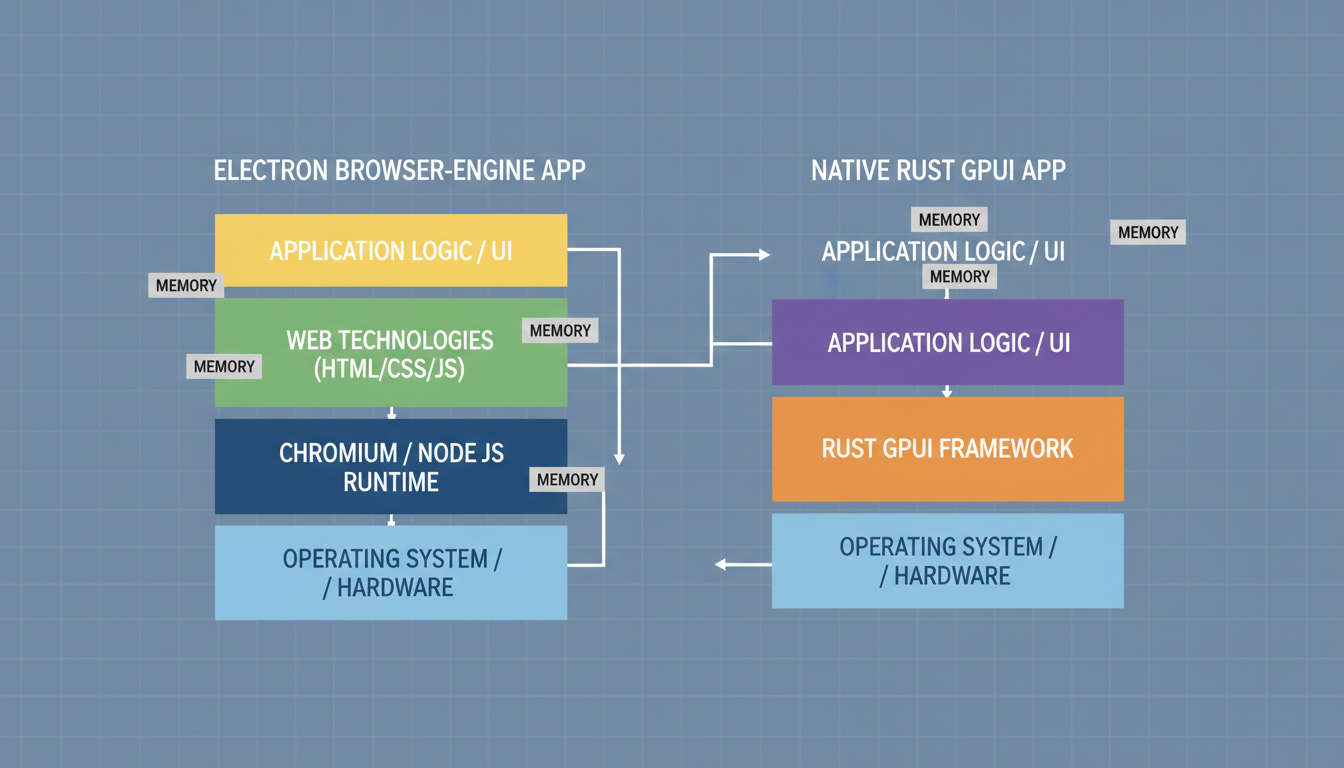
Electron bundles Chromium and Node.js to run applications built with web technologies. The approach allows extensive code sharing but adds browser-runtime overhead. Rust can support native software with explicit resource management and memory-safety guarantees, while GPUI supplies GPU-accelerated interface rendering. Rust alone does not guarantee faster software; architecture, workload and testing determine the outcome.
Discord has used Rust in infrastructure and voice technology since 2018. A previous company engineering article described moving its Read States service from Go to Rust to reduce latency spikes. The current initiative extends an established engineering investment rather than introducing an entirely new language to the company.
Why Gamers and Developers Care
Discord often runs beside games, browsers, streaming software and development tools. Lower background memory demand could leave more RAM available for games, especially on machines with 8 GB or 16 GB of memory. The significance of system memory pressure is explored in BitcoinVersus.Tech’s guide to RAM, VRAM and storage in games.

For developers, the migration illustrates a broader choice between portable web interfaces and native application frameworks. Rust offers compile-time ownership checks intended to prevent many memory errors, but a large rewrite also creates regression risks involving accessibility, plug-ins, screen sharing, audio devices and platform-specific behavior. Related software-engineering tradeoffs appear in open-source game development and systems-programming language fundamentals.
Discord’s other product initiatives continue independently. Its plan to make selected public-server discussions searchable on the web raises privacy and discoverability questions distinct from the client rewrite.
The Release Remains the Real Test
No independent benchmark suite, hardware-normalized comparison or full public test build was available in the reports reviewed. Real-world performance will depend on server count, voice calls, screen sharing, hardware acceleration, operating-system support and extended uptime. The company has not committed to a date for the migration.
A successful rollout would offer a meaningful example of a gaming platform replacing browser-based desktop software with native Rust while retaining cross-platform functionality. Until production testing is available, the reported 290 MB figure should remain an early engineering observation, not a promised memory target.
We volunteer daily to ensure the information on this platform is Verifiably True. If you would like to support the research, please scan QR code.
To donate 5,000 sats, open the article on another screen and scan the original QR code below with a mobile Bitcoin wallet. A wallet supporting saved-image scanning may also scan the QR image from the phone.

Editor’s Note. Reporting is based on Discord CTO Stanislav Vishnevskiy’s November 4 statements, contemporaneous coverage from The Verge, Inven Global and Windows Latest, and Discord’s published engineering history. The 290.2 MB figure is a single development screenshot, not a validated benchmark. In-body diagrams are conceptual and are not official Discord images. No verified original YouTube video or social-post embed was available for inclusion.


Leave a Reply