Autonomous delivery company Zipline announced a $1.5 billion financing round on November 5, 2026, valuing the business at $21.5 billion after the investment. The South San Francisco company says the capital will expand U.S. drone manufacturing, hiring and a nationwide delivery network, while a new agreement with Walmart calls for 300 additional delivery sites. Announced locations are not yet operational installations.
Paradigm, WCM Investment Management and Layer Global led the financing, with Uber among the participants. Independent reporting by Reuters confirms the round and valuation. The reported $21.5 billion value is a private-market post-money estimate, not revenue, profit or cash received by Zipline.
Zipline’s official November 5, 2026 video, “Zipline raised $1.5 billion in new funding,” published by the Zipline YouTube channel. Original video. Manufacturer presentation, not independently audited financial evidence.
How Zipline delivers packages without landing
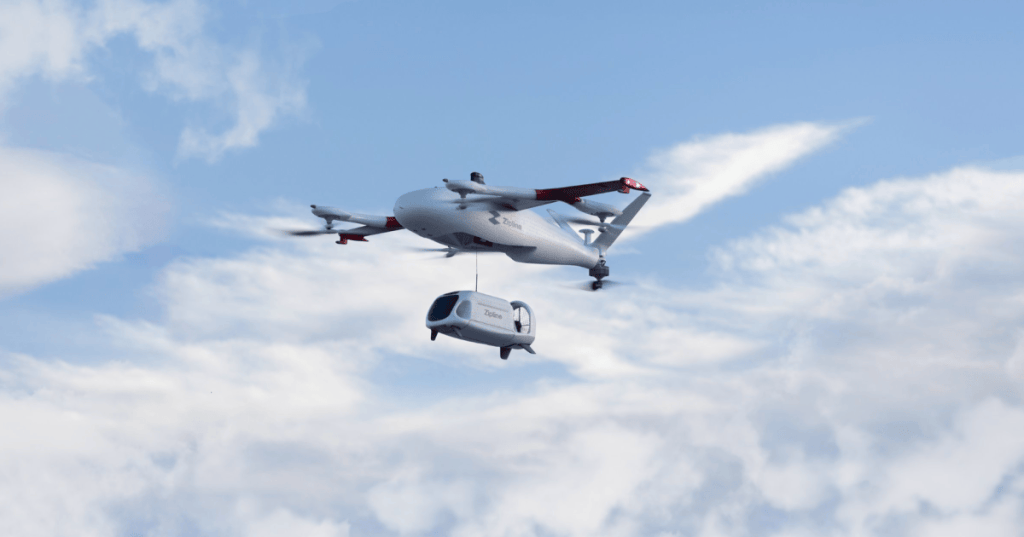
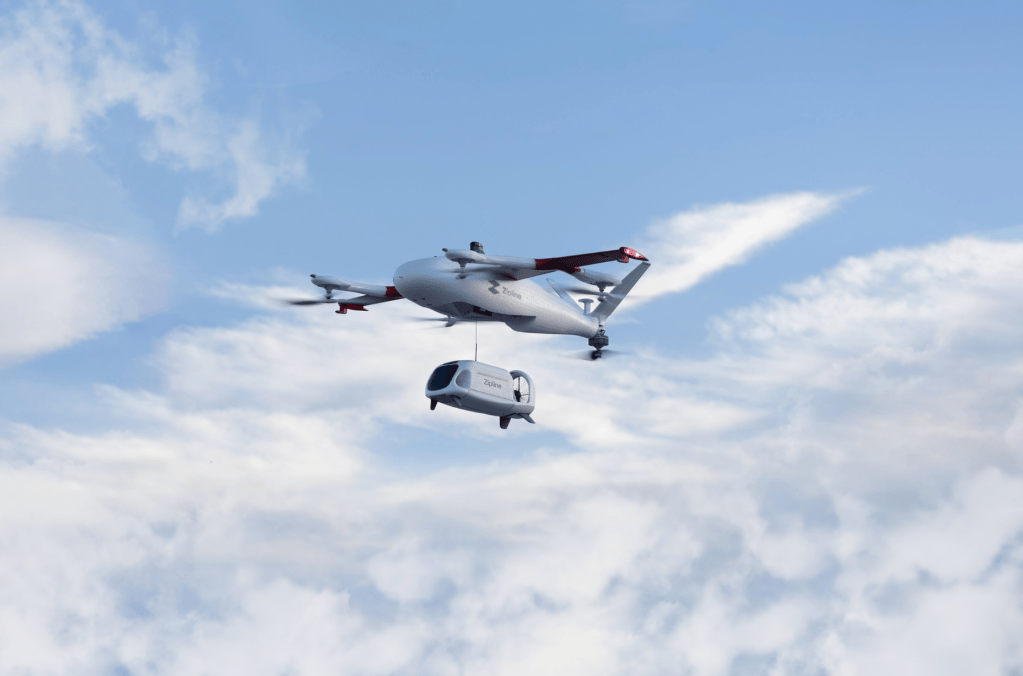
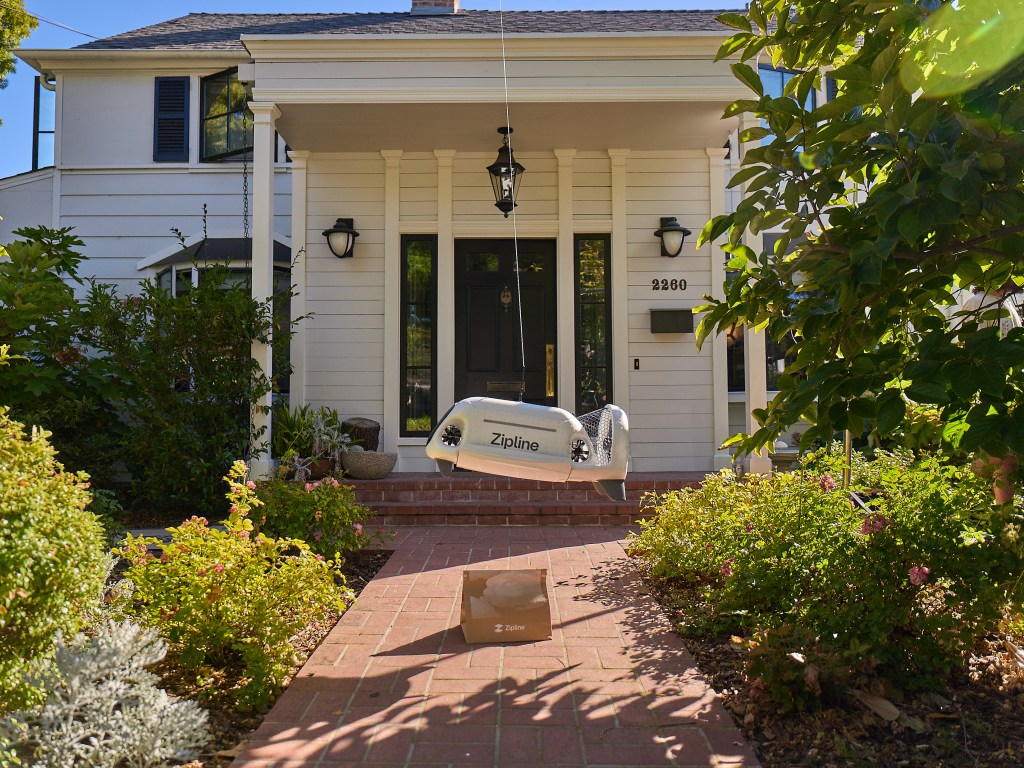
Zipline operates two aircraft families. Its long-range Platform 1 supports medical and institutional logistics, while Platform 2 serves consumer deliveries. The P2 uses an electrically powered hybrid fixed-wing design to travel between loading points and homes, then hovers high above a destination while a smaller delivery droid descends on a tether. The aircraft does not need to land in a customer’s yard.
Zipline lists an 8-pound payload, approximately 10-mile service radius and cruise speeds around 70 mph for Platform 2. These are manufacturer specifications, not evidence that all deliveries reach the stated range or speed under every weather and loading condition. Battery endurance, wind, dispatch timing and aviation permissions affect actual service.
Funding growth is not the same as network expansion
The financing follows a previously reported $7.6 billion valuation in January. The new valuation is approximately 2.83 times the earlier figure, but investors’ pricing does not establish an equivalent increase in completed deliveries or operating margins. TechCrunch reported 21 existing joint Zipline-Walmart delivery sites, compared with 300 additional planned sites. Regulatory approval, launch infrastructure, local acceptance and trained staff remain separate deployment requirements.
Zipline says a selected cohort of established restaurant partners increased its share of their delivery revenue from 10.8% in March to 34.9% in October, a gain of 24.1 percentage points. The company also reports median October orders arriving 19 minutes after checkout. Because the restaurant cohort is selected and no independent methodology was supplied, neither result should be generalized to every merchant or geography.
Zipline’s official August 17, 2026 “Zipline + Uber Drone Delivery” video illustrates its commercial network strategy. Credit: Zipline YouTube channel. The partnership’s target of one million daily deliveries by 2029 remains a forecast, not current volume.
Engineering economics and unresolved constraints
A software upgrade announced in October adjusts flight speed, altitude and trajectories according to onboard wind sensing and acoustics models. Zipline claims 68% less cumulative sound exposure, 21% less flight energy and 53-second shorter average flights compared with earlier configurations. The company identifies internal modeling behind its sound results; comparable independent field measurements were not provided.
Drone operations also bring weather limits, battery replacements, maintenance, aircraft noise and public-airspace oversight. Zipline claims 150 million commercial autonomous miles without a safety incident, but third-party incident reporting and definitions of reportable events warrant scrutiny. Battery technology is another constraint, as earlier BitcoinVersus.Tech reporting on drone battery manufacturing illustrates.
The economics resemble other autonomous fleet businesses: repeatable dispatch, maintenance and asset utilization matter alongside machine capability. BitcoinVersus.Tech previously examined robotaxi fleet-operator economics, the investment behind drone-detection radar systems and the safety trade-offs in counter-drone technology. Zipline’s next meaningful benchmark will be activated sites, documented delivery economics and independently assessed neighborhood impacts.
Editor’s Note: Primary evidence: Zipline’s November 5, 2026 release, technical fact sheet, October 27 acoustics report and official funding and partner videos. Independent context: Reuters and TechCrunch. Financial and operational targets are attributed, not guaranteed. In-story photographs and cover are official Zipline images; no generated illustration depicts hardware.

For mobile scanning, open the article on another display and use a compatible Bitcoin wallet to scan the original donation QR. Verify the destination before donating 5,000 sats: 3C9o19EH5HSiwEPyCTmEKzxhNCbo2X6TTb.
We volunteer daily to ensure the credibility of the information on this platform is Verifiably True. If you would like to support our work and help further secure the integrity of our research initiatives, please scan the QR code below to donate 5,000 sats.
BitcoinVersus.tech is not a financial advisor. This media platform reports on financial subjects purely for informational purposes.


Leave a Reply