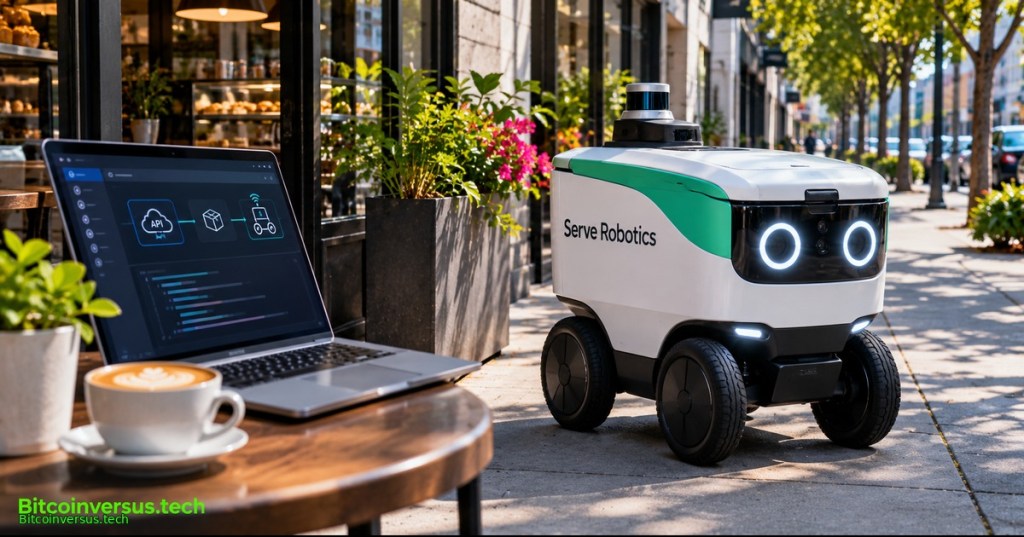
Serve Robotics launched its AV Delivery Developer Portal on November 11, 2026, allowing software developers, local businesses and AI assistants to build applications that request sidewalk-robot deliveries. Serve says its network includes more than 2,000 deployed robots and delivery coverage across over 150 neighborhoods in 20 U.S. cities. The new public programming interface offers a simulated sandbox; sending an actual robot still requires approval from Serve. An open developer portal is not an unrestricted public dispatch system.
A software request can now lead to a physical delivery
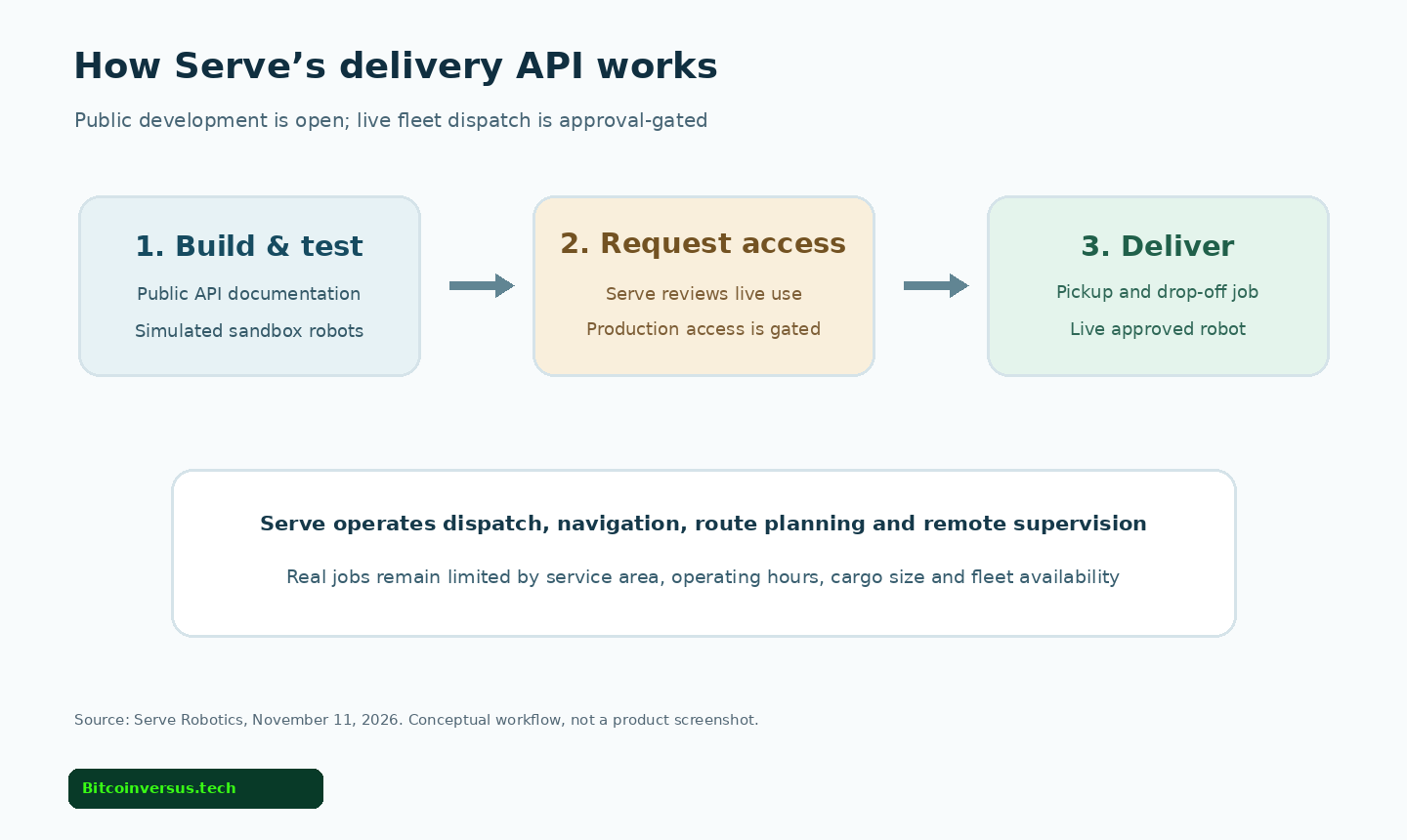
The basic workflow resembles a conventional online service. An application specifies a pickup and drop-off, confirms the job and receives tracking updates. Serve retains responsibility for assigning a vehicle, planning the route, navigating obstacles and supervising operations. The developer does not receive arbitrary steering control or the ability to send a robot anywhere. Serve’s November 5 Physical AI Services launch was different: it offered connectivity and data tools to other robotics manufacturers, rather than direct use of Serve’s delivery fleet.
In the developer sandbox, simulated robots let an engineer test order creation, job status, failed requests and integration behavior without placing a physical vehicle on a sidewalk. Production use requires Serve to authorize access. Approved trips are constrained by active service zones, operating hours, available vehicles and cargo capacity. The company’s November 11 release does not report a number of approved third-party developers, API-triggered live deliveries or measured revenue from the newly launched channel.
The 2,000-robot total is not simultaneous availability
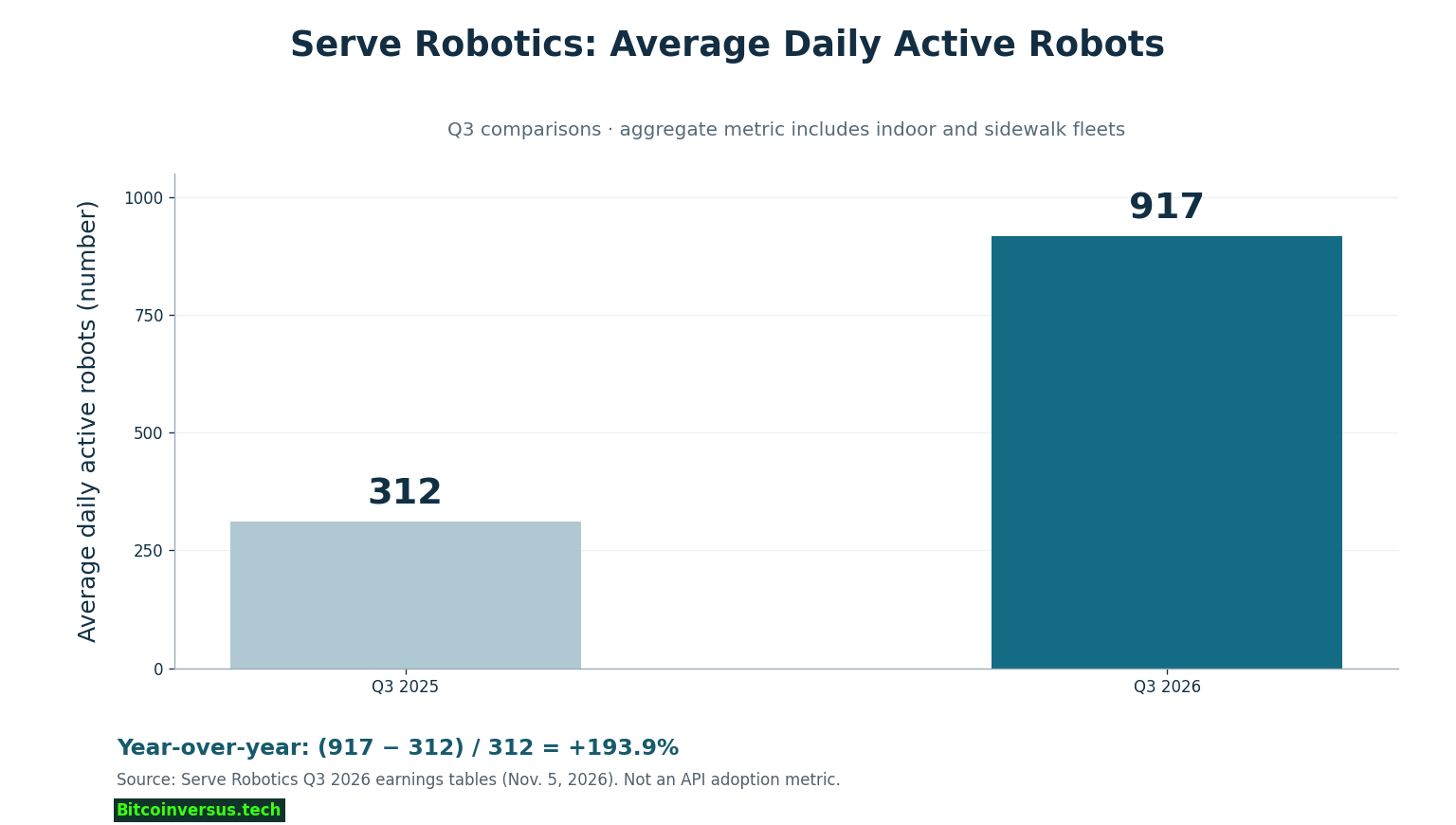
Serve describes more than 2,000 robots as deployed across its overall network, not as 2,000 vehicles available for an individual developer’s order at any moment. Its November 5 earnings tables reported an average of 917 daily active robots during the third quarter, compared with 312 a year earlier. That equals (917 − 312) ÷ 312 = 193.9% growth in the company-defined metric. Crucially, the 2026 figure includes both outdoor sidewalk robots and indoor hospital robots; it cannot be divided by 2,000 to calculate a valid sidewalk-fleet utilization rate.
Different geography figures also have different scopes. The API announcement describes delivery service in 20 U.S. cities and 150-plus neighborhoods. Serve’s wider investor presentation reports operations in 44 U.S. cities across its combined business. The two numbers should not be treated as contradictory measurements of identical coverage, nor used to claim 44 cities already accept developer-dispatched sidewalk orders.
Business opportunity meets operational limits
Serve Chief Executive Ali Kashani told The Verge that new demand outside meal peaks could keep vehicles busier. Businesses might request office-to-office transfers, shop deliveries or replacement-part transport without creating a full courier operation. The company discusses per-delivery and hourly-reservation commercial models, but has not published a universal API tariff or independently established savings for merchants. Avoiding a traditional platform’s commission does not eliminate robotics, insurance, maintenance or customer-support costs.
Real-world approval matters for security and safety. A bot requesting a delivery is an instruction to move physical hardware through public space, where pedestrians, accessibility, weather, fragile cargo and theft risks remain. Serve says trained staff supervise the robots remotely and may reject unsafe or unsuitable use. Related AI-agent permission controls and industrial-robot controller security show why authentication, authorization and monitoring belong beside autonomy.
Serve’s approach differs from Zipline’s aerial delivery expansion and broader robotaxi fleet businesses, which have distinct operating domains and regulatory constraints. Serve’s third-quarter revenue was $2.835 million, against a $7.555-million gross loss, so a larger deployed network does not yet establish profitable economics. Verified proof of the new developer model will require disclosed production API orders, delivery completion rates, additional fleet utilization, customer costs and safety outcomes.
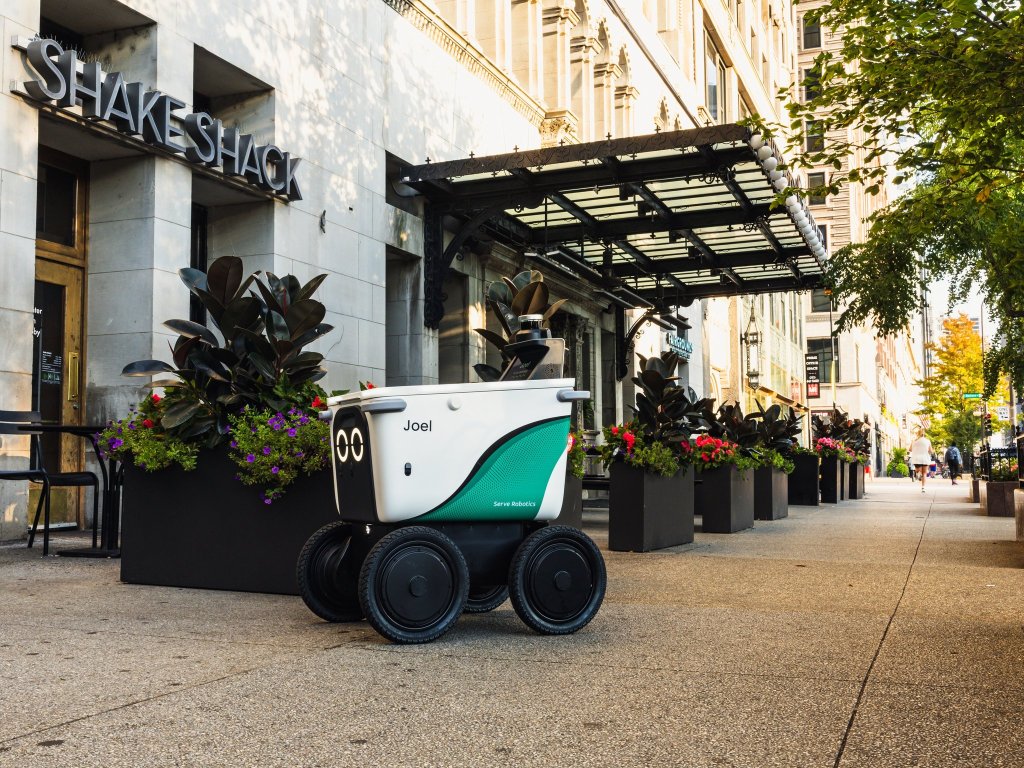
Sources and calculations: Serve Robotics press release, November 11, 2026; Serve official developer portal (announced public sandbox; independent access test not completed); Serve third-quarter results, November 5; The Verge’s November 11 interview with Ali Kashani; Serve’s earlier official Chicago robot photo. Original calculation: (917 − 312) / 312 × 100 = 193.9%; figures are company-reported and changes in fleet composition limit comparison.
Editor’s Note: The November 11 API announcement and reported fleet size are company statements. Public sandbox availability must not be conflated with unrestricted access to production robots; live dispatch is subject to Serve’s approval, geography, operating hours and safety controls. The Q3 average daily active robot metric includes both indoor and outdoor platforms in 2026 and predates the API launch; it does not measure API usage or the proportion of deployed sidewalk robots active. The official photo is archival, not from an API-based delivery. The featured cover is conceptual artwork and the two original graphics are explanatory or based on cited reported data. No verified official launch-related YouTube video ID was established. Mobile-browser rendering and real-device video playback were not performed.

BitcoinVersus.Tech is volunteer-run and publishes independent educational technology reporting. An optional 5,000-satoshi donation helps support continued research. Scan the original QR from a second screen using a compatible Bitcoin wallet; on mobile, use a wallet that supports scanning a saved image. Independently verify recipient address 3C9o19EH5HSiwEPyCTmEKzxhNCbo2X6TTb and payment amount before sending. Bitcoin transactions are generally irreversible.
We volunteer daily to ensure information on the BitcoinVersus.Tech platform is Verifiably True. Coverage is for educational and informational purposes and does not constitute financial or investment advice.


Leave a Reply