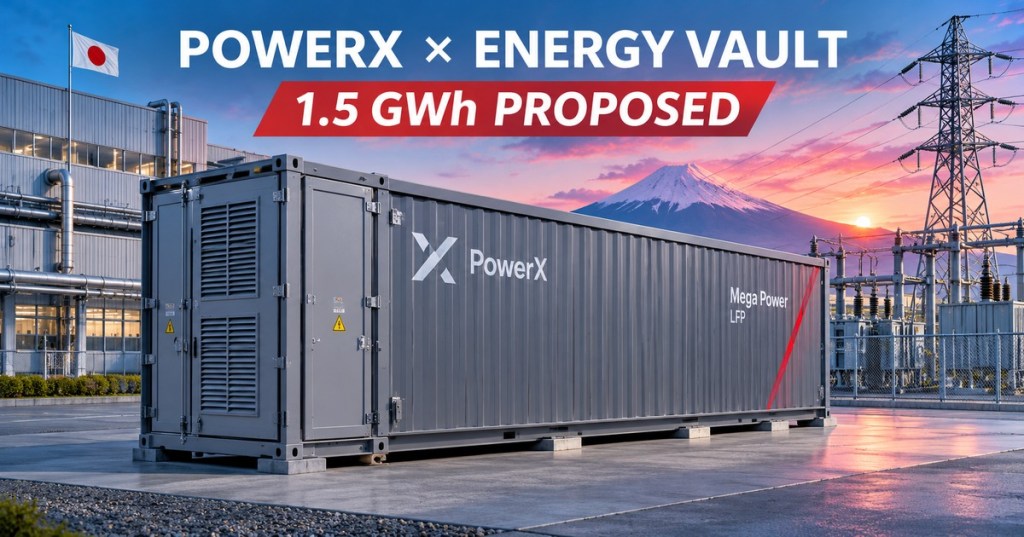
Japanese battery manufacturer PowerX and Energy Vault have agreed to explore supplying up to 1.5 gigawatt-hours of energy-storage products for U.S. deployment during 2027. The companies announced the strategic partnership on November 5, 2026, alongside potential cooperation on battery installations and data-center infrastructure in Japan, Australia and the United States. Crucially, the arrangement is non-binding: no firm 1.5 GWh purchase order, named U.S. project or commissioned installation was announced.
PowerX manufactures modular battery energy storage systems, or BESS, which absorb electricity and release it later to manage supply, demand and grid stability. Energy Vault develops and operates energy infrastructure, including storage projects. Their proposed partnership pairs Japanese-manufactured hardware with Energy Vault’s international project-development and commercial operations. The companies describe possible supply, financing, construction and operation, with individual deals still to be negotiated.

A proposed energy quantity, not generating capacity
The headline figure is 1.5 GWh, equivalent to 1,500 MWh of stored energy, rather than 1.5 GW of continuous power generation. Actual output power would depend on the batteries, inverters and site designs selected. For illustration only, 1,500 MWh could supply 375 MW for four hours before accounting for losses and operating limits; neither a 375 MW facility nor a four-hour project was specified in the announcement.
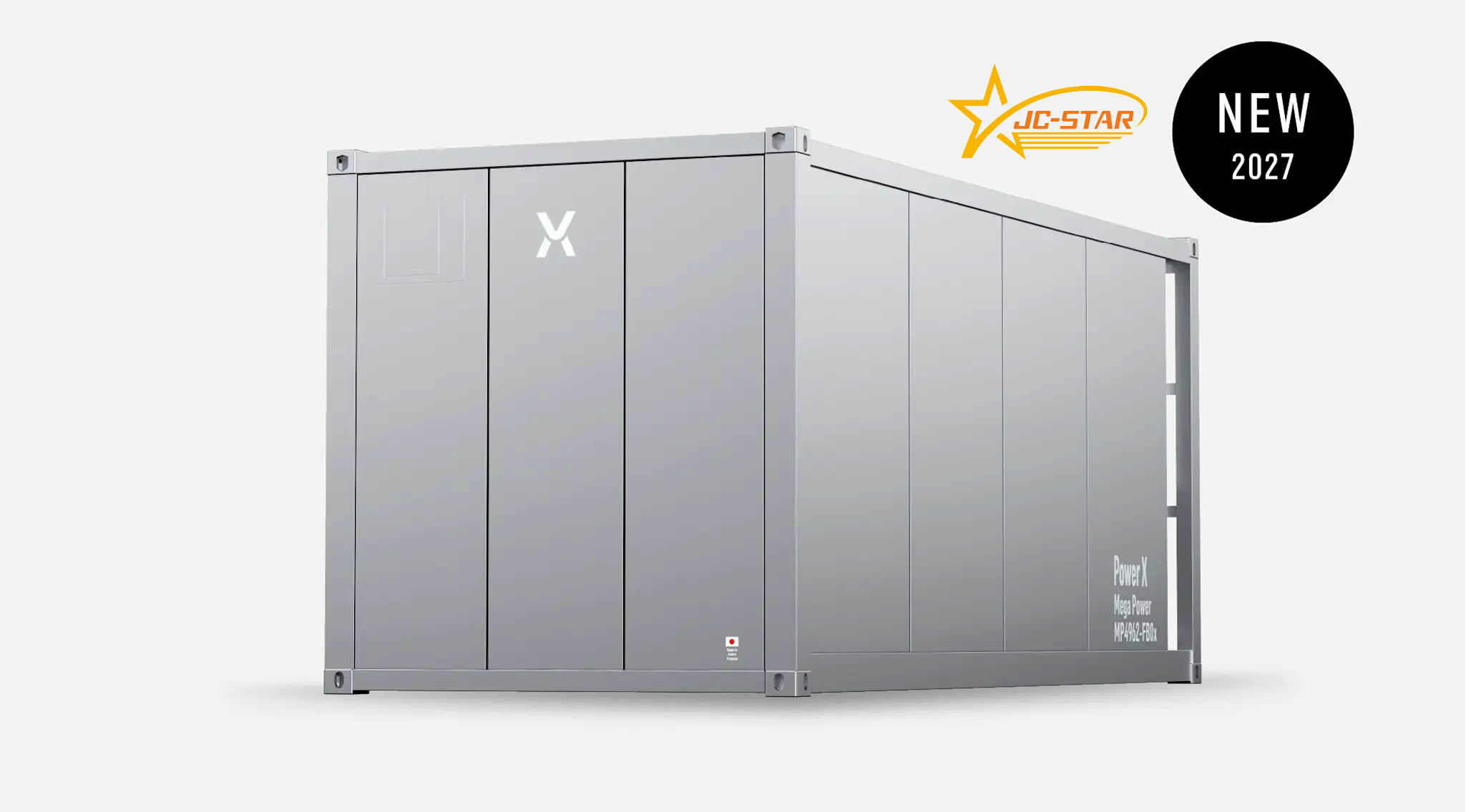
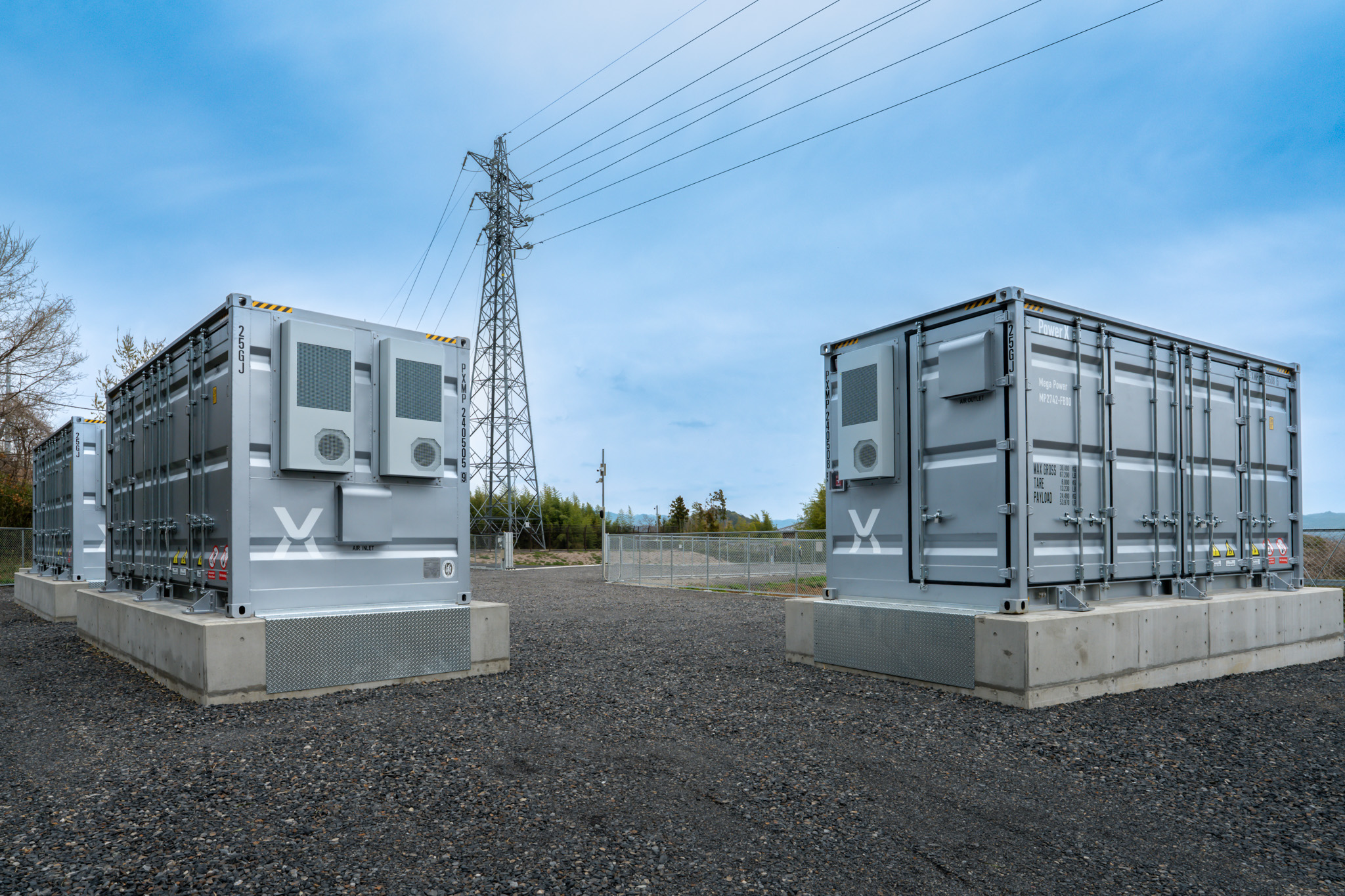
PowerX’s Mega Power product lineup includes liquid-cooled lithium iron phosphate systems. Its Mega Power 4000 series is advertised at up to 4.69 MWh in a 20-foot container. Other offerings include the Grid Connector package, integrating equipment such as power conversion, transformers and switchgear, and the modular Mega Power DC concept combining computing infrastructure with large-scale storage. Exact product allocations under the partnership remain undecided.
Factories, grid connections and data centers
According to PowerX’s November 5 release, the companies will explore U.S. supplies in 2027 using equipment manufactured in Japan and designed to comply with relevant U.S. foreign-entity-of-concern requirements. Design intent is not an independent certification of eligibility for federal tax credits. Country-of-origin rules, component sourcing, interconnection permits and final contracts could affect execution.
The possible collaboration also reflects growing competition for storage adjacent to electricity-hungry computing sites. BitcoinVersus.Tech recently reported a separate 900 MW planned fuel-cell arrangement at NTT DATA. Unlike a fuel cell, a battery is not a primary energy source: it shifts previously generated electricity across time and provides short-duration power support subject to its state of charge.
What has been committed, and what has not
Energy Vault has previously pursued longer-duration infrastructure, including an eight-hour Stoney Creek battery project in Australia. The emerging U.S. market also includes more concrete transactions, such as a previously reported Samsung SDI battery supply agreement. Those developments should not be counted as capacity built by the new PowerX partnership.
The companies did not disclose a committed contract value, sites, financing timetable, delivered energy rating or operating date. They explicitly cautioned that projected supply and projects may not materialize without definitive agreements. Their stated ambition could expand energy-storage options for renewable integration and data centers, but execution still hinges on commercial contracts, grid connection, battery safety engineering, capital and regulatory approvals.
For additional context, New York’s recent advanced-storage funding awards show a different stage of development: public project support rather than a global supply framework. The practical measure of the PowerX–Energy Vault agreement will be signed orders and independently verifiable deliveries—not the exploratory 1.5 GWh ceiling.
Editor’s Note: The November 5, 2026 partnership announcement was checked against PowerX’s official release and the company’s investor-disclosure listing. Product capacity was cross-checked with PowerX’s Mega Power specifications. The SPA is non-binding; 1.5 GWh represents indicative prospective supply rather than installed capacity or guaranteed revenue. The 375 MW / four-hour calculation is an idealized illustration, not an announced project. The PowerX installation and product images are background material. No relevant official YouTube playback was independently verified, and public mobile/desktop visual inspection remains outstanding.

To donate 5,000 sats, open the article on a separate display and scan the original QR code with a compatible Bitcoin wallet. On mobile, use another screen or your wallet’s supported image-scanning feature. Verify the destination 3C9o19EH5HSiwEPyCTmEKzxhNCbo2X6TTb before sending.
We volunteer daily to ensure the information on this platform is Verifiably True. If you would like to support the research, please scan QR code.


Leave a Reply