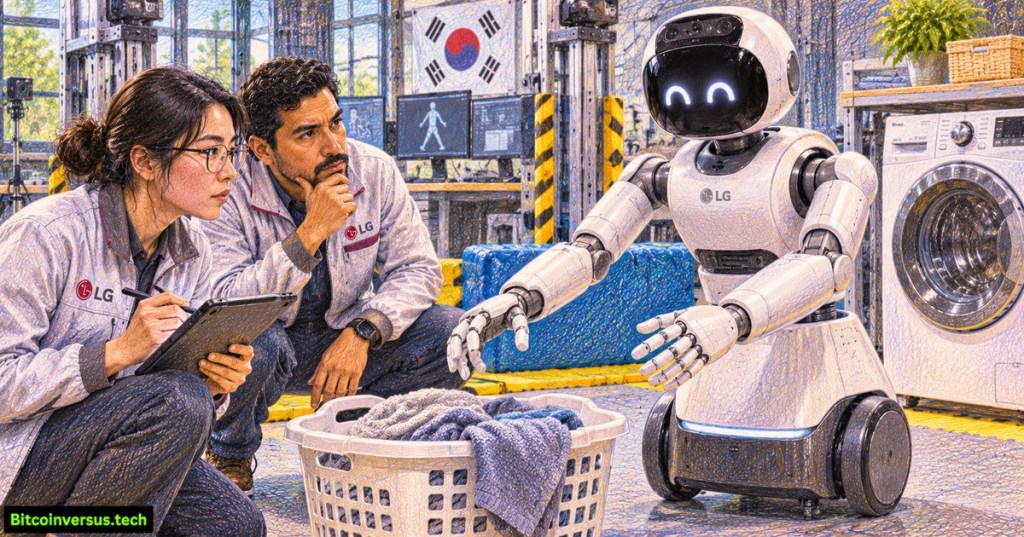
LG Electronics is moving its humanoid robot safety program into outside evaluation, signing a cooperation agreement with the Korea Institute for Robot Industry Advancement (KIRIA) on November 13, 2026. Announced November 16, the agreement covers methods for testing robot safety and usability, building a national evaluation system and pursuing pilot safety certification for LG CLOiD and future humanoids. No completed certification or commercial launch was announced.
The move comes as LG develops a separate bipedal robot based on an NVIDIA reference platform for a planned first-quarter 2027 unveiling. The existing CLOiD home prototype, shown at CES in January, uses a wheeled base rather than walking legs. The distinction matters because robots that navigate homes, factories and shared workspaces face different stability, collision and interaction risks.
LG’s official January 15, 2026 development film explains CLOiD’s wheeled design, home-appliance integration, articulated hands and safety considerations. Credit: LG/YouTube. Archival footage; it does not depict November’s agreement or a completed safety certification.
What LG and KIRIA actually agreed to test
Under the memorandum of understanding, LG will help develop the evaluation system at KIRIA’s humanoid safety certification center and contribute industry experience to domestic and international standards work. The partners intend to pursue a domestic pilot assessment of robots including CLOiD. A pilot establishes evaluation experience; it should not be confused with a regulatory approval covering every use case.
LG’s Korean-language November 16 corporate announcement identifies safety, reliability and usability as priorities from the beginning of robot development. KIRIA’s assessment infrastructure is intended to make tests repeatable and more objective. Real-world performance will still depend on the robot configuration, environment, maintenance and the final test criteria.
A robot working near people needs more than a demonstration of picking up objects. Engineers must evaluate collisions, unexpected movement, loss of sensor information, emergency stopping, grasp forces and predictable recovery after failures. A BitcoinVersus.Tech lesson on protective fields and safety scanners explains related industrial safeguarding principles, although a general humanoid assessment requires a broader system-level approach.
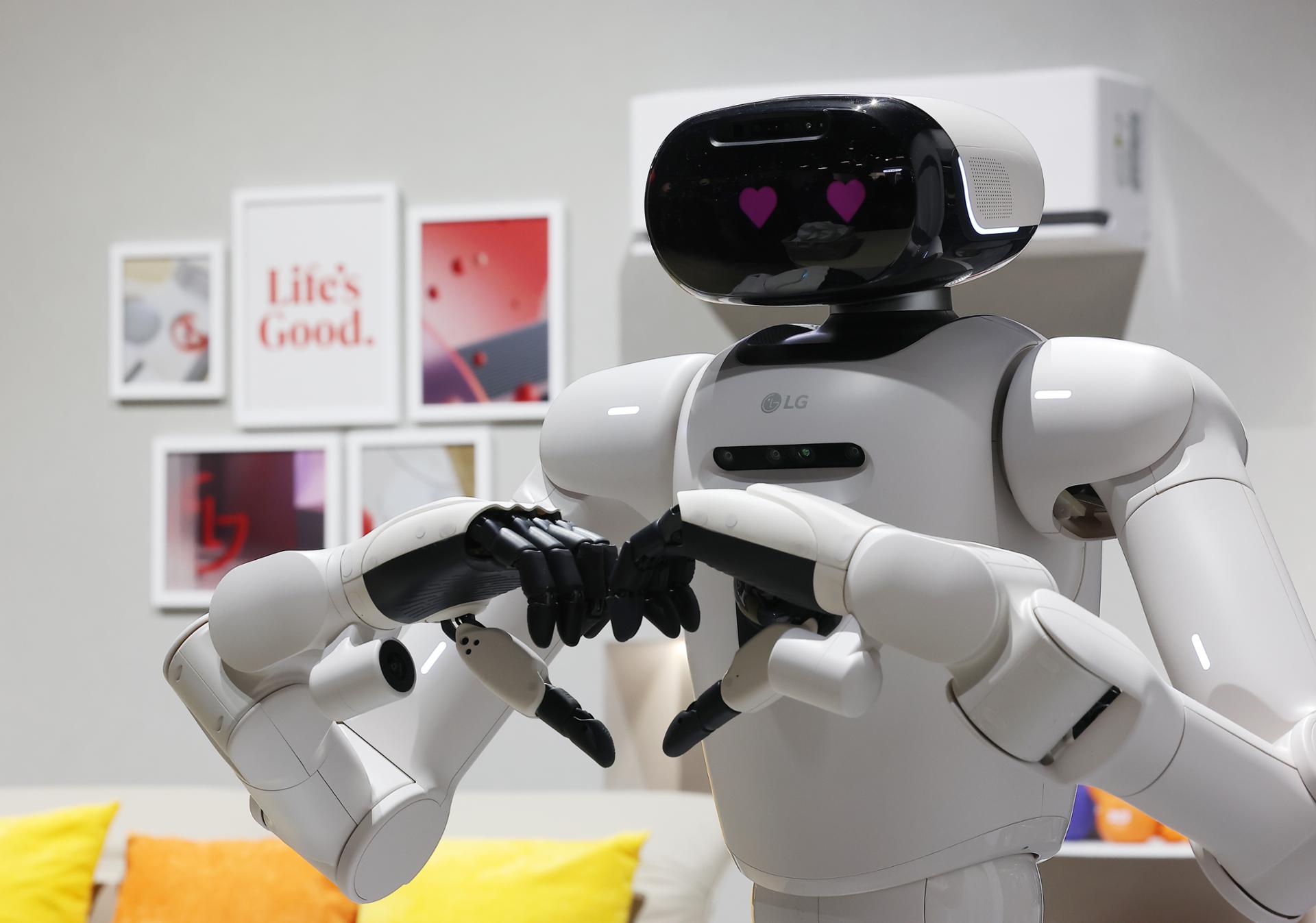
The 2027 bipedal plan is still a development target
LG says it is developing the two-legged NVIDIA-reference robot for public unveiling during January–March 2027. No final technical specifications, independent walking-safety benchmarks, selling price or shipment date accompanied the safety announcement. The company is using actuator development and data collection to build its physical-AI business, but those capabilities do not establish reliable operation outside controlled demonstrations.
Earlier ASUS Gallop reporting highlighted the gap between a factory task and its proposed 99.5% success target. University of Michigan’s PRISM simulation study likewise illustrates why walking performance must be separated from real-world reliability.
Official LG World Premiere highlights from CES 2026 show CLOiD alongside the company’s connected-home products. Credit: LG Global/YouTube, January 7, 2026. The footage documents a prior prototype demonstration, not commercial availability or a KIRIA test result.
Why testing must precede household deployment
LG first introduced CLOiD with two seven-degree-of-freedom arms, independently controlled fingers, cameras, and a mobile base designed for indoor stability. Its software combines visual interpretation with action planning and connected-appliance control. LG said the January prototype could perform chore demonstrations; observers also documented the slow pace of some individual actions, leaving continuous autonomy and economic value unresolved.
Safety validation can expose failures that polished demonstrations may miss, including low-frequency perception errors or contact during human interaction. The NVIDIA Halos safety coverage examines complementary hardware and software assurance approaches. Neither LG’s new agreement nor a technology partner’s safety framework substitutes for published test procedures and results.
The next verifiable milestones are the release of KIRIA’s test criteria, any disclosed CLOiD pilot results and the actual 2027 bipedal demonstration. Until those arrive, LG’s agreement is an important pre-commercial safety and standards initiative, not evidence that a household humanoid has passed certification or reached the market.
Primary sources and verification
Sources: LG’s November 16, 2026 corporate release (Korean); KIRIA agreement reporting, Electronic Times; LG’s original CLOiD technical overview; authentic CES photograph; LG’s design film and LG World Premiere highlights. Announcement, aspiration, prior demonstration and certification status are explicitly distinguished.
Editor’s Note: The agreement was signed November 13 and publicly announced November 16, 2026. LG and KIRIA described planned pilot certification, not completed certification. CLOiD’s wheeled prototype is distinct from LG’s planned 2027 bipedal robot. The original 1200 × 630 colored-pencil cover depicts fictional engineers and an illustrative lab, not actual LG personnel or a KIRIA test. The in-story press photograph and two official LG videos show genuine earlier CLOiD material; video playback and mobile layout must be separately tested.
Support BitcoinVersus.Tech
Optional donations of 5,000 satoshis help support independent robotics and technology journalism. Scan the original QR from a second device using a compatible Bitcoin wallet. On a phone, save the QR image and import it with a wallet that supports scanning saved images. Confirm the recipient and amount before sending.

BitcoinVersus.Tech is volunteer-run and strives to publish independent reporting grounded in verifiable sources. All donations are optional, and Bitcoin transactions can be irreversible. Confirm recipient 3C9o19EH5HSiwEPyCTmEKzxhNCbo2X6TTb and 5,000 satoshis before sending. Technical reporting is educational and is not a product safety certification or purchasing recommendation.


Leave a Reply