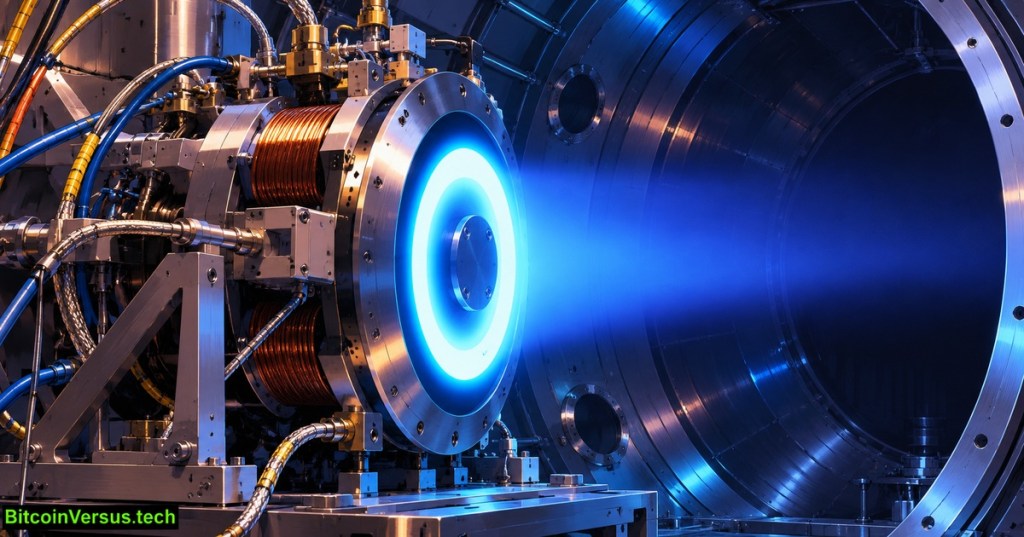
NASA is inviting American companies to compete for $500,000 in prizes by designing and building mid-power electric rocket engines. Announced on November 18, 2026, the Advanced Mid-Power Electric Rocket, or AMPERE, challenge targets 3–7 kilowatt Hall-effect thrusters for future spacecraft. Up to two companies can receive as much as $250,000 each, along with access to NASA technology and test facilities. The launch marks a new procurement approach, not evidence that any competing propulsion prototype has already passed qualification. NASA published the competition announcement on November 18.
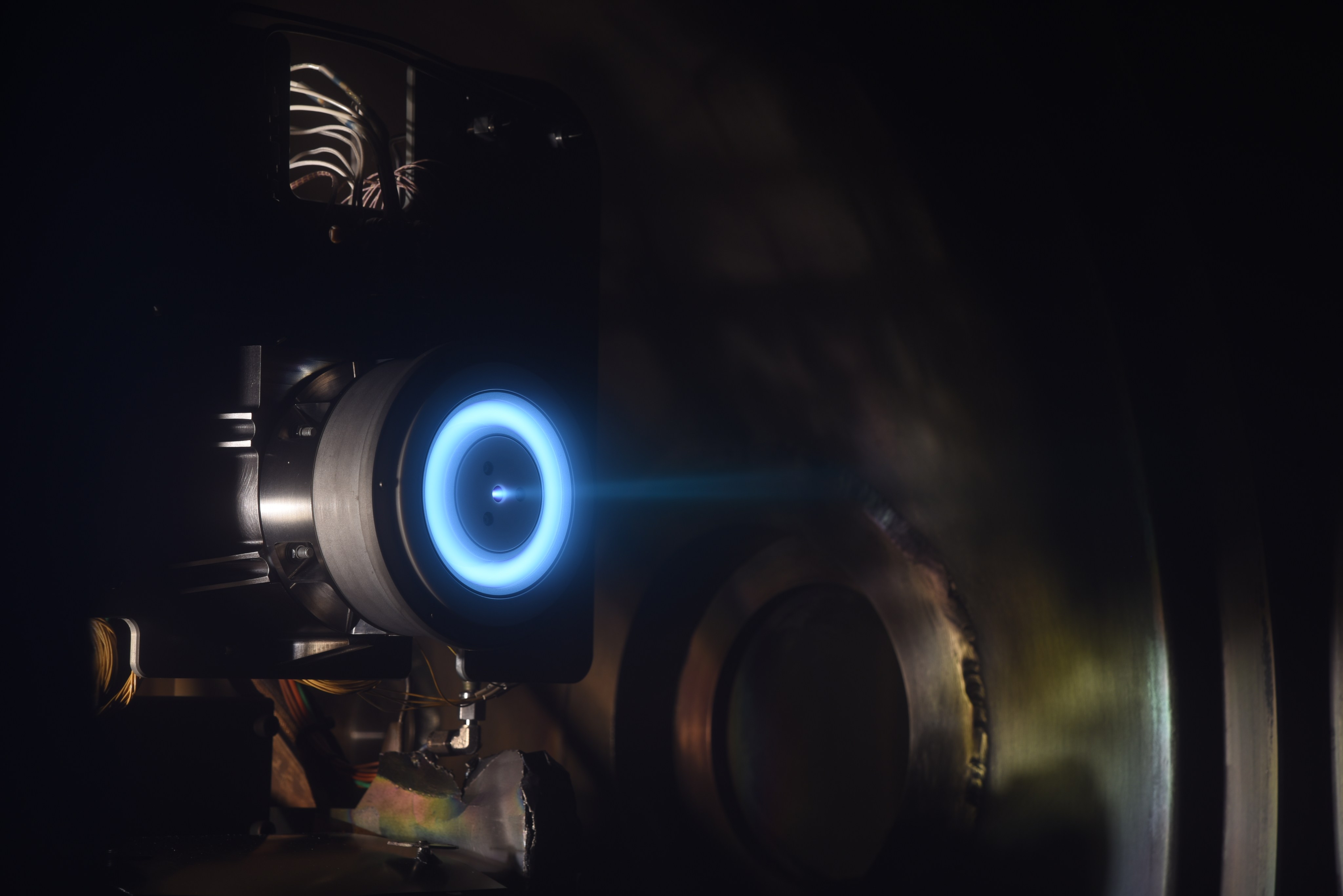
Archival 2022 footage credited to the NASA Marshall Space Flight Center and university collaborators shows a Hall-effect thruster firing. The footage is not an AMPERE entrant or a November 2026 test.
What makes a Hall thruster different from a rocket engine?
A chemical rocket burns fuel and oxidizer to accelerate hot exhaust. A Hall thruster instead uses electrical energy to ionize a neutral gas, often xenon or krypton, then accelerates the charged particles with an electric field. Magnetic fields constrain electron motion, sustaining the discharge and producing thrust. Its blue glow is visible plasma, not combustion. NASA explains the technique in its solar electric propulsion documentation.
The advantage is efficient use of propellant across months or years of firing. The trade-off is low instantaneous thrust and a need for substantial onboard electrical power. Hall thrusters can gradually reshape an orbit or propel an interplanetary probe after launch, but cannot replace a high-thrust launch vehicle leaving Earth’s surface. BitcoinVersus.tech previously explained why conventional rockets use stages and covered iodine-based small satellite propulsion.
Why NASA wants a mid-power engine
Mid-power propulsion occupies a practical middle ground. A 3–7 kW thruster might serve satellites and robotic exploration missions that require more sustained maneuvering than small spacecraft can provide, without the larger power plant demanded by high-power systems. NASA’s November 9 program description identifies satellite, defense and exploration applications, but does not specify a winning thrust level or flight qualification target.
For perspective, NASA has developed a sub-kilowatt H71M thruster for smaller spacecraft and a separate 12 kW Advanced Electric Propulsion System for larger missions. Power class alone cannot rank engine quality: specific impulse, thrust, lifetime, efficiency, propellant consumption and electrical architecture determine mission suitability. A prior NASA dual-engine CubeSat project illustrates how propulsion design changes with spacecraft scale.
How the $500,000 contest works
Companies incorporated in the United States and maintaining their principal place of business there can enter. The three-phase challenge begins with proposals describing technical concepts, manufacturing plans, costs and performance projections. NASA may select two winners to build prototypes, using no-cost licenses for agency-developed krypton Hall-thruster technology. Later testing will take place at NASA Glenn Research Center’s facilities at no cost to those teams. Registration closes January 27, 2027, at 5 p.m. Eastern. Eligibility and program terms appear on the official challenge website.
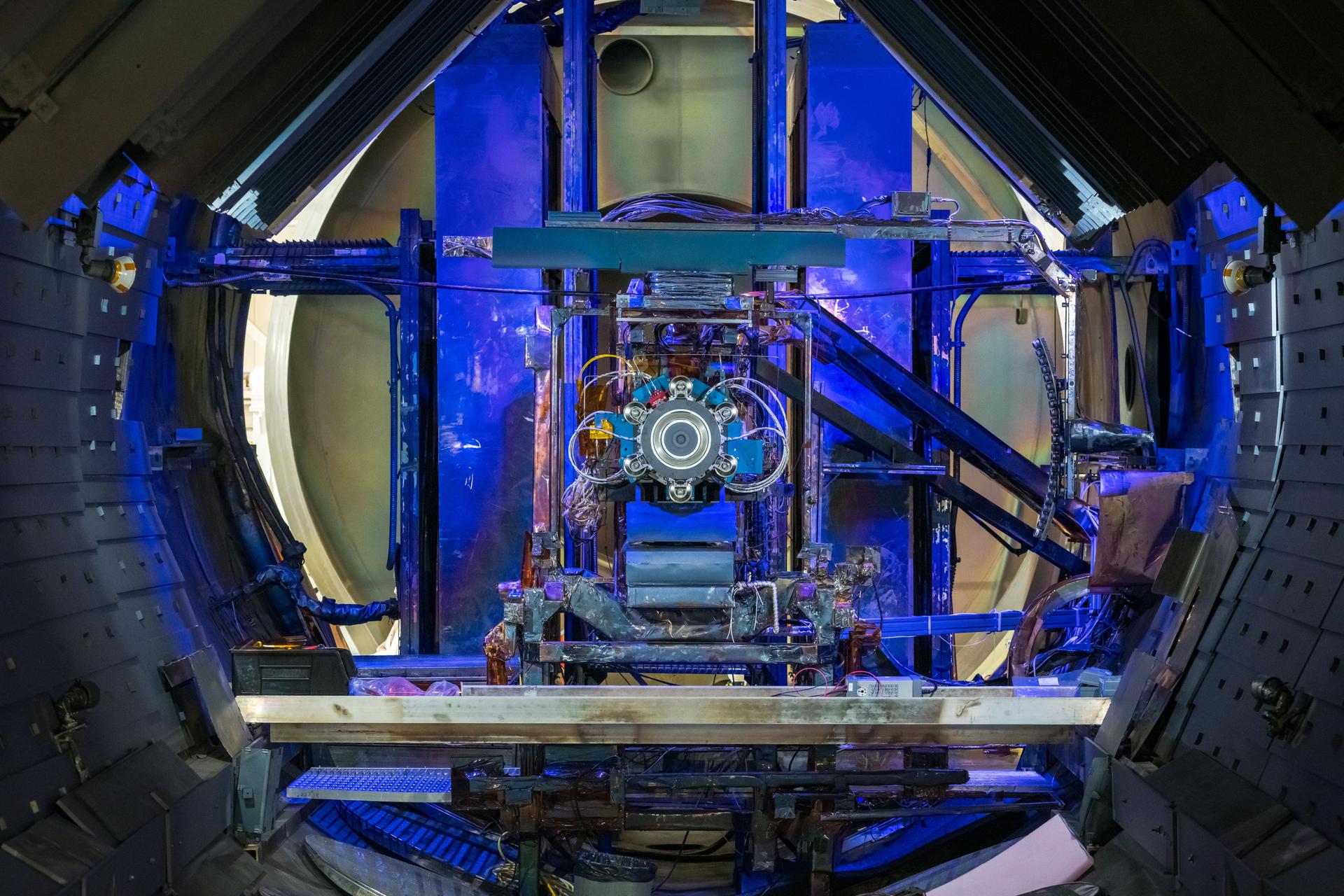
NASA Glenn Graphics and Visualization Laboratory’s archived animation of Hall-thruster testing inside Vacuum Facility 5. An explanatory animation, not footage of an AMPERE competitor.
Prototype results will matter more than prize money
Real propulsion qualification demands repeatable thrust measurements, vacuum testing, thermal performance, erosion assessment, reliable cathodes and power processing electronics. Krypton may broaden propellant sourcing choices, yet switching gas can change discharge characteristics and efficiency. The announced competition does not establish a new propulsion record, a commercial manufacturing agreement or a date for launch.
AMPERE is operated through NASA Glenn and the Jet Propulsion Laboratory as the first Tech Maturation Prize competition. Its significance lies in moving from research prototypes toward tested domestic suppliers. Related missions, including the electric-propulsion journey of BepiColombo, demonstrate why accumulated small thrust can reshape deep-space travel. For AMPERE, the decisive evidence will come from independently measured prototype results, not projected performance.
Primary sources: NASA announcement, November 18, 2026; AMPERE rules overview, November 9, 2026; NASA solar electric propulsion technical background.
Editor’s Note: We volunteer daily to ensure the credibility of the information on this platform is Verifiably True. If you would like to support our work and help further secure the integrity of our research initiatives, please scan the QR code below to donate 5,000 sats.

Disclaimer: BitcoinVersus.tech provides independent technology reporting for educational purposes. Figures and schedules describing proposed spacecraft or engineering projects are not warranties, engineering instructions or financial advice. Refer to primary specifications and official rules before making business or technical decisions.


Leave a Reply