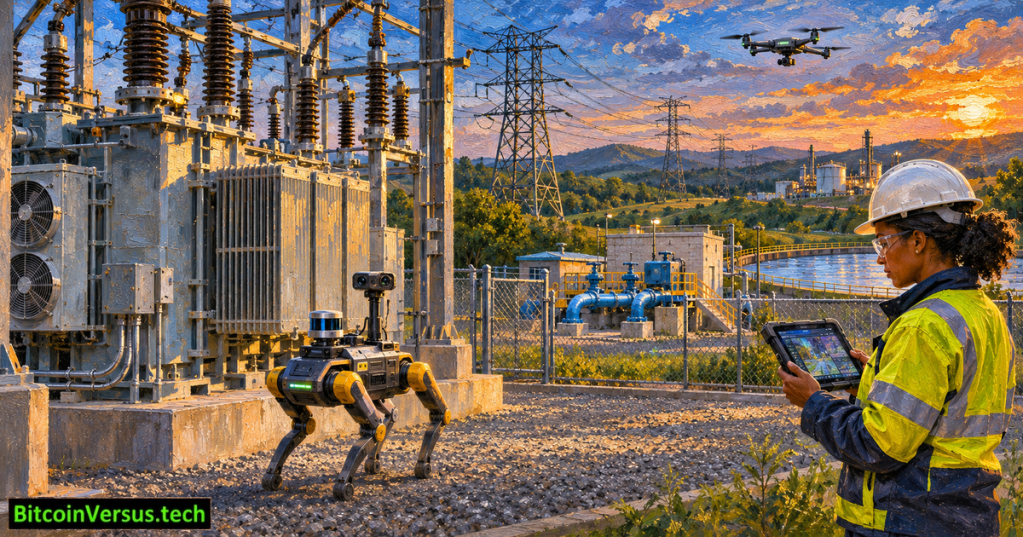
An artificial-intelligence company wants to change how electrical utilities and industrial operators find failing equipment: watch assets continuously, send a robot when something looks wrong, and give technicians the repair history before they arrive. Palo Alto-based BrightAI announced $97 million in financing on November 18, 2026. Smith Point Capital led the investment, joined by GE Vernova, which BrightAI also identifies as a customer. The round finances broader deployment of its Stateful platform across power, water and industrial infrastructure. Smith Point’s announcement confirms the investment; T&D World separately reported the news.
From sensor measurements to a repair ticket
BrightAI’s system starts with edge sensors placed on infrastructure such as electrical poles, pipelines, compressors and storage tanks. Depending on equipment and configuration, measurements can include vibration, acoustics, temperature and images. Local computing detects anomalous patterns without sending every raw measurement to a distant data center. The resulting events flow into the Stateful software platform, which combines them with existing maintenance data to help operators prioritize inspection and response.
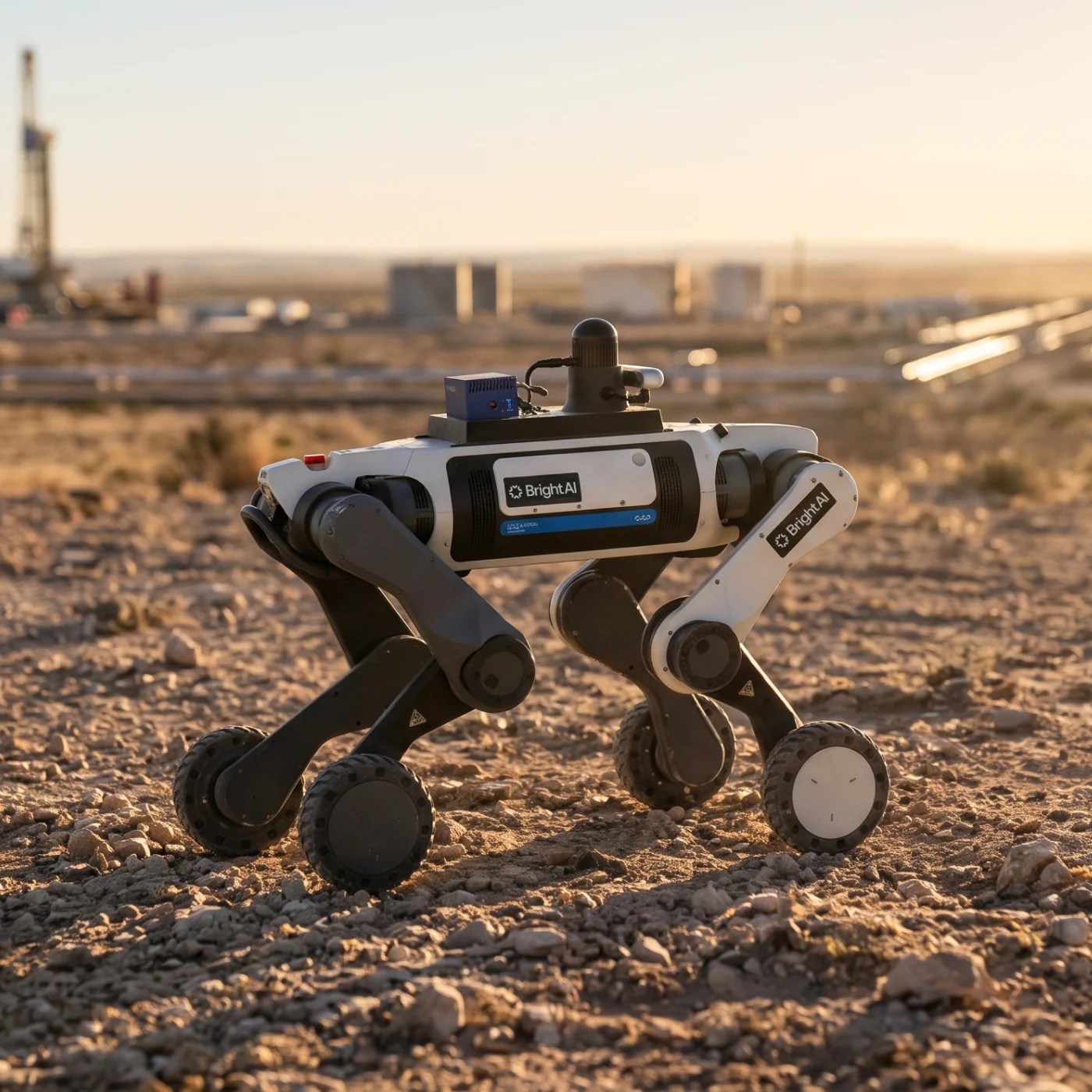
An autonomous drone or ground robot can then examine a suspected defect more closely. BrightAI advertises computer-vision workflows for pole damage, thermal anomalies, industrial gauges and pipe corrosion. Its inspection product documentation describes support for compatible third-party robots, not a requirement to purchase a single proprietary robot. Wearable assistants can then present diagnostic instructions to field workers. Such assistance is intended to supplement qualified technicians, not override electrical safety procedures or change control.
What $97 million does—and does not—prove
BrightAI says Stateful operates across more than 50,000 locations and processes trillions of sensor observations. Those are company-reported deployment and data-volume figures; the announcement supplies no independently audited, cross-customer reduction in outages or maintenance expenditure. Likewise, promotional claims that robotic inspections can be substantially more productive than manual visits are not universal performance benchmarks. GE Vernova’s participation gives the financing an industrial customer connection, but investment does not prove every product configuration has passed independent validation.
Why infrastructure owners are interested
Fixed-calendar inspections can miss a fault between visits while also sending crews to healthy assets. More frequent observation may improve prioritization, particularly where equipment is inaccessible or labor-intensive to inspect. Recent BitcoinVersus.Tech reporting covered drones that recharge on live transmission lines, a utility’s planned grid-sensor expansion and secure connectivity for industrial robots. BrightAI proposes joining several of those functions into one operations workflow.
The harder test is whether alerts are accurate enough to justify field action. False positives waste time; missed faults can threaten reliability. Utilities must also secure sensor communications, validate models against local conditions, keep human oversight and integrate with existing systems. The scale of planned grid upgrades outlined in our infrastructure-demand report and switchgear coverage explains why operators are exploring additional monitoring capacity. New financing marks an expansion effort, not proof of a fully autonomous, fault-free grid.
Sources and media notes
- Smith Point Capital: November 18 financing confirmation
- BrightAI: November 18 financing and product announcement
- BrightAI: Stateful platform and sensor workflow
- BrightAI: compatible autonomous inspection platforms
- T&D World: independent utility-sector coverage
- The Next Web: additional November 18 reporting
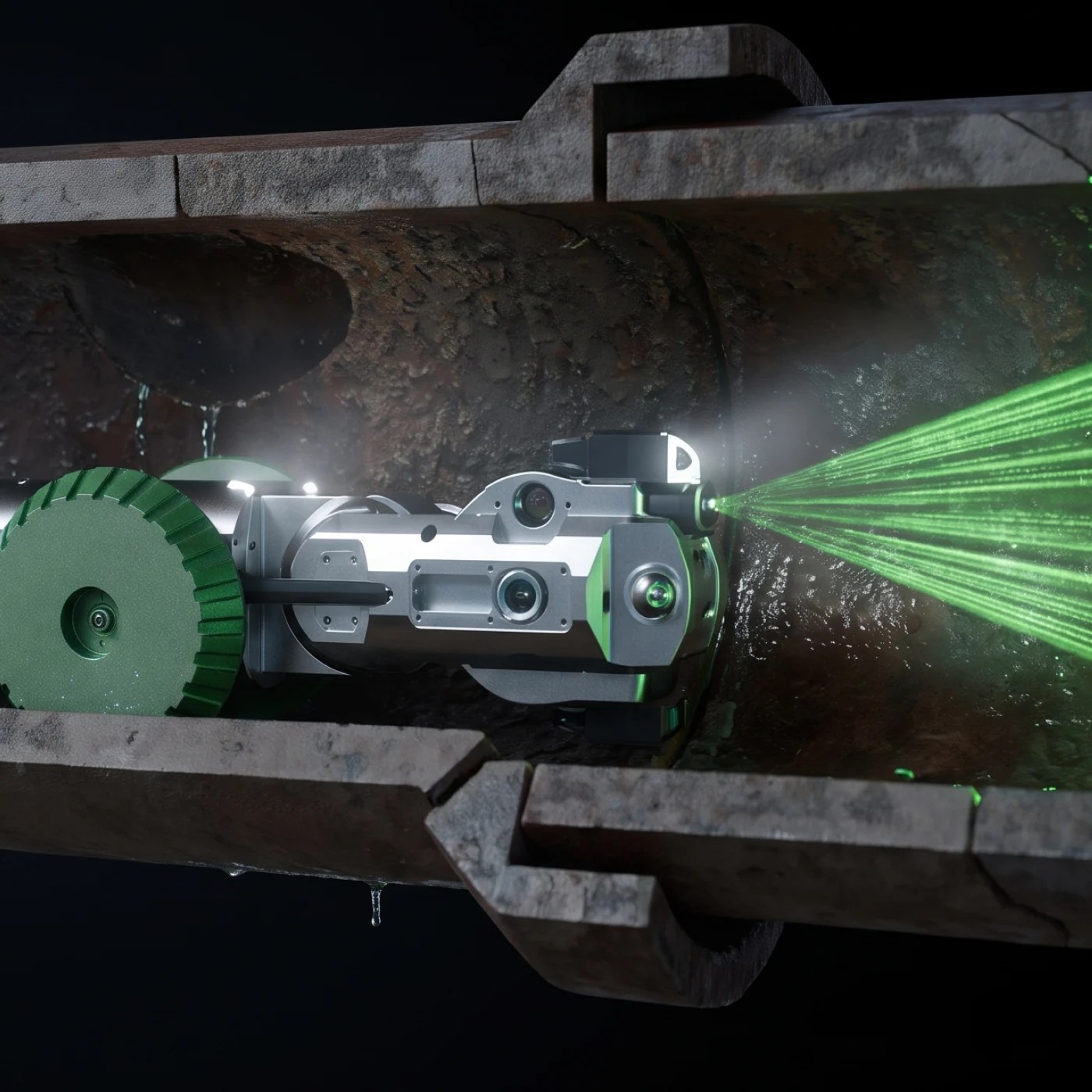
Visual disclosure: The oil-painted featured cover is a conceptual editorial scene, not an actual BrightAI customer installation. The original approved BitcoinVersus.tech watermark is copied once to the bottom-left. Both in-story robot images are from BrightAI. The previously embedded videos were removed because playback was blocked; no video players remain in the article.
We volunteer daily to ensure the credibility of the information on this platform is Verifiably True. If you would like to support to help further secure the integrity of our research initiative, please scan the QR code below.


Leave a Reply