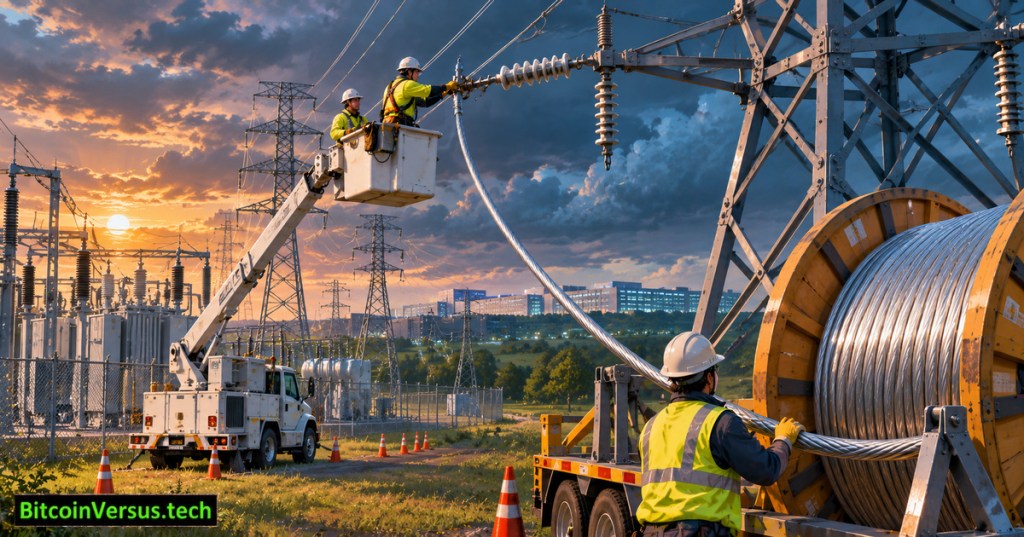
Google and Ohio Power Company want to accelerate data center electricity service by upgrading existing overhead wires rather than waiting for entirely new transmission corridors. On November 19, 2026, the companies announced a proposal to replace conductors across 15.5 miles of aging power lines in Columbus, Ohio. Google would finance the $10.8 million incremental cost of advanced wire on a utility rebuild already planned. It is a pending regulatory proposal, not a completed power installation. See Google’s original announcement and the utility’s statement.
How changing the wire can free electrical capacity
The technique, called reconductoring, uses existing rights-of-way and many of the existing towers while replacing legacy overhead conductors. The equipment selected is CTC Global’s ACCC conductor, which combines a light, high-strength carbon-and-glass composite core with aluminum. A smaller reinforcing core permits more conductive aluminum than some steel-core designs, while reduced thermal expansion limits wire sag at high temperatures. Those properties can lower resistance and raise allowable current. Engineering limits still depend on the line, clearances, weather, fittings and protection settings.
CTC Global’s October 2024 webinar features an American Electric Power transmission engineer discussing advanced conductor projects. Earlier technical footage, not an image or video of Columbus construction. View on YouTube.
The proposed upgrades could deliver 24 megawatts of Google’s already-contracted capacity roughly two years ahead of the prior schedule. A different projection concerns more than 700 MW of potential added corridor capacity after a separate planned 765-kilovolt regional transmission expansion is complete. Neither figure is electricity already delivered. The two milestones cannot be added together as though the new wires create 724 MW of generating capacity. Regional demand is outlined in our Ohio data-center project review.
A different way to pay for grid improvements
Google would cover the additional $10.8 million equipment cost, rather than the entire underlying utility rebuild. Ohio Power expects greater line capacity, reduced electrical losses and slightly lower transmission costs for other customers, though savings remain projections until regulators evaluate the arrangement and the upgraded system operates. Independent reporting from Data Center Dynamics also documents the scope and funding.
The company additionally committed $1 million for Ohio lineworker and manufacturing apprenticeships and a national curriculum for installing advanced conductors. Trained crews must manage cable tension, appropriate fittings, electrical clearances and safe outage procedures. Other utilities are addressing grid constraints with transmission sensors and high-voltage direct-current links, rather than only building new generation.
Energy Innovation’s May 2024 independent educational video explains reconductoring. The video predates the Google–Ohio Power announcement and is included only as engineering background. View the original video.
Why the project cannot bypass every bottleneck
CTC Global advertises up to approximately twice the capacity of conventional conductors in suitable applications. Yet transformers, substations, relay protection, voltage stability and upstream transmission can still limit what customers receive. The comparison also differs from superconducting transmission cable proposals, which have distinct cooling and infrastructure requirements. The companies have not published post-construction measurements for the Columbus project.
Both the Public Utilities Commission of Ohio and the Ohio Power Siting Board must approve the plan. If permitted, the companies target late 2028 for service. With data center electricity demand increasing, the proposal illustrates how a utility and a large customer might expand delivery capacity faster without treating forecast megawatts as commissioned power.
Original sources and multimedia
- Google: joint proposal, November 19, 2026
- Ohio Power: utility news release, November 20
- CTC Global: project technology and planned capacity
- CTC Global: ACCC technical specifications
- Data Center Dynamics: independent coverage
- CTC Global/AEP webinar, 2024
- Energy Innovation explainer, 2024
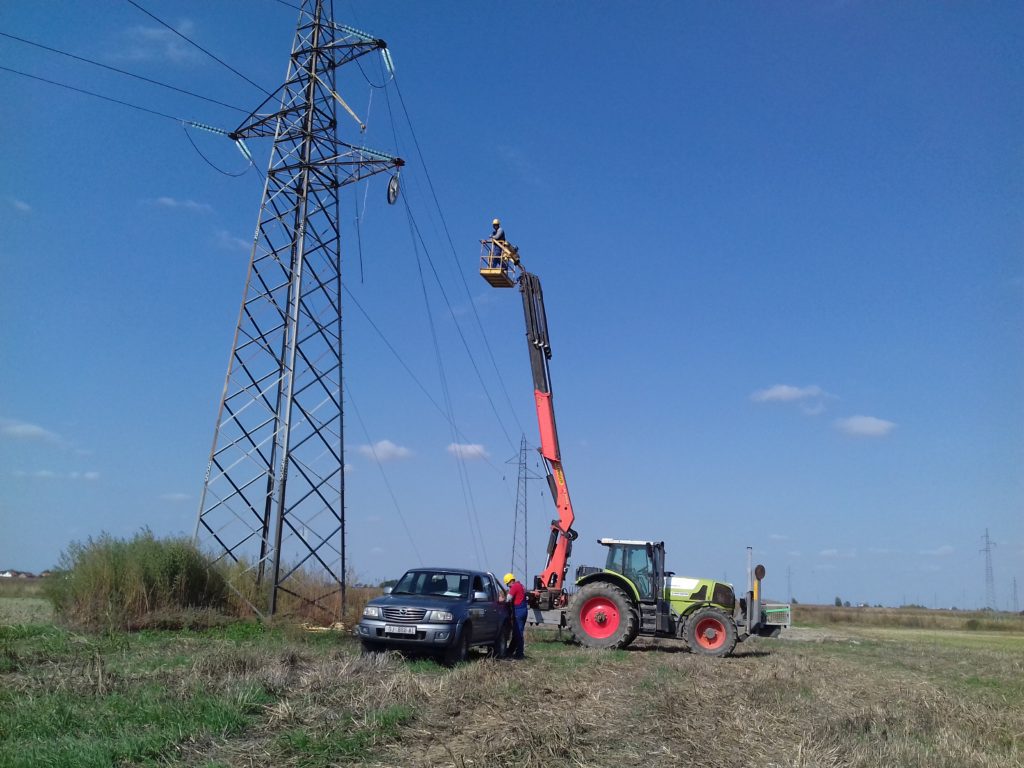
Visual note: The featured anime scene is original editorial artwork, not a photograph of the proposed Columbus construction. The exact previously approved BitcoinVersus.tech watermark is copied once at bottom-left. The body photograph is authentic but depicts earlier Croatian installation work. YouTube clips are older technical references, not evidence that the Ohio project has begun.
We volunteer daily to ensure the credibility of the information on this platform is Verifiably True. If you would like to support to help further secure the integrity of our research initiative, please scan the QR code below.



Leave a Reply