What if a Bitcoin mine could be delivered to an oilfield on a trailer, operated by a local business and eventually purchased by a larger mining company? On November 10, 2026, Entrex and BUILD Manufacturing announced a franchise program built around that approach. Their proposed 20-foot tandem-axle mobile data centers accommodate up to 96 Bitcoin mining processors each. The companies identified six target states: Texas, Oklahoma, Louisiana, Ohio, Pennsylvania and Alabama.
Rather than constructing every site itself, Entrex intends to consider buying facilities after local operators establish operating histories. BUILD would supply equipment and support. The announcement follows a Florida franchise exemption application filing; it does not establish that a nationwide fleet has been commissioned.
Moving computing to the fuel
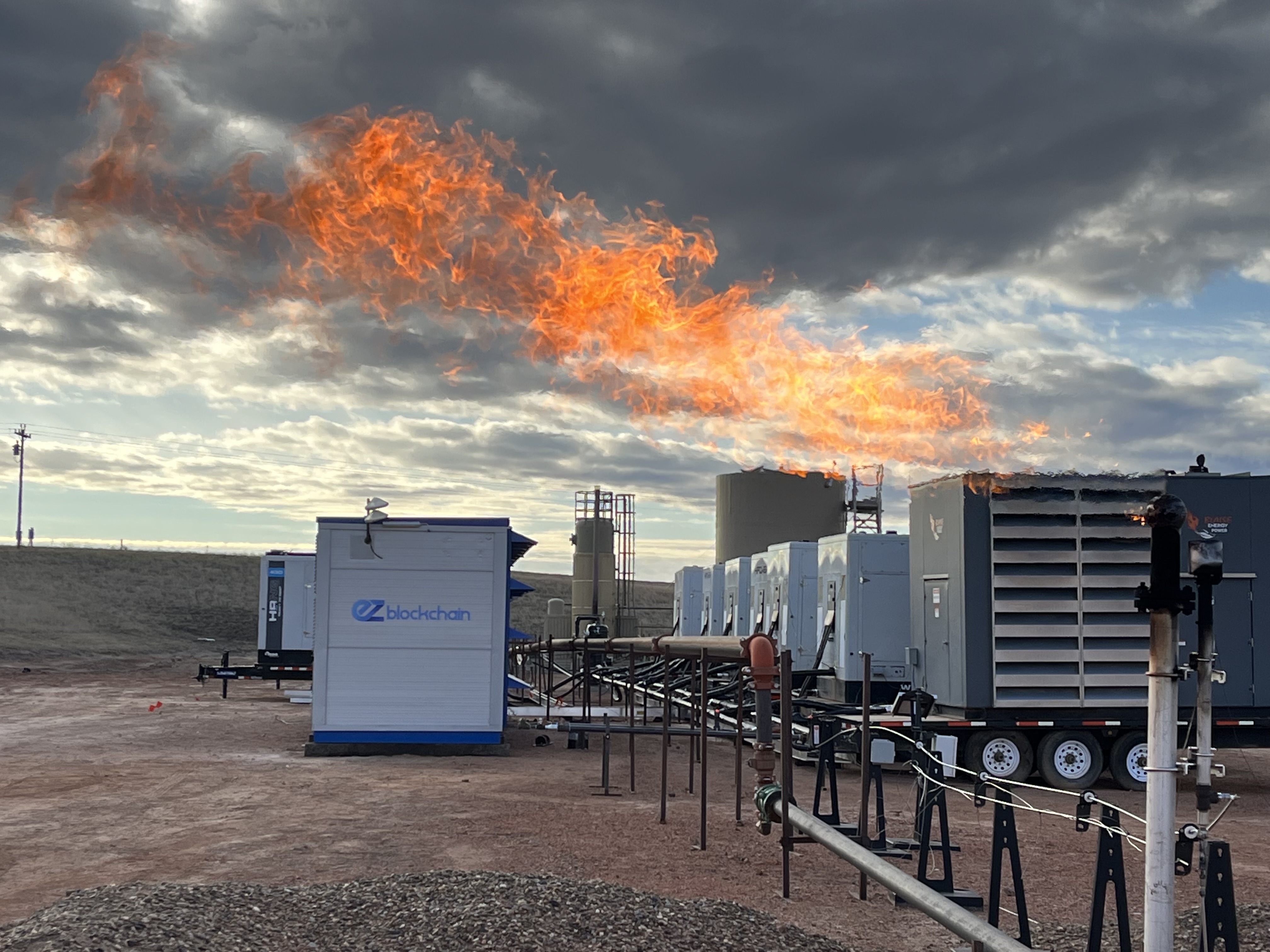
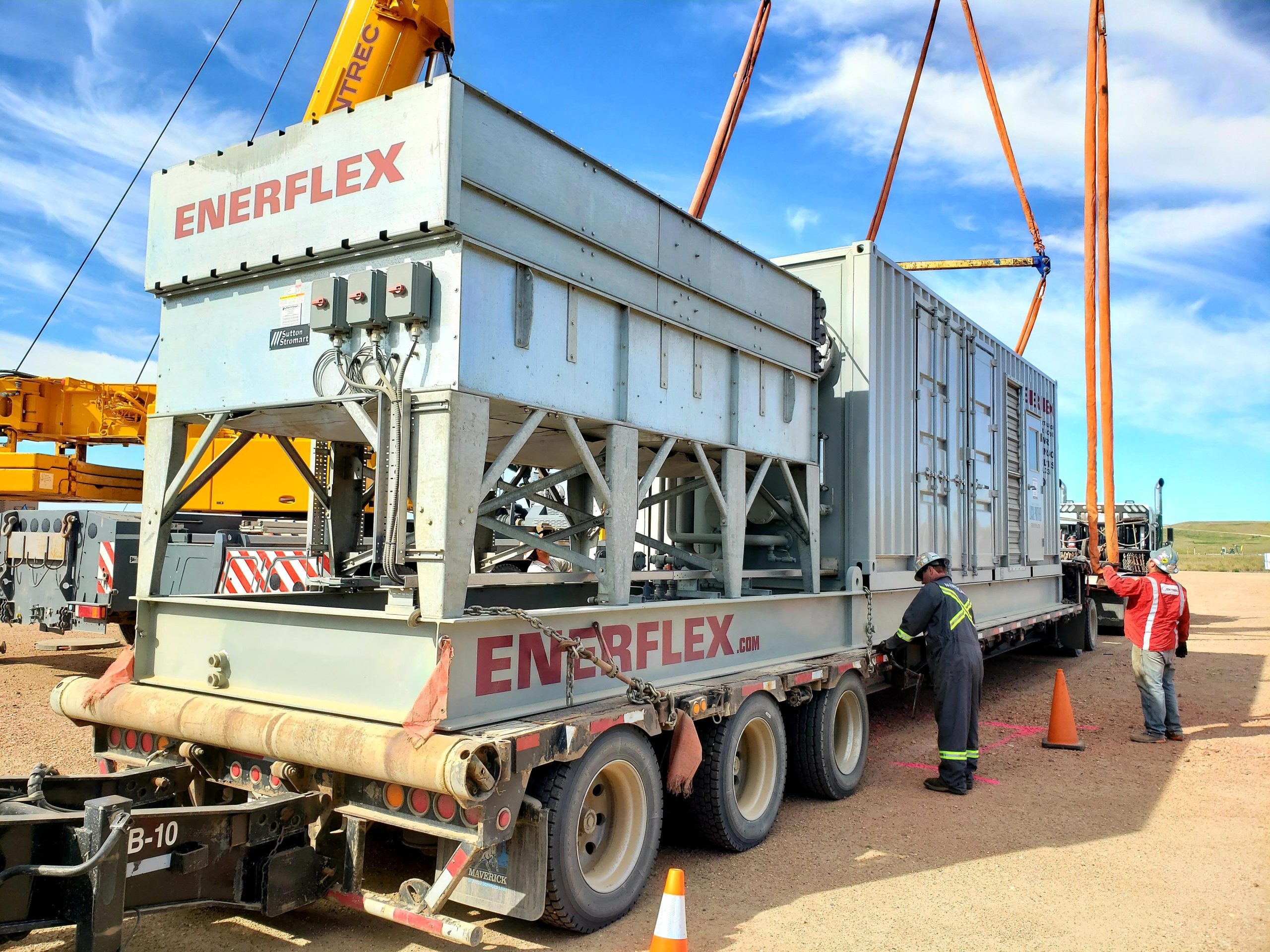
Where gas cannot economically reach a pipeline, a suitable engine-generator can convert fuel into electricity near the source. A mobile mining facility receives electrical power through protected distribution equipment and uses ventilation or liquid cooling to remove heat from the ASICs. Gas quality, pressure, flow and generator maintenance constrain the available power. A trailer must also accommodate electrical clearances, service access, communication equipment and safe transport weight.
Bitcoin mining is well suited to remote locations because independent hashing devices exchange relatively little network traffic with a mining pool compared with distributed AI training clusters. Our stranded-energy explainer examines the economics of bringing a computing load to energy rather than transporting fuel.
How much compute could fit inside one trailer?
Assume, for illustration, 96 ASICs rated at 200 TH/s each and 17.5 J/TH. Each miner would draw approximately 3,500 watts, giving a combined 336 kW of ASIC load and 19.2 PH/s of rated hashrate. At full load, the miners would consume 8,064 kWh daily. Cooling, networking, distribution losses and generator auxiliaries would add to the total facility demand. The announced 96-unit limit is a physical capacity claim; Entrex did not identify a deployed ASIC model or electrical rating for the franchise trailer.
At 35% net electrical generation efficiency, supplying 336 kW continuously would require roughly 78,620 cubic feet of gas per day if fuel energy content is 1,000 BTU per cubic foot. Actual consumption depends on engine efficiency, gas composition, auxiliary loads and uptime. Compare the distinct Sterling Digital West Texas operation for a larger commercial gas-to-mining example.
An earlier deployment offers context
Entrex has previously worked with mobile mining developers. CherAmi Digital reported starting a 160 kW trailer-mounted mine in northeastern Oklahoma in December 2024, using coalbed methane. That earlier project is distinct from the franchise program and does not verify the performance of its 96-processor design.
The new acquisition model potentially lets smaller operators establish revenue before selling an asset to Entrex. Nevertheless, mining revenue changes with network difficulty and hashprice, while generator overhauls and declining well output can reduce returns. Avoided emissions also depend on whether the gas would otherwise be vented, flared or left underground, along with methane leakage and combustion performance.
The broader opportunity is distributed computing infrastructure, but GPU hosting requires additional reliability and connectivity. The Giga Energy AI campus illustrates a different scale of development, while GEIOS’s proposed geothermal compute pilot explores another way to reuse oilfield infrastructure. For Entrex, the strongest next evidence would be a published count of commissioned franchise units, independently measured power consumption and sustained operating income.
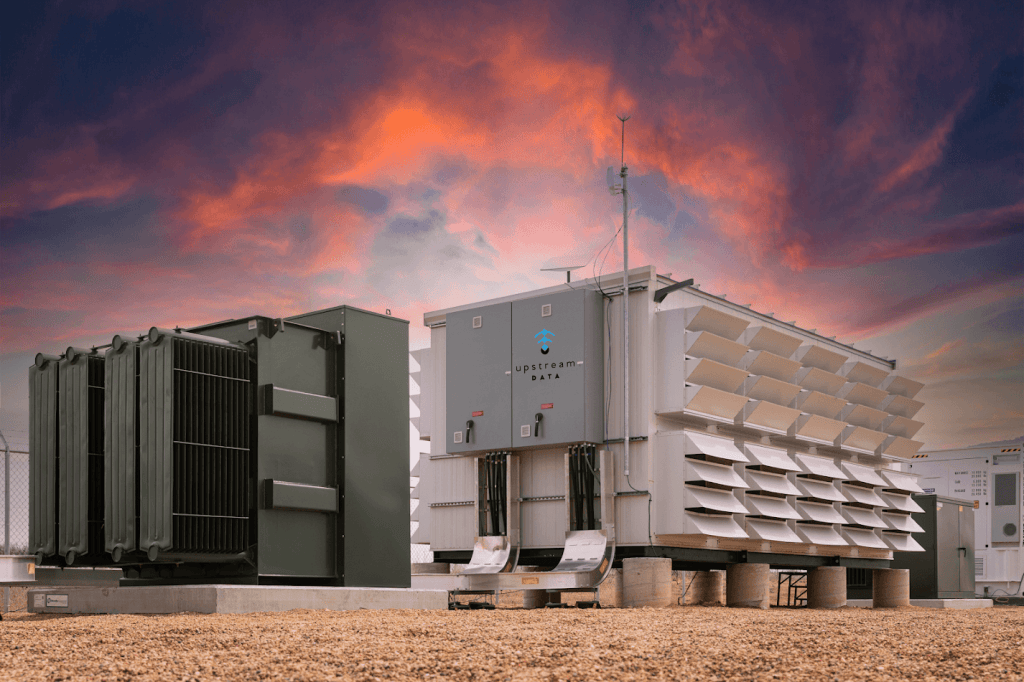
Featured photograph: Upstream Data modular infrastructure, included as an industry comparison rather than a photograph of the announced BUILD equipment.
We volunteer daily to ensure the credibility of the information on this platform is Verifiably True. If you would like to support to help further secure the integrity of our research initiative, please scan the QR code below.



Leave a Reply