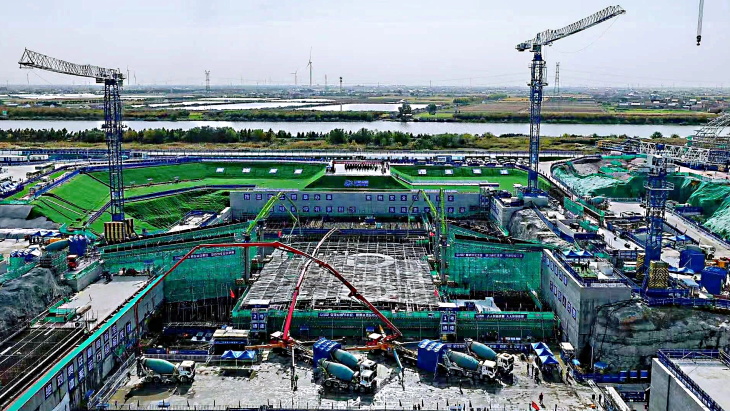
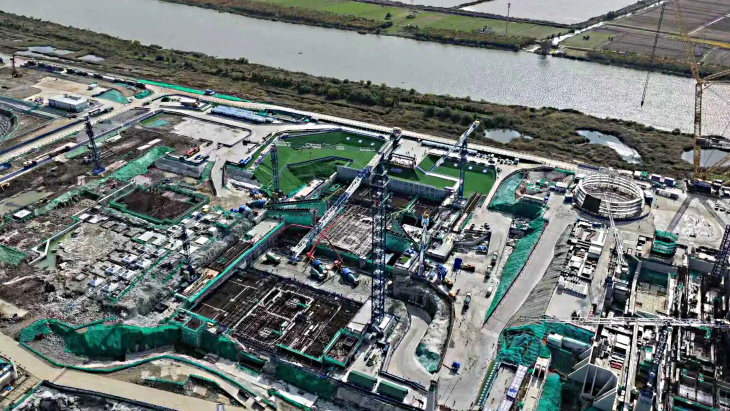
China began nuclear-island construction for the third reactor at the Jiangsu Xuwei Nuclear Heating and Power Plant on November 6, 2026. The China Atomic Energy Authority confirmed the first concrete pour for the Chilong One high-temperature gas-cooled reactor. Located in Lianyungang, Jiangsu province, the facility is designed to supply industrial steam alongside electricity. The milestone follows the type of nuclear construction progression documented in our Zhangzhou Unit 4 construction coverage, but Xuwei combines different reactor technologies in a single industrial energy system.
Three reactors with complementary thermal functions
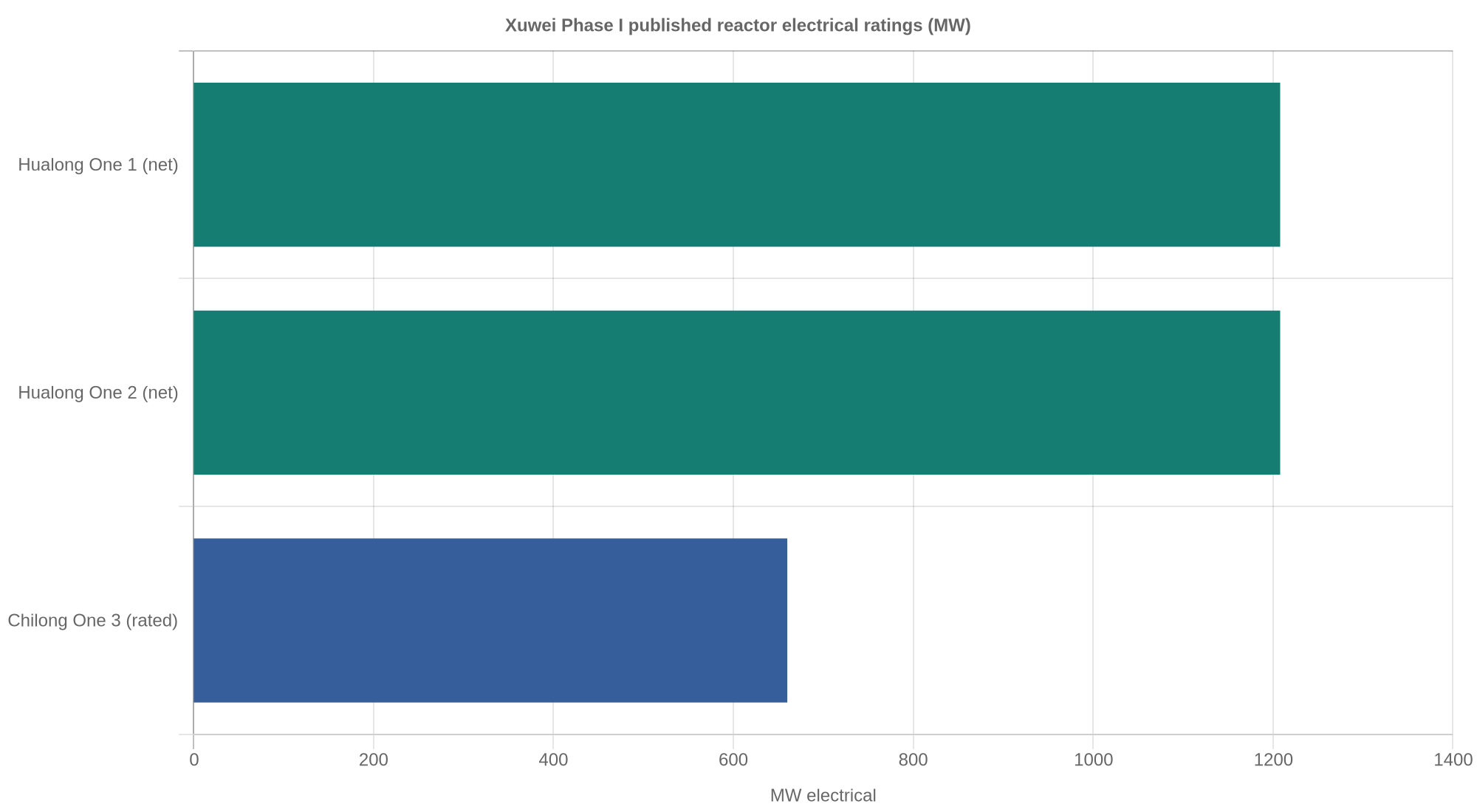
The first phase includes two Hualong One pressurized water reactors, each reported at 1,208 MW net electrical capacity, and a Chilong One high-temperature gas-cooled reactor rated at 660 MW electrical. World Nuclear News reported the configuration on November 6. The published ratings sum arithmetically to 3,076 MW, although the first two figures are net ratings and the third is described as rated capacity. The sum is not a verified net export limit for a plant simultaneously delivering steam. The developer specifies a 60-year design life for the third unit.
Industrial steam and the heat exchange chain
A pressurized water reactor transfers fission heat through a water coolant circuit to produce steam in a separate circuit. High-temperature gas-cooled reactors use helium coolant and heat-resistant fuel systems to deliver heat at higher temperatures. Xuwei’s steam exchange architecture uses steam from the water-cooled reactors to heat demineralized water, then uses the high-temperature reactor’s steam for further heating. The combined system is designed to supply steam at several industrial conditions. Process heat is a useful product in its own right, as demonstrated by the proposed Long Mott nuclear installation at Dow’s Texas industrial site.
CNNC projects annual industrial steam supply of 32.5 million tonnes and maximum annual electrical generation exceeding 11.5 TWh when the initial phase is complete. Both figures are design expectations, not demonstrated simultaneous output. Heat delivered to industrial customers changes the amount available for electricity generation. Achieving the intended results requires reliable steam generators, heat exchangers and integrated plant controls, components also relevant to X-energy’s steam generator supply chain.
Construction approval and industrial implications
China’s National Nuclear Safety Administration issued the construction license on November 2. A November 12 regulatory update reported oversight of the concrete milestone. Construction approval does not authorize commercial operation; commissioning, testing and subsequent regulatory approvals remain ahead.
Large energy campuses such as Pennsylvania’s Homer City gas-powered AI development illustrate rising demand for reliable industrial energy. Xuwei is instead designed primarily for petrochemical steam and electricity, with no announced Bitcoin or AI customer. The engineering milestone is a concrete foundation for a commercial-scale thermal integration project, not proof of delivered industrial heat or electrical output.
Featured construction photograph: CNNC, via World Nuclear News, November 6, 2026.
We volunteer daily to ensure the credibility of the information on this platform is Verifiably True. If you would like to support to help further secure the integrity of our research initiative, please scan the QR code below.

For mobile scanning, open the article on another display and scan the QR code with a Bitcoin wallet. The voluntary donation amount is 5,000 sats. Verify the receiving address 3C9o19EH5HSiwEPyCTmEKzxhNCbo2X6TTb before sending.
BitcoinVersus.tech is not a financial advisor. This media platform reports on financial subjects purely for informational purposes.


Leave a Reply