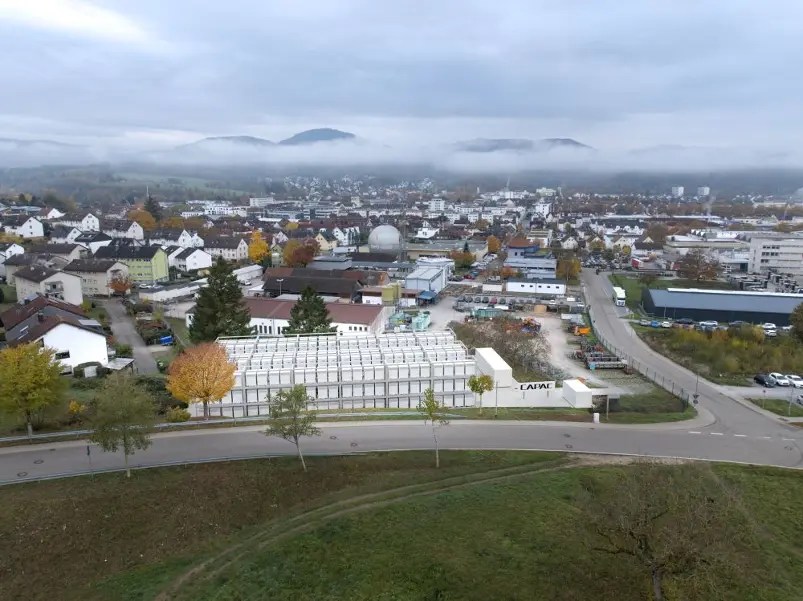
A former liquefied petroleum gas facility in Gaggenau, Germany, is slated for conversion into a grid-scale battery installation. Stadtwerke Gaggenau announced on November 10, 2026 that the municipal utility and CAPAC AG plan to deploy a 7.5 MW, 30 MWh zinc-bromide storage system supplied by Eos Energy Enterprises. The project broadens the range of stationary storage chemistries beyond the alternatives explored in our coverage of Dairyland’s vanadium flow battery plans.
A four-hour battery at a former gas site
The municipality’s November 13 announcement confirms council approval and a planned investment of approximately €15.2 million by the utility and JP Holding. CAPAC will coordinate engineering, procurement, construction and commissioning. Construction is scheduled for 2027, with operation targeted for 2028. The announced budget equates to about €507 per kWh of rated storage capacity. That is a project-level capital ratio, not a battery cell price or levelized storage cost.
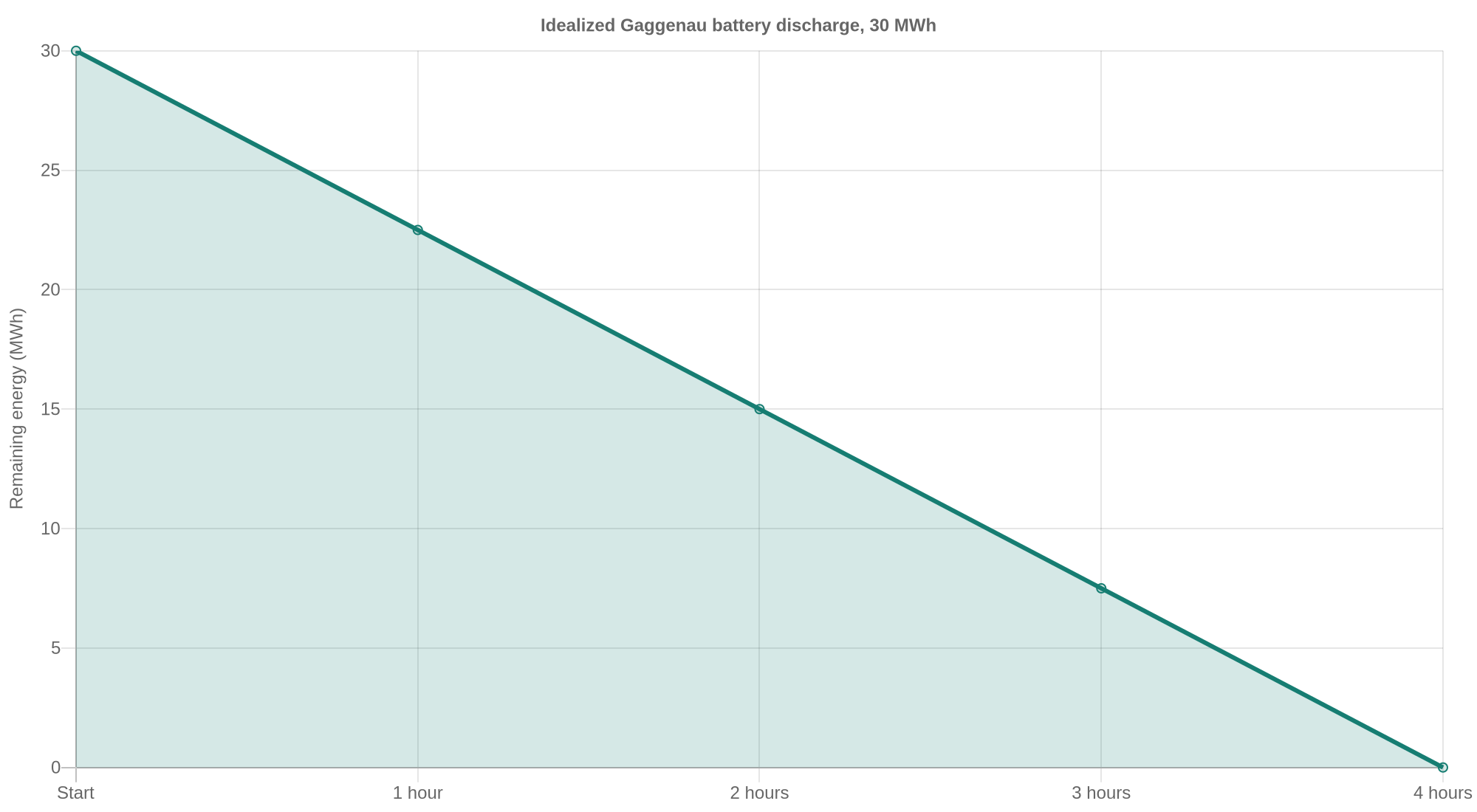
At a constant 7.5 MW, dividing 30 MWh by the power rating gives four hours of idealized discharge. The chart assumes the entire stated capacity is usable and excludes auxiliary demand, conversion losses and operational reserve margins. Field acceptance tests will establish actual deliverable energy.
Zinc deposition instead of lithium-ion intercalation
According to Eos’s technology documentation, the Z3 cell employs an aqueous electrolyte and bipolar electrodes in a sealed polymer enclosure. Charging deposits metallic zinc on an electrode, storing energy in chemical form. Discharge reverses the reaction, producing electrical current through an external circuit. Unlike a conventional vanadium flow battery, the Z3 electrolyte resides within individual sealed cells rather than circulating through external storage tanks.
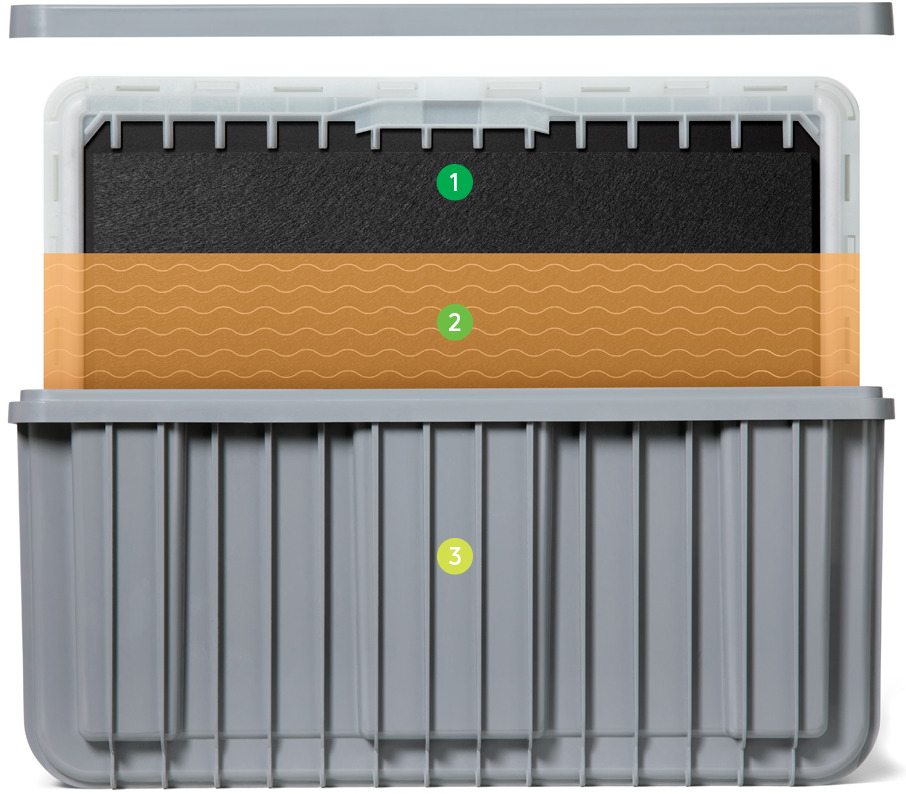
The planned Indensity architecture places modular units in a steel support framework, making use of vertical space as well as ground area. A water-based electrolyte can reduce flammability concerns, but engineers must still address electrical faults, structural loading, drainage and chemical containment. As with China’s liquid-air storage demonstration, the choice of storage medium changes the balance-of-plant requirements.
Grid flexibility and industrial demand
The utility expects to earn revenue from electricity trading and grid services. Storage can charge during periods of surplus supply and discharge when demand or electricity prices rise. A comparable objective underlies Virginia’s substation battery project, although the German installation has a different chemistry and commercial structure.
For data centers and industrial customers, grid batteries can provide flexibility during peak periods but cannot replace a continuous generation source indefinitely. The distinction is visible in Utah’s Faraday battery and data center connection. Gaggenau has not announced a dedicated computing customer. Its significance lies in testing whether a vertically arranged zinc-based system can deliver reliable, economically competitive grid services on an existing industrial site.
Featured rendering: CAPAC AG, published by Stadtwerke Gaggenau. Proposed layout, not completed construction.
We volunteer daily to ensure the credibility of the information on this platform is Verifiably True. If you would like to support to help further secure the integrity of our research initiative, please scan the QR code below.

For mobile scanning, open the article on another display and scan the QR code with a Bitcoin wallet. The voluntary donation amount is 5,000 sats. Verify the receiving address 3C9o19EH5HSiwEPyCTmEKzxhNCbo2X6TTb before sending.
BitcoinVersus.tech is not a financial advisor. This media platform reports on financial subjects purely for informational purposes.


Leave a Reply