Alaska’s Department of Natural Resources issued a final decision on November 10, 2026, to offer STAK Energy a 50-year negotiated land lease for a proposed natural gas-powered computing campus. The 715.4-acre parcel lies approximately 26 miles south of Deadhorse. The decision advances Project Aaka beyond the preliminary lease stage documented in our October Alaska data center infrastructure survey. It does not constitute comprehensive construction approval or establish an operational data center.
A fuel agreement preceding the land decision
Five days earlier, STAK announced a 15-year gas purchase agreement with ExxonMobil Alaska Production. The developer says the fuel could support nearly 3 GW of generating capacity and targets initial power in 2030, followed by phased expansion through 2032. The company’s plan involves independent generation on the North Slope rather than relying on Alaska’s Railbelt electricity network. Commercial fuel supply is a distinct development milestone, as illustrated by Cipher Digital’s pipeline development for computing infrastructure.
From gigawatts to annual electricity
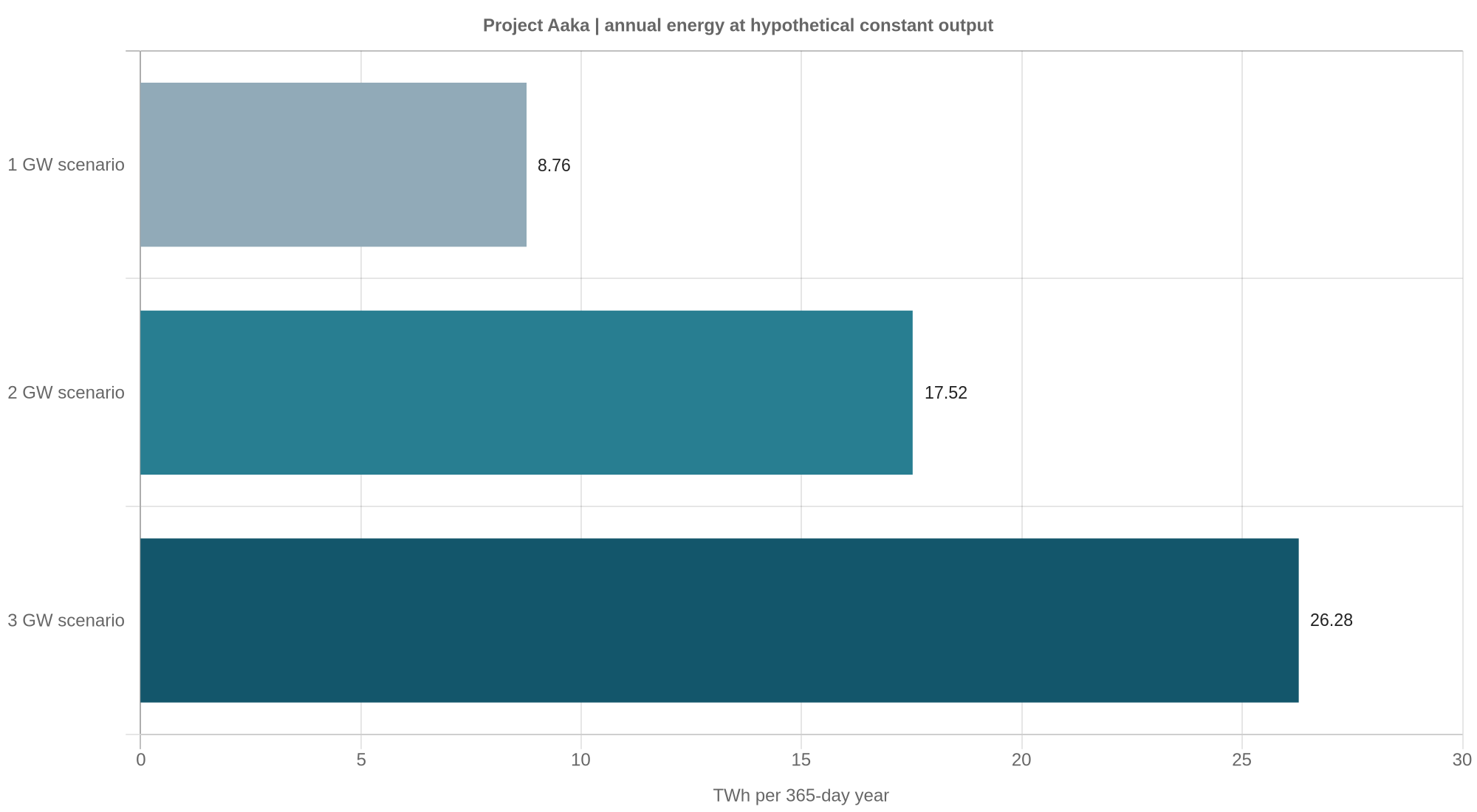
The proposed generating system spans a 1–3 GW design range. At constant output throughout a 365-day year, 1 GW corresponds to 8.76 TWh of electricity, 2 GW to 17.52 TWh, and 3 GW to 26.28 TWh. The middle value is an analytical scenario, not an announced construction phase. The upper value represents a theoretical full-year ceiling rather than an annual production forecast. Maintenance, dispatch, auxiliary loads and electrical losses reduce energy available for computing.
Engineering an independent Arctic power system
Gas turbines convert combustion energy into shaft rotation and electrical output. An isolated generating campus must continuously balance supply with demand, maintain voltage and frequency, and provide reserves for equipment outages. Generator nameplate ratings cannot be equated with usable server power. Similar engineering constraints apply to Pennsylvania’s Homer City gas generation development, although its location and grid arrangements differ.
Arctic ambient air may reduce dependence on evaporative cooling. The proposed modular computing buildings would use air cooling, according to Alaska Public Media’s November 11 report. Cold conditions also impose challenges involving equipment start-up, frost protection, foundations over permafrost and year-round maintenance. Cooling savings remain projections until operating measurements become available.
Permitting and environmental constraints
The initial site-development estimate is $500 million, not the total cost of a completed multi-gigawatt campus. Separate wetlands and power-plant air permits are required. The Northern Alaska Environmental Center raises concerns about gas consumption, ecological impacts and the additional infrastructure required for fuel delivery. The land decision and gas agreement therefore do not resolve every environmental, financing or engineering question. Smaller off-grid computing proposals, including Saskatchewan’s proposed 7 MW gas-powered Bitcoin mine, share the need for dependable fuel and generation systems. Project Aaka is a much larger proposed development with no demonstrated commercial computing output yet.
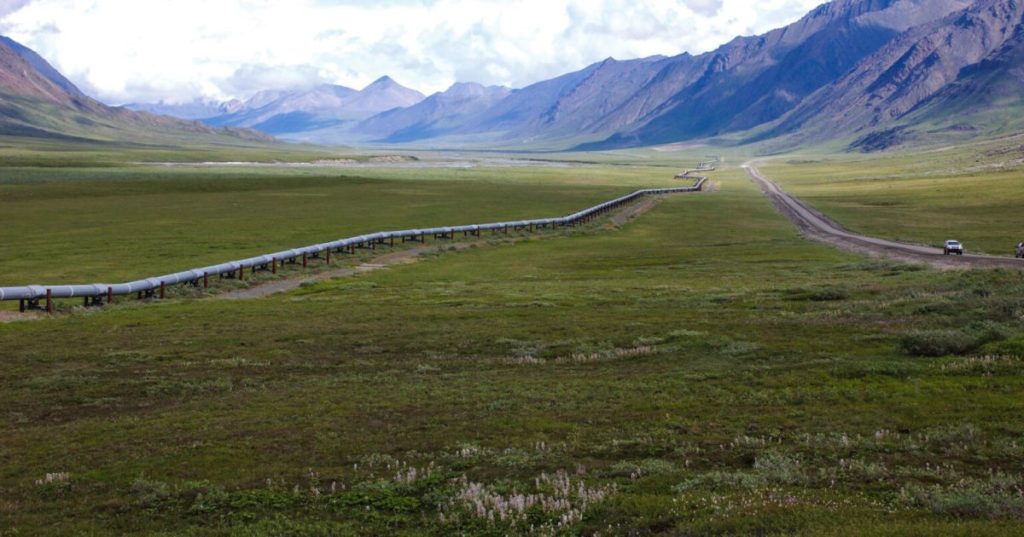
Featured photograph: U.S. Geological Survey, June 2007, via Alaska Public Media. The Trans-Alaska oil pipeline and Dalton Highway in the Brooks Range provide regional context; the photograph does not depict the proposed campus.
We volunteer daily to ensure the credibility of the information on this platform is Verifiably True. If you would like to support to help further secure the integrity of our research initiative, please scan the QR code below.

For mobile scanning, open the article on another display and scan the QR code with a Bitcoin wallet. The voluntary donation amount is 5,000 sats. Verify the receiving address 3C9o19EH5HSiwEPyCTmEKzxhNCbo2X6TTb before sending.
BitcoinVersus.tech is not a financial advisor. This media platform reports on financial subjects purely for informational purposes.


Leave a Reply