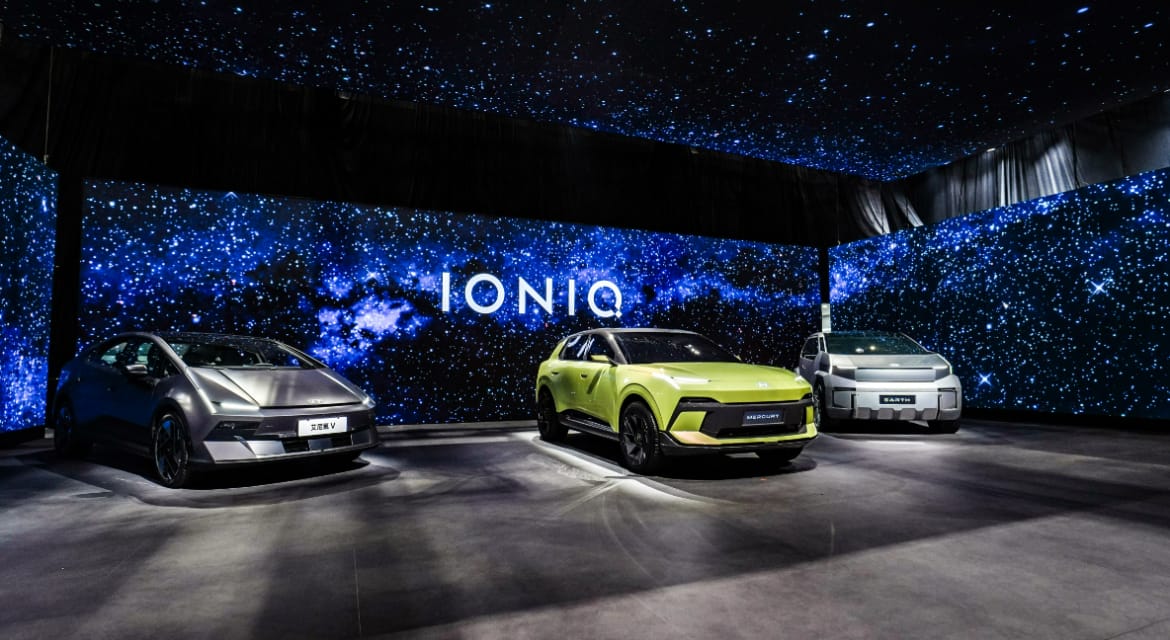
Hyundai unveiled its Mercury electric SUV concept at the Guangzhou International Automobile Exhibition on November 27, 2026. The manufacturer announcement describes a China-developed compact vehicle with a planned battery-swapping variant and locally developed driving assistance. The production version, IONIQ M, is scheduled for 2027. The concept targets a different market from the compact Suzuki Ignis EV, but both illustrate efforts to reduce the size and complexity of electric transportation for urban use.
Battery exchange changes the vehicle interface
Hyundai plans to cooperate with Contemporary Amperex Technology Co., Limited (CATL) on a battery-swap variant. A removable traction battery requires more than a convenient opening beneath the vehicle. Mechanical retention must withstand loads during ordinary driving and impacts. Electrical and thermal connections must mate reliably, and the vehicle must identify the installed pack and its operating limits. Interlocks must prevent unsafe energization during exchange. A station also requires battery inventory, charging equipment and a procedure for checking pack condition. The announcement does not specify the completed pack design or a measured exchange time.
Battery exchange separates a driver’s stop from the time required to replenish the removed pack. It does not eliminate the electrical energy or equipment needed to charge that battery. The underlying cell chemistry and manufacturing requirements remain important, as illustrated by our Ford battery manufacturing coverage. The eventual economics will depend on utilization, station density, compatible vehicles and battery ownership arrangements.
Driver assistance is not driverless operation
Hyundai identifies Zhuoyu’s L2++ advanced driver-assistance system and ByteDance’s Doubao model for the smart cockpit. L2++ is industry marketing terminology rather than an additional SAE driving-automation level. Level 2 systems can combine steering and speed assistance, but require continuous driver supervision. A conversational cockpit also does not establish that a vehicle can safely operate without a human driver. Our autonomous freight analysis discusses why validated operating domains and fallback behavior are necessary for genuinely driverless transportation.
A roadmap rather than a production specification
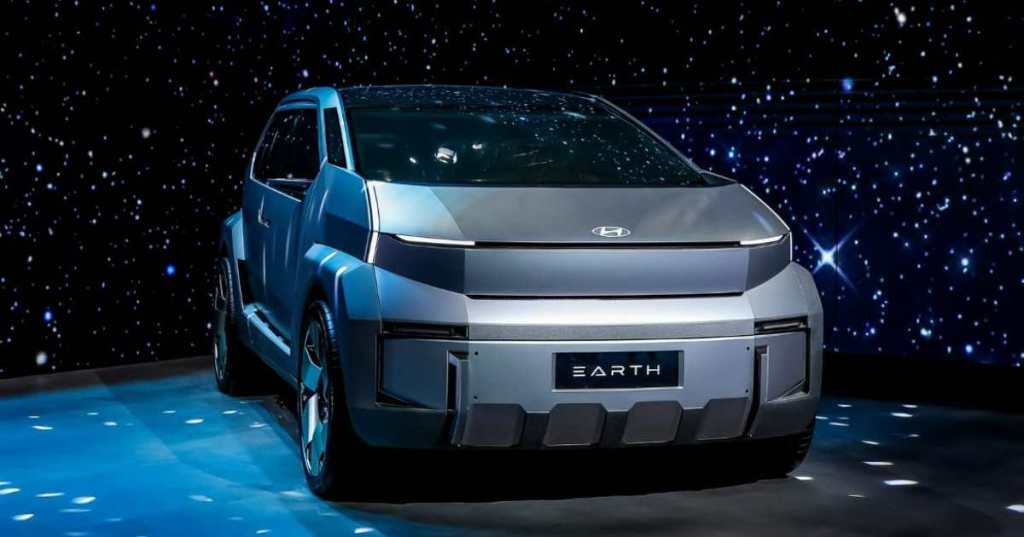
Hyundai’s China roadmap includes Mercury and an extended-range IONIQ V in 2027, followed by a production vehicle derived from the EARTH concept in 2028. Yonhap’s independent reporting identifies the first half of 2027 as the planned IONIQ M launch window. No final battery capacity, official driving range or retail price was provided in the cited concept announcement. As with bidirectional charging in Audi’s A2 e-tron, actual value depends on compatible infrastructure and validated vehicle specifications. The engineering significance of Mercury is the proposed integration of a locally designed electric vehicle with battery exchange and supervised driving assistance, not proof of a fully autonomous or commercially available system.
We volunteer daily to ensure the credibility of the information on this platform is Verifiably True. If you would like to support to help further secure the integrity of our research initiative, please scan the QR code below.



Leave a Reply