Data Center Cooling Techniques: Immersion, Water, and Air Explained

Data centers, the backbone of our digital world, employ various cooling methods to maintain optimal operating temperatures for their equipment.

One such method is immersion cooling, where IT components are submerged in thermally conductive, dielectric liquids.

technique allows for efficient heat dissipation, as the liquid directly contacts heat-generating components, reducing the need for traditional air cooling systems.

According to Wikipedia, immersion cooling has gained traction in high-performance computing environments due to its effectiveness in managing heat. ​

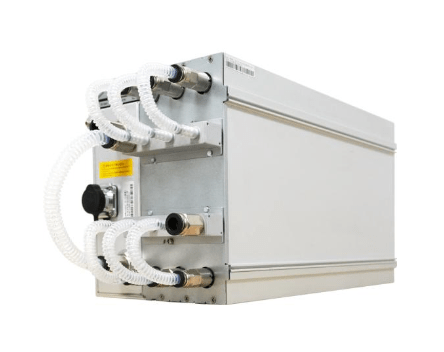
Another prevalent cooling strategy is water cooling, which utilizes chilled water circulated through pipes to absorb and dissipate heat from servers and other hardware.

This method is often more efficient than air cooling, as water has a higher thermal conductivity, enabling it to carry away heat more effectively. The Australian reports that innovative approaches, such as using recycled wastewater for cooling, are being explored to enhance sustainability in data center operations. ​

Air cooling remains the most traditional method, involving the use of fans and HVAC systems to circulate cool air around equipment, thereby dissipating heat.

While widely used, air cooling can be less efficient, especially as server densities increase, leading to higher energy consumption. Efforts to improve air cooling efficiency include optimizing airflow management and incorporating advanced cooling technologies. ​

As data centers continue to expand to meet growing digital demands, selecting the appropriate cooling method becomes crucial.

Factors such as energy efficiency, environmental impact, and operational costs play significant roles in determining the most suitable cooling solution for a given facility.

BitcoinVersus.Tech Editor’s Note:

We volunteer daily to ensure the credibility of the information on this platform is Verifiably True. If you would like to support to help further secure the integrity of our research initiatives, please donate here

BitcoinVersus.tech is not a financial advisor. This media platform reports on financial subjects purely for informational purposes.

13 responses to “Data Center Cooling Techniques: Immersion, Water, and Air Explained”

  1. […] Digital Holdings (MARA) has significantly expanded its operations by acquiring two operational data centers in Hannibal and Hopedale, Ohio, totaling 222 megawatts (MW) of interconnect-approved […]

    Like

  2. […] regime could slow U.S. hashrate growth, pushing miners to move overseas or diversify into AI and data center […]

    Like

  3. […] thermal design connects directly with a broader shift in data-center cooling: heat increasingly is being treated as something that can be transported and reused rather than […]

    Like

  4. […] BitcoinVersus.tech has recently examined the same trend from several directions. Hydro-cooled ASICs are pushing hundreds of terahashes from individual machines, while Canaan is installing mining heat-recovery infrastructure in Manitoba. At the site level, air, hydro and immersion cooling impose very different plant requirements. […]

    Like

  5. […] computing. For readers following the physical layer, BitcoinVersus.Tech’s guide to air, water, and immersion cooling explains why higher rack density increasingly changes the rest of the facility […]

    Like

  6. […] Cooling design varies widely—some systems consume far more water than others—and our data-center cooling guide explains the trade-offs among air, water-assisted and liquid […]

    Like

  7. […] applicable, and facility engineering. BitcoinVersus.Tech has covered the broader tradeoffs among air, water, and immersion cooling and why cooling overhead must be included in any real facility […]

    Like

  8. […] story. The real fleet question is which manufacturer gives operators the strongest lineup across air, hydro, and immersion cooling when hashrate, joules per terahash, and deployable density all […]

    Like

  9. […] is why air, water, and immersion cooling cannot be compared only by looking at the ASIC sticker. A hydro miner with a spectacular nameplate […]

    Like

  10. […] moving heat from sensitive equipment to somewhere that can safely accept it. BitcoinVersus.Tech’s data-center cooling overview follows that same heat-transfer problem from the computing […]

    Like

  11. […] BitcoinVersus covered that transition in our 2025 comparison of air, water, and immersion data-center cooling. […]

    Like

  12. […] guide to air, water and immersion data-center cooling explains the basic tradeoff: water-assisted systems can move heat efficiently, but they can consume […]

    Like

  13. […] Submer’s factory-built AI data centers, Flex’s modular deployment claims, and the cooling choices used in Bitcoin mining. Its 2024 data-center efficiency guide explains why site power and cooling overhead […]

    Like

Leave a Reply