Maryland’s proposed data center boom is concentrated in three very different projects: a multi-developer industrial redevelopment near Frederick, a power-plant conversion along the Potomac River, and a former shopping-mall site east of Washington, D.C. The latest installment of BitcoinVersus.Tech’s State Power Rankings identifies the three largest distinct Maryland campuses with publicly attributable power figures as of October 28, 2026: Quantum Frederick (2,400 MW), TeraWulf Chesapeake (1,000 MW), and Brightseat Tech Park (820 MW). None of those full-buildout figures should be read as 2026 metered consumption.
Method: Rank by the latest stated full-development individual-campus electrical power or load target, rather than individual building load, generation equipment or investment cost. Quantum’s 2.4 GW is a master-developer park-wide power plan encompassing parcels leased or developed by others; Chesapeake’s 1 GW is a proposed gross data-center load; and Brightseat’s 820 MW is a developer-reported total campus power capability. These different metrics are labeled rather than falsely harmonized into critical IT capacity. Approval, utility rights, operating status and development risk must be evaluated separately.
3. Brightseat Tech Park, Landover — Up to 820 MW Proposed
Brightseat Tech Park is Lerner Enterprises’ plan to convert the former Landover Mall property in Prince George’s County into a five-building data center campus. A February 2024 developer presentation delivered to the City of Glenarden cited up to 820 MW of overall site capacity. The official Prince George’s County Planning Department case record verifies 86.62 acres and 4,132,500 square feet in the preliminary subdivision plan approved March 14, 2024. The power number is not a confirmed Pepco utility interconnection or measured 2026 server load.
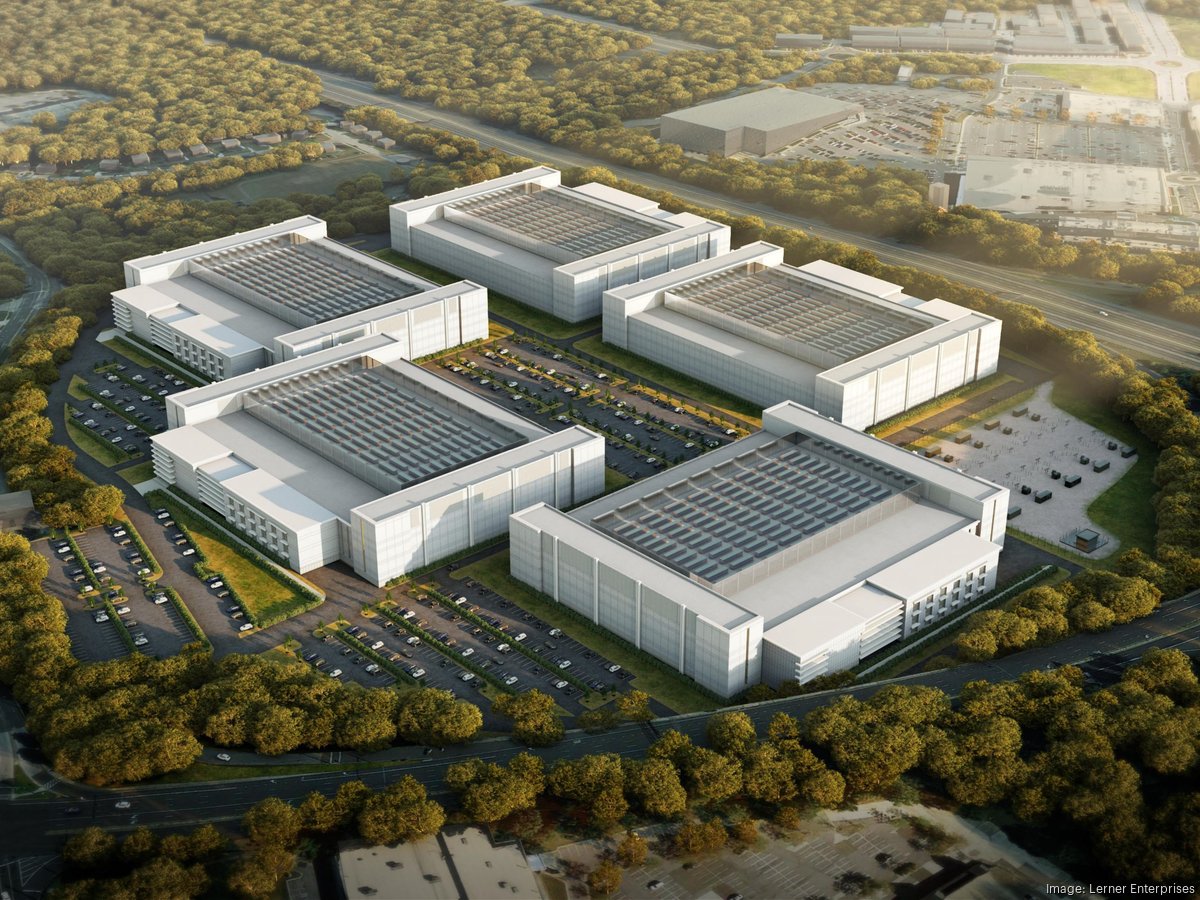
The roughly $5 billion investment concept drew objections concerning noise, utility bills, water and environmental justice in nearby neighborhoods. A January 2026 Washington Post investigation documents those concerns alongside the promise of property-tax revenue. Meanwhile, Prince George’s County officials imposed a data center permitting pause, later extended by the county council. The public project record identifies uncertainty over whether the July 2026 moratorium affects the already approved preliminary plan. Therefore this project remains proposed/on hold, not canceled and not an operating 820 MW installation.
WUSA9 covered the original local government decision to halt further progress on the former mall development in September 2025.
Video: WUSA9, “Prince George’s County halts Landover Mall data center plans amid environmental concerns”, September 16, 2025. The report explains the original local moratorium, not a new October 2026 approval.
2. TeraWulf Chesapeake Data & Energy, Newburg — Up to 1,000 MW Proposed Data Center Load
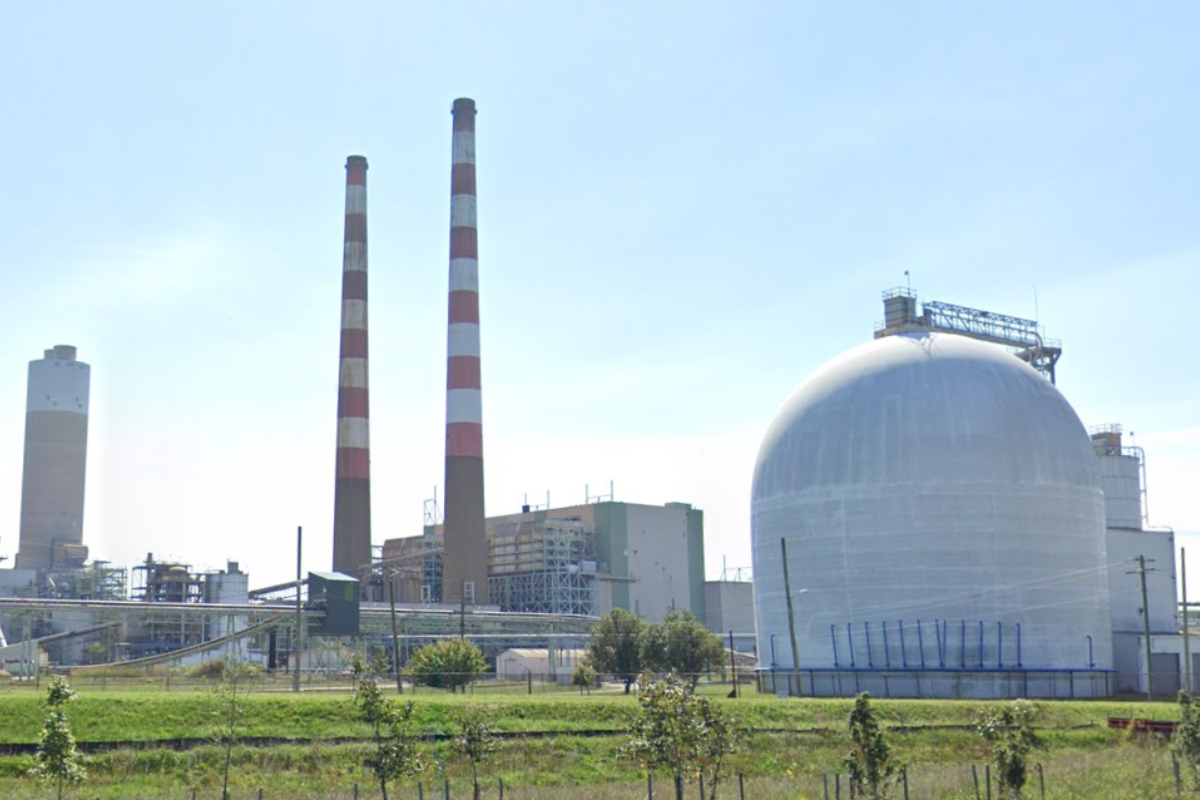
At the former Morgantown Generating Station along the Potomac River in Charles County, TeraWulf proposes to reuse grid-connected industrial land for a mixed generation, battery and high-performance-computing campus. Its August 5, 2026 second-quarter update says the site currently has about 210 MW of operational generation capacity and could eventually support a campus scaling to 1 GW, with data center operations then contemplated around 2030. The company reported receiving Federal Energy Regulatory Commission authorization on July 29 for the pending acquisition, while other closing conditions and regulatory approvals remained outstanding.
Crucially, the company’s August investor presentation filed with the SEC separately labels 1,000 MW of planned on-site generation, 1,000 MW of planned data center load and 500 MW of battery discharge power. Its two proposed phases each include 500 MW of generation, 500 MW of data center load and 250 MW of batteries. Those figures should never be added to claim 2.5 GW of computing demand. A 1 GW data center load is also not the same as a company-reported 800 MW of intended critical IT load; some facility power supports cooling, transformers, UPS losses and other systems.
Charles County’s official redevelopment overview describes the roughly 355-acre site as a former coal facility requiring environmental remediation and modernization before the computing component can proceed. The phased project must address grid coordination with PJM Interconnection, site cleanup, fuel supply, local land-use approvals and community concerns before it can be presented as a commissioned data center. This redevelopment is distinct from TeraWulf’s earlier Kentucky Muskie project, which has a separate utility-service arrangement.
1. Quantum Frederick / Frederick Digital Campus, Adamstown — 2,400 MW Under Development
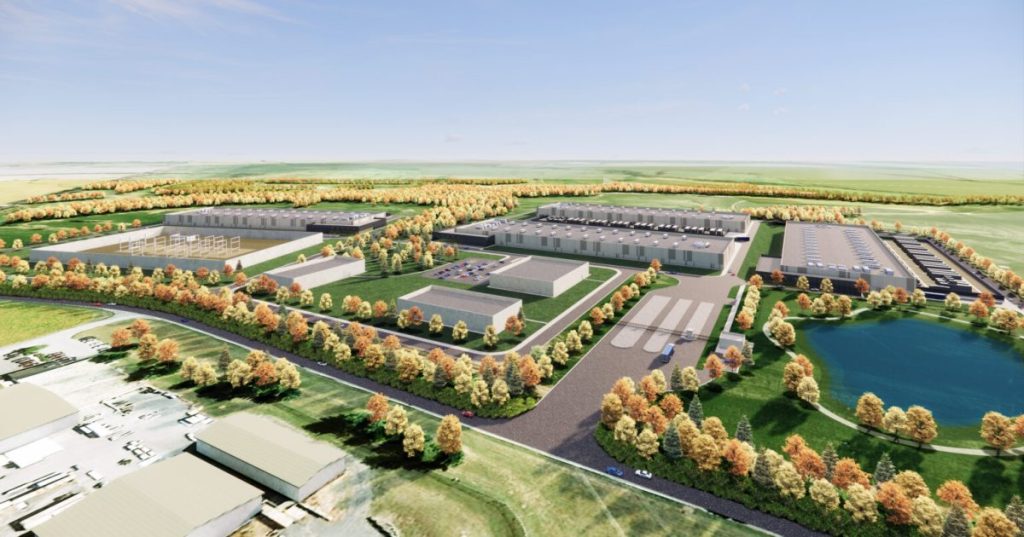
Catellus Development Corporation reports that approximately 2.4 GW of power is under development at the 2,100-acre Frederick Digital Campus on the former Eastalco aluminum-smelting site near Adamstown. Its official campus portfolio page also cites 17.4 million square feet of entitled data centers and a planned 40-mile fiber link toward Loudoun County, Virginia. The figures describe a multi-tenant/multi-builder industrial park’s long-term planned capacity, not 2.4 GW of servers already switched on.
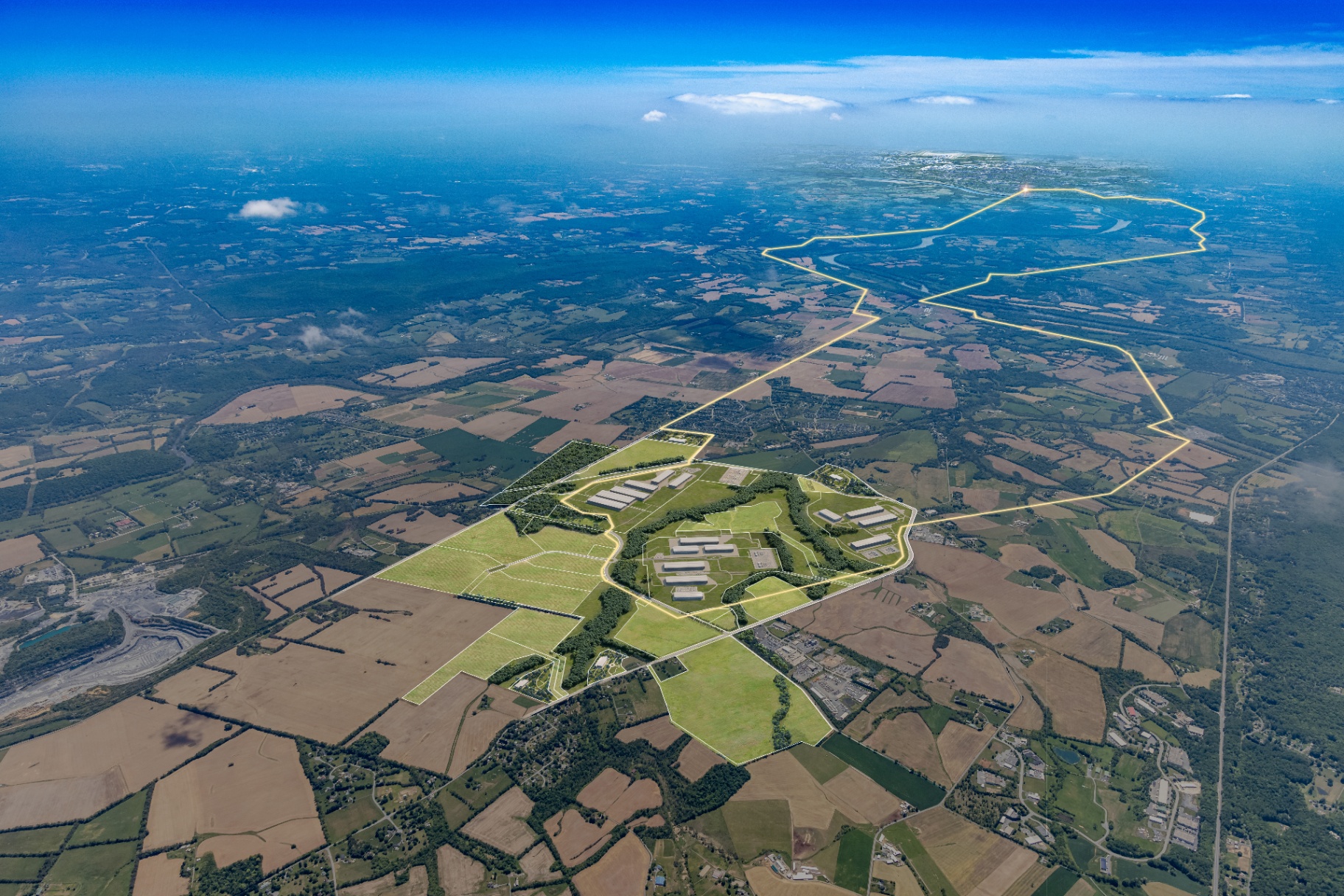
The park includes separately developed parcels for Rowan Digital Infrastructure (Bauxite I, II and III), Aligned Data Centers and others. Rowan’s official portfolio describes more than 600 MW of Bauxite parcel capacity, while Aligned’s four-building expansion was described at approximately 264 MW. These portions are inside Quantum’s master development and are not added again as independent ranked projects. Existing construction and partly operational facilities also should not be mistaken for delivery of the entire 2.4 GW master-site target.
Frederick County introduced a targeted overlay and additional reporting rules for new data centers. On September 14, 2026, County Executive Jessica Fitzwater rejected Catellus’s proposed development-rights and community-benefits agreement and extended the pause on new applications until July 1, 2027. The county states that parcels with approvals preceding June 17, 2025 and work already under construction are exempt from that pause. Thus, the county’s decision does not mean every existing Quantum construction project was canceled, but the wider master plan’s future development remains exposed to approval and infrastructure risk.
The county executive addressed the September 2026 agreement rejection and extended pause in an official video statement, linked from Frederick County’s own website.
Video: Frederick County Government, “Special Announcement: DRRA for the Frederick Digital Campus”, September 2026. This is the county’s primary-source explanation of its development decision.
The county had previously explained how the new overlay would restrict sprawling data center construction around the Eastalco redevelopment site.
Video: Frederick County Government, July 7, 2025 data center overlay map announcement. This older official statement provides the zoning context, not a new 2026 utility commitment.
Maryland’s Power Rankings Need a Critical Distinction
A single park-wide development figure must not be double-counted with tenant projects inside it, and megawatts of power demand must not be mixed with megawatts of generation without qualification. For illustration, a hypothetical facility consuming 1,000 MW constantly over 24 hours would use 24,000 MWh (24 GWh) of energy; this does not mean TeraWulf Chesapeake currently draws 1 GW. Similarly, Catellus’s 2.4 GW is under development, not necessarily secured, connected or fully operational. These distinctions parallel our reporting on who pays for large-load grid upgrades, nuclear-powered data center procurement at Calvert Cliffs and the Maine state ranking.
Other Maryland projects, including Rowan’s Bauxite units and Aligned’s buildings at Frederick, are substantial but already included in the Quantum park’s overall figure. Proposals elsewhere in the state lack comparable larger, independently published full-site power values. The next decisive changes to this ranking will come from dated permits, utility interconnection agreements, executed leases, construction milestones and actual metered operating capacity—not merely high-end master-plan diagrams.
BitcoinVersus.Tech
BitcoinVersus.Tech Editor’s Note: We volunteer daily to ensure the credibility of the information on this platform is Verifiably True.
If you would like to support to help further secure the integrity of our research initiatives, please scan the QR code to donate (For the best results, scan the QR code on a Laptop or larger screen).
Suggested donation: 5,000 sats. Bitcoin address: 3C9o19EH5HSiwEPyCTmEKzxhNCbo2X6TTb. Please verify the recipient in your wallet before sending.

BitcoinVersus.tech is not a financial advisor. This media platform reports on financial subjects purely for informational purposes.


Leave a Reply