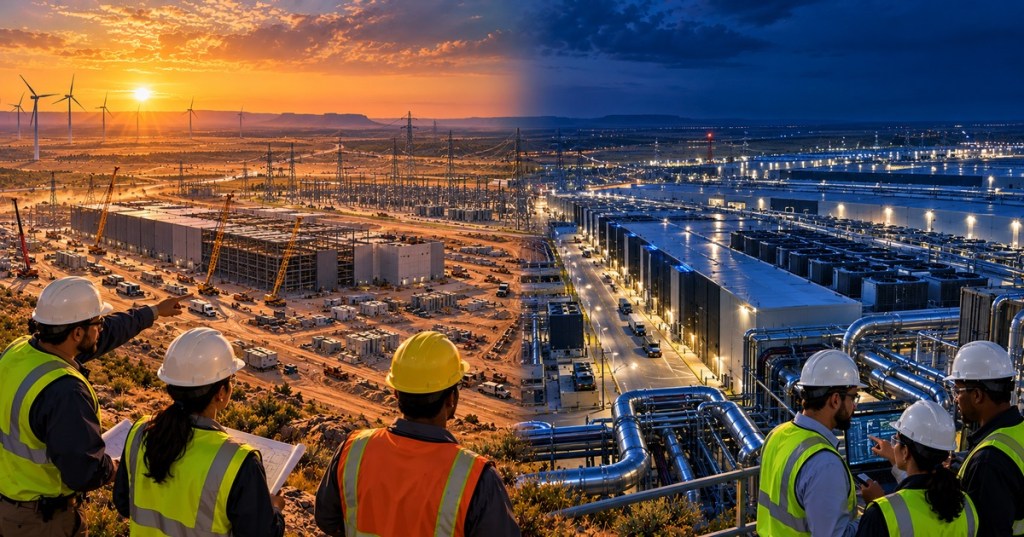
Texas has become the focal point of some of the country’s largest AI data center developments, with megawatt-scale server halls rising alongside proposals for private gas generation, new substations and entire industrial power campuses. The biggest plans run from Fermi America’s 11 GW Project Matador energy campus near Amarillo to the 1.2 GW Stargate development in Abilene, where portions of the computing complex are already in use. But the number in a project announcement often describes its eventual power envelope—not electricity being consumed by running AI servers today.
This special Top 7 edition ranks seven substantial, source-documented Texas projects by their stated maximum planned campus or electrical development capacity, using the latest disclosed company and public records as of October 30, 2026. The figures are not all on the same electrical basis: generation plans, gross facility power, utility-connected development capacity and critical IT capacity are identified separately. Where two projects disclose 2 GW, the one with the more advanced electrical milestone is listed first. Projects with only marketing targets, stalled anchor deals or denied permits are addressed separately rather than silently counted as active construction.
7. Stargate Abilene — 1.2 GW Planned Campus; Partly Operating
The flagship Stargate development at Abilene is one of the state’s clearest examples of the difference between a planned megaproject and equipment already running. Crusoe is developing the campus on Lancium-associated land, with Oracle supplying cloud infrastructure for OpenAI. The larger campus design has been described at 1.2 GW spread across eight buildings, but the full power allocation has not been proven online.
Satellite analysis from Epoch AI, updated October 28, estimates 618 MW of current IT power supporting AI hardware, with more expected as construction proceeds. This is an independent model, not a company meter reading. Unlike a raw development announcement, the facility’s already-running sections demonstrate that an extensive portion of its infrastructure has reached commercial service.
OpenAI’s June 1, 2026 documentary focuses on Abilene residents and the first Stargate campus.
The neighboring 900 MW Crusoe-led expansion now associated with Microsoft is a separate development opportunity, and it should not be automatically added to the OpenAI/Oracle 1.2 GW without establishing project boundaries. For Abilene, the next test is how quickly additional data halls and power equipment enter service, while local leaders weigh employment, water and infrastructure needs.
6. Vantage Frontier, Shackelford County — 1.4 GW Critical IT Planned
Vantage Data Centers’ Frontier development occupies about 1,200 acres in Shackelford County, west of Fort Worth. Vantage’s published specification calls for 1.4 GW of critical IT capacity across ten single-story data centers totaling approximately 3.7 million square feet. That IT figure is different from a gross electrical connection or a generation plant rating.
The company has described a development investment of more than $25 billion, with its first facility targeted for the second half of 2026. Frontier is designed for high-density GPU equipment and liquid cooling, with Vantage describing a closed-loop cooling design intended to limit ongoing water consumption. The planned first delivery is not proof that all ten buildings, or 1.4 GW, are already available to customers.
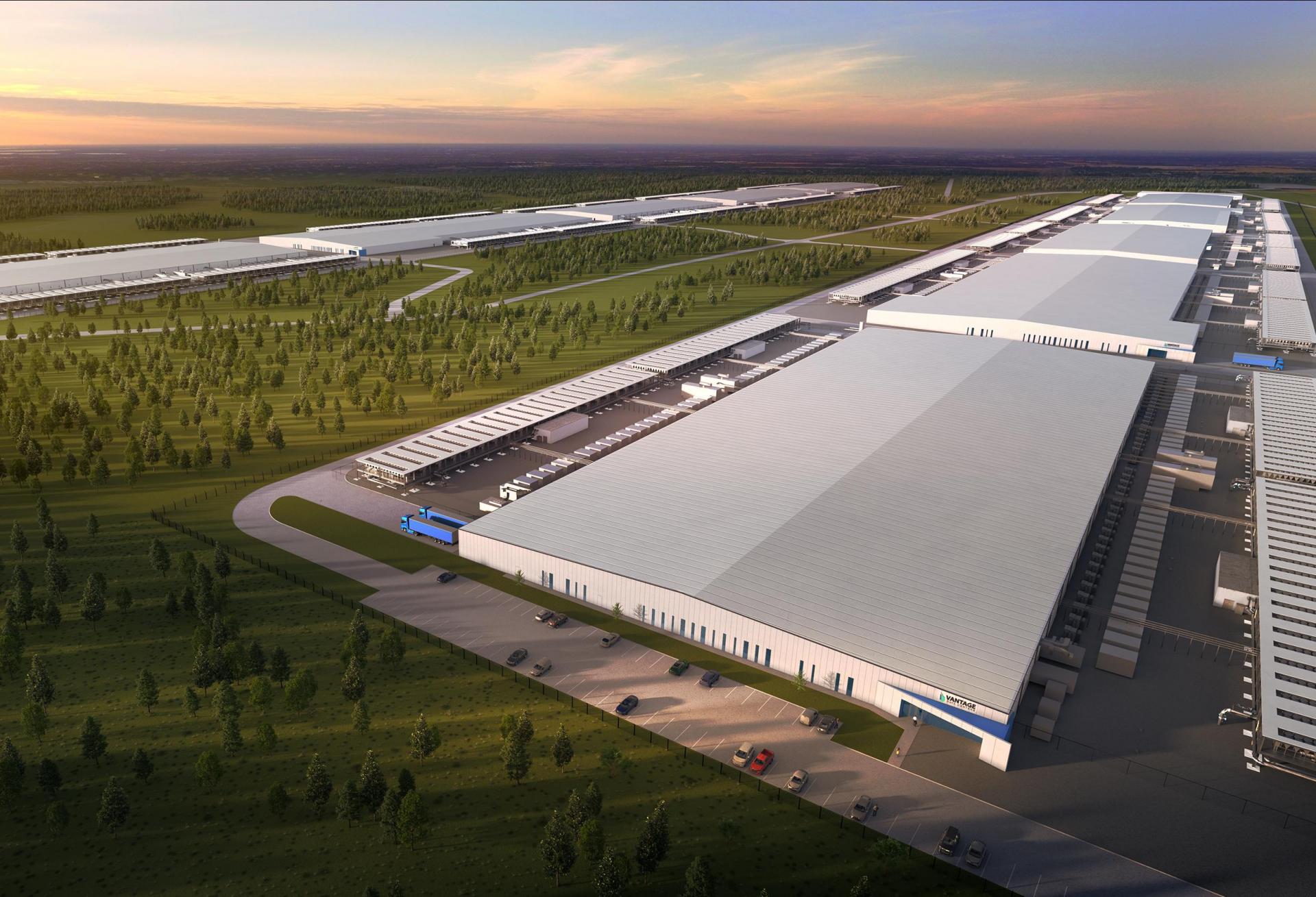
As an Epoch AI review noted, Frontier is part of the wider cluster of Stargate-related developments in West Texas. New generating capacity and transmission arrangements remain crucial to phased occupancy. The project also illustrates why announced spending should be measured against actual shell completion, delivered mechanical equipment and energized server space.
5. Galaxy Helios, Dickens County — 1.63 GW Approved Campus; 133 MW IT Delivered
The Galaxy Helios complex near Afton began as Bitcoin mining infrastructure and is being redeveloped for AI computing under long-term agreements with CoreWeave. Galaxy reported on July 6 that it had delivered 200 MW gross electrical capacity in its first phase, including 133 MW of critical IT load. This operating milestone is more concrete than a future campus aspiration.
Across its first three phases, Galaxy says CoreWeave has committed to 526 MW of critical IT load backed by 800 MW of gross site power. Its wider campus has 1.63 GW of approved power capacity and a more distant possibility of 3.6 GW if later expansion proceeds. The number used in this ranking is the currently approved 1.63 GW, not that higher theoretical extension.
Galaxy’s April 28, 2026 time-lapse shows the construction of Helios as it transitions from a Bitcoin mining facility into an AI data center.
The distinction between 133 MW delivered, 526 MW contractually committed as IT capacity and 1.63 GW approved at campus level gives investors and local utilities a useful way to monitor real progress. Phase II construction was underway by midyear; subsequent deliveries remain scheduled milestones rather than completed electrical loads.
4. Microsoft Pecos, Reeves County — 2 GW Announced Data Center; Dedicated Power Contract
Microsoft announced on June 22 a new 2 GW data center campus in Pecos, one of its largest planned additions to global capacity. The company describes the investment as multibillion-dollar and expected to take five to seven years, supporting more than 6,000 construction jobs at peak and hundreds of lasting operational positions. The campus is announced, not yet a 2 GW operating installation.
Microsoft has a 20-year power purchase agreement with Chevron subsidiary Energy Forge One for the associated Project Kilby gas-generation facility. Chevron describes 2.67 GW of planned electrical generation, with first power expected in 2028 and an investment decision still subject to conditions. The larger generating number must not be substituted for Microsoft’s 2 GW computing-campus figure or added to it.
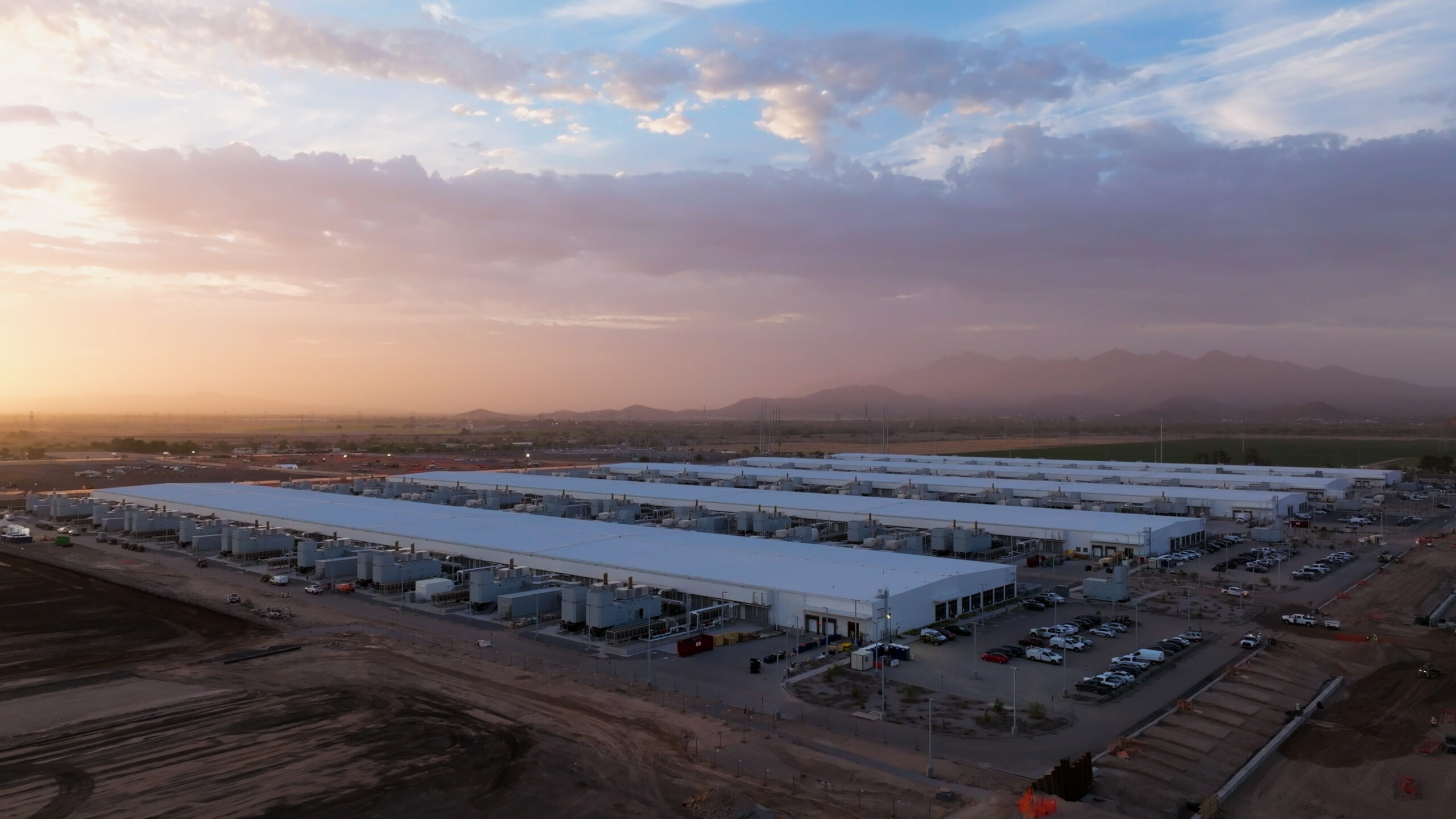
Microsoft says it will fund the new power infrastructure and use a closed-loop cooling design, while Chevron says its generating plant will seek non-potable water sources. Those are forward-looking design commitments. Detailed local permits, actual fuel use, water withdrawals and the cost of any grid interconnection will show how the promised project affects Reeves County in practice.
3. IREN Sweetwater Hub — 2 GW Development Plan; Substation Energized
IREN’s Sweetwater development combines two sites: Sweetwater 1 at 1,400 MW and Sweetwater 2 at 600 MW, for a total announced 2 GW of gross development capacity. Its move from Bitcoin mining toward AI cloud computing has made large land positions, fiber routes, transformers and liquid cooling as important as the mining machines that once defined its business.
IREN disclosed on September 8 that the Sweetwater 1 high-voltage substation had been energized earlier in 2026, while work on the first 300 MW gross data center phase continued toward a targeted fourth-quarter 2027 delivery. The company’s inclusion in ERCOT’s Batch Zero process is conditional. A live substation is an electrical construction achievement, not evidence that 1.4 GW of servers are online. Sweetwater 2 is a separate future stage.
IREN’s original “Introduction to Sweetwater” video describes the company’s two-gigawatt development hub and proposed AI workloads.
The project can be compared with the company’s June 30 filing, which separates its 750 MW Childress location from the 2 GW planned Sweetwater sites. Combining all three in a single Texas campus figure would double count distinct places. New actual data hall deliveries, customer commitments and the second grid connection will decide how much of Sweetwater’s planned capacity becomes productive.
2. Tract Caldwell Valley, Caldwell County — 4 GW Master Plan; Site Development
Tract’s Caldwell Valley Technology Park, north of Lockhart between Austin and San Antonio, encompasses approximately 2,973 acres of land owned and controlled for data center development. Tract says the master plan supports up to about 4 GW of eventual capacity, aided by nearby high-voltage transmission, natural-gas and fiber infrastructure. A land-development capacity rating is not the same thing as fully leased, built or energized data halls.
In its January 13 announcement, Tract confirmed it had purchased another 1,458 acres, nearly doubling the park. The developer and electric-service partners described an onsite substation that could scale to 1.6 GW, with an initial 250 MW contracted for delivery in the first quarter of 2028. The gap between 250 MW contracted and 4,000 MW master-planned is substantial and central to the story.
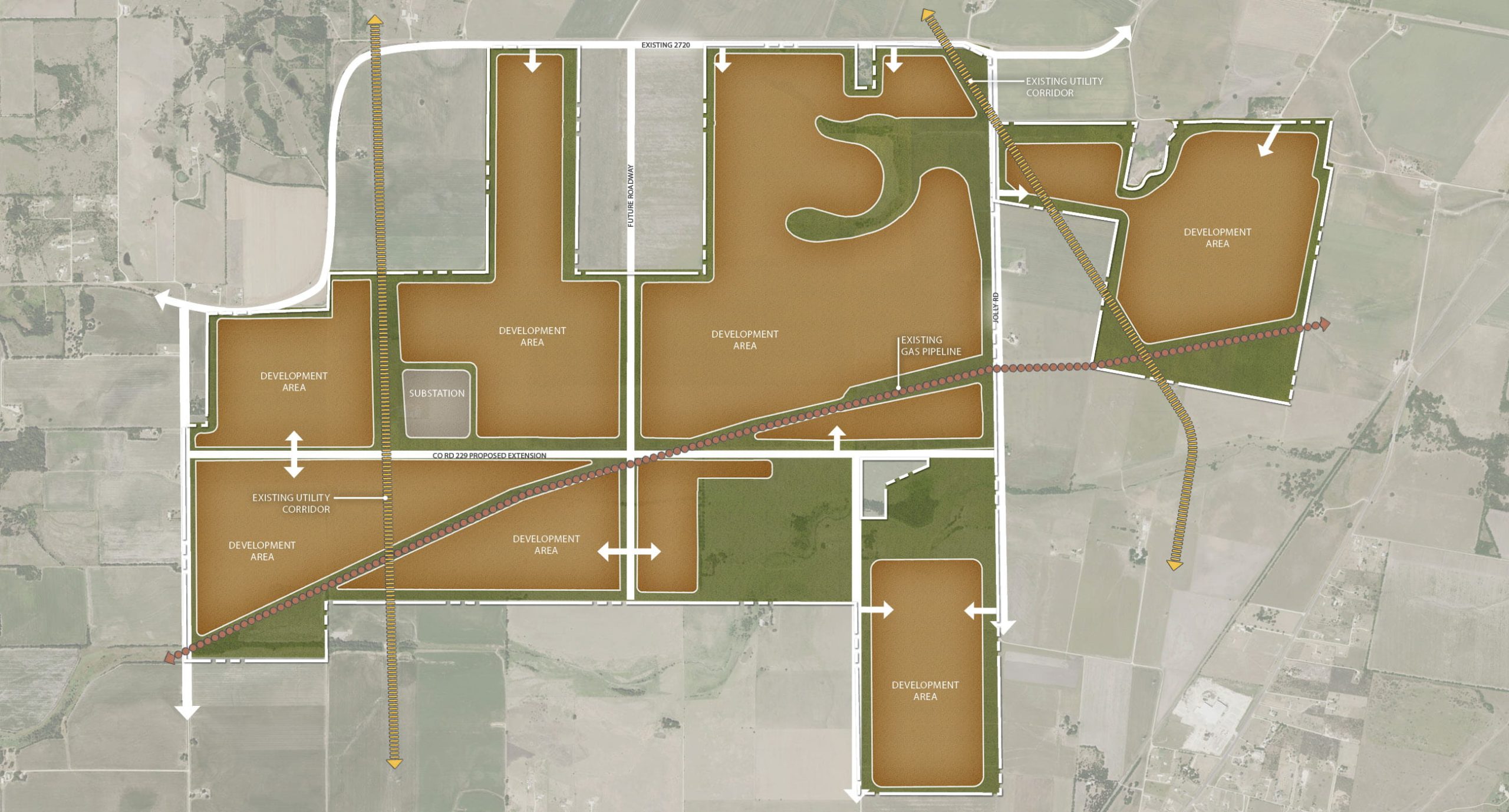
Caldwell County officials have held public discussions on the effects of industrial computing construction and the limits of local authority over water and land use. Early infrastructure work and land ownership support the proposal’s legitimacy, but the full 4 GW remains a long-term development option rather than a tenant-committed load. Its actual rollout will depend on power supply, future operators and local infrastructure agreements.
1. Fermi Project Matador, Carson County — Up to 11 GW Power Campus; 222 MW Initial Tenant Lease
Fermi America’s Project Matador near Amarillo is the highest-capacity development in this ranking, with a claimed 11 GW private HyperGrid energy-campus ambition. The campus is intended to host large-scale AI data centers alongside on-site generating infrastructure. That 11 GW is not a disclosed operating critical IT load; most of the planned electricity and computing facilities remain to be delivered.
The project has moved beyond an abstract announcement. In August, Fermi signed a lease with TensorWave for a 222 MW total-facility-power data center, with a 15-year revenue projection and possible later expansion. Fermi subsequently extended the lease closing deadline to October 31, 2026 while conditions were being addressed. The agreement’s existence does not imply that its required closing conditions have been met or that 222 MW is already operating.
Fermi America’s Project Matador video, linked from the company’s own investor-relations video gallery.
A Fermi announcement targets second-half 2027 deliveries under the initial arrangement. Meanwhile, the developer says utility construction and turbine equipment deliveries are progressing. The next verifiable milestones are completed lease closing, construction and energization of data halls, power generation permits, reliable cooling sources and confirmed tenants for further phases. An 11 GW campus plan is an indication of ultimate ambition, not a 2026 measurement of productive computation.
Other Texas Megaprojects Worth Watching
Three huge proposals are deliberately not folded into the seven active, well-documented developments above. Energy Abundance’s 5 GW Data City near Laredo markets future behind-the-meter power but lacks verified operating data halls, an identified anchor tenant and confirmed project financing in the available record. Poolside’s 2 GW Project Horizon lost an anchor agreement and is described as paused. Hood County’s Comanche Circle proposal encountered an October permit denial and unsuccessful appeal. Those development risks should not disappear behind headline gigawatt figures.
Other active proposals and conversions also deserve coverage: SB Energy’s 1.2 GW Stargate site in Milam County, Meta’s approximately 1 GW El Paso campus, the 900 MW Crusoe/Microsoft expansion in Abilene, and Bitcoin-to-AI conversions in Childress, Rockdale and Corsicana. Some are as significant to the near-term construction market as the bigger proposals, even though their stated planned site ratings are lower.
Power, Cooling and the Difference Between a Plan and a Running Data Center
These seven projects illuminate several distinct measures of progress. A site can be announced, controlled by a developer, permitted, connected to a substation, under construction, leased, energized or operating. A power plant’s nameplate rating should not be confused with its data center’s gross power consumption, and neither is automatically the same as critical IT power available to chips. Phased schedules also change, especially as turbine delivery, transformers, networking infrastructure and high-density cooling equipment become bottlenecks.
The stakes reach beyond the technology industry. Public filings and community hearings need to address water sourcing and withdrawals, gas emissions, long-term ratepayer protection, backup generation, interconnection costs, tax incentives and the enduring local jobs actually created. Readers can compare these Texas developments with the Tennessee and South Dakota installments, while our data center capacity planning lesson explains why forecast load, delivered power and safe infrastructure headroom are not interchangeable.
BitcoinVersus.Tech
BitcoinVersus.Tech Editor’s Note: We volunteer daily to ensure the credibility of the information on this platform is Verifiably True. If you would like to support our work and help further secure the integrity of our research initiatives, please scan the QR code below to donate 5,000 sats. For best results, scan the QR code from a laptop or larger screen.
Bitcoin address: 3C9o19EH5HSiwEPyCTmEKzxhNCbo2X6TTb. Confirm the destination address before sending.

BitcoinVersus.tech is not a financial advisor. This media platform reports on financial subjects purely for informational purposes.


Leave a Reply