
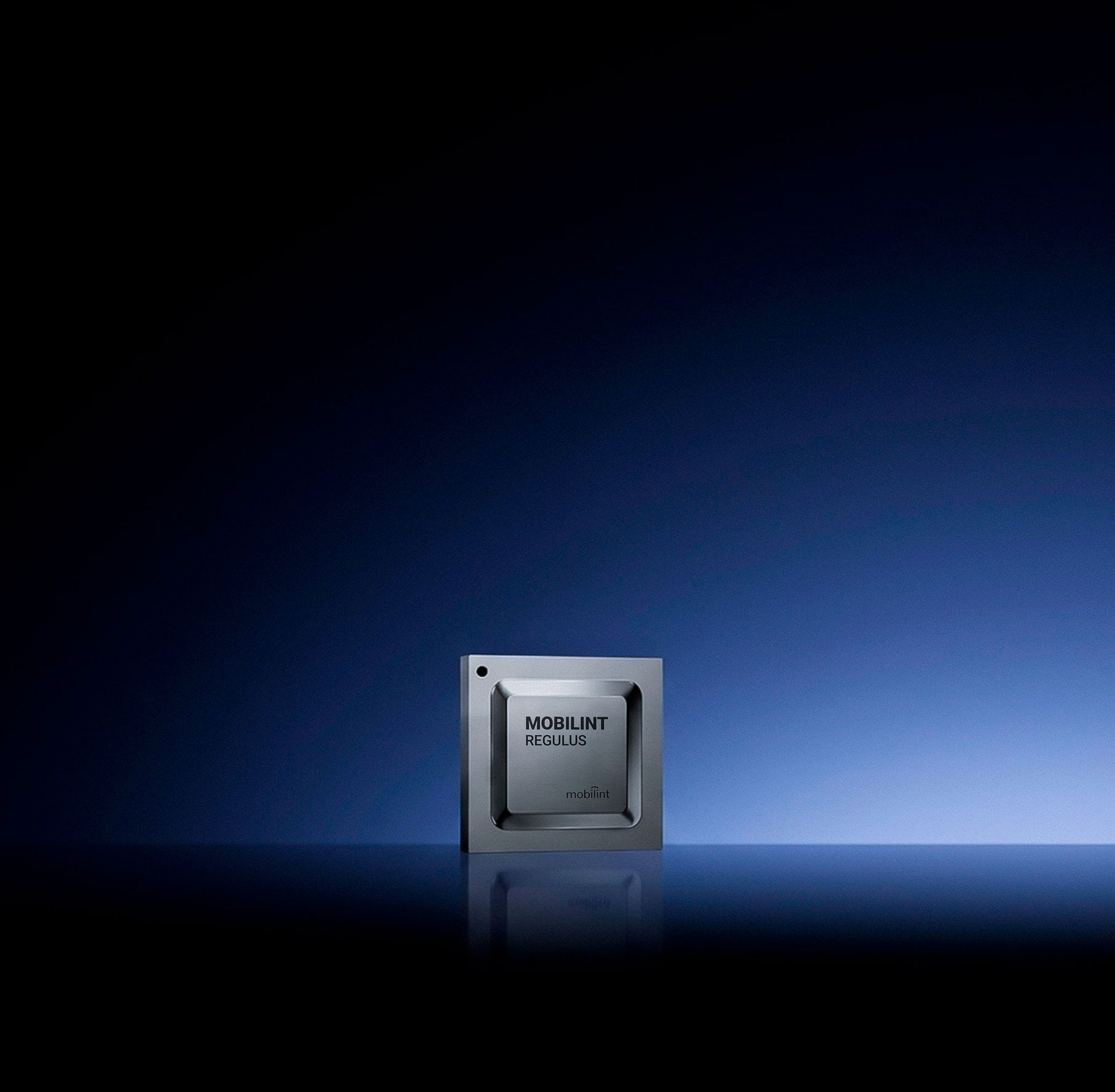
Ceva and South Korea’s Mobilint announced on November 2, 2026, that the REGULUS edge-AI system-on-chip is the first production deployment of Ceva’s NeuPro neural-processing intellectual property. The companies describe a compact processor delivering 10 trillion AI operations per second (TOPS) at less than three watts, with the REGULUS-powered MLD-R1 USB accelerator already shipping. The announcement connects Ceva’s licensed AI designs to hardware customers can actually deploy.
Inside REGULUS: Specialized AI Engines
REGULUS pairs Ceva’s NeuPro-Nano NPN32 neural processor with its SensPro digital signal processor and Mobilint’s own processing architecture. SensPro handles programmable sensor and signal workloads; NeuPro-Nano targets always-on inference. The combination extends Ceva’s new NeuPro portfolio into a commercial chip rather than merely another announced IP roadmap.
Mobilint’s chip documentation specifies 10 dense INT8 TOPS, a 17-millimeter package, onboard 4K/60-fps video encoding and support for cameras, USB and Ethernet. The manufacturer also describes up to eight gigabytes of connected memory. Those specifications suit battery-conscious robots, industrial cameras and drones, but a peak TOPS rating does not establish sustained performance, latency or accuracy in real applications.
Embedded World 2026 demonstration of Mobilint edge-AI equipment; independent ARMdevices booth video from March, not footage of November’s announcement.
The Difference Between Three Watts and Four Watts
The distinction matters because the hardware sits between cloud-scale inference and smaller embedded controls. Like the separate SEMIFIVE–Mobilint robotics-chip project, it emphasizes local sensing; unlike that future-oriented design partnership, REGULUS is represented as available in commercial hardware.
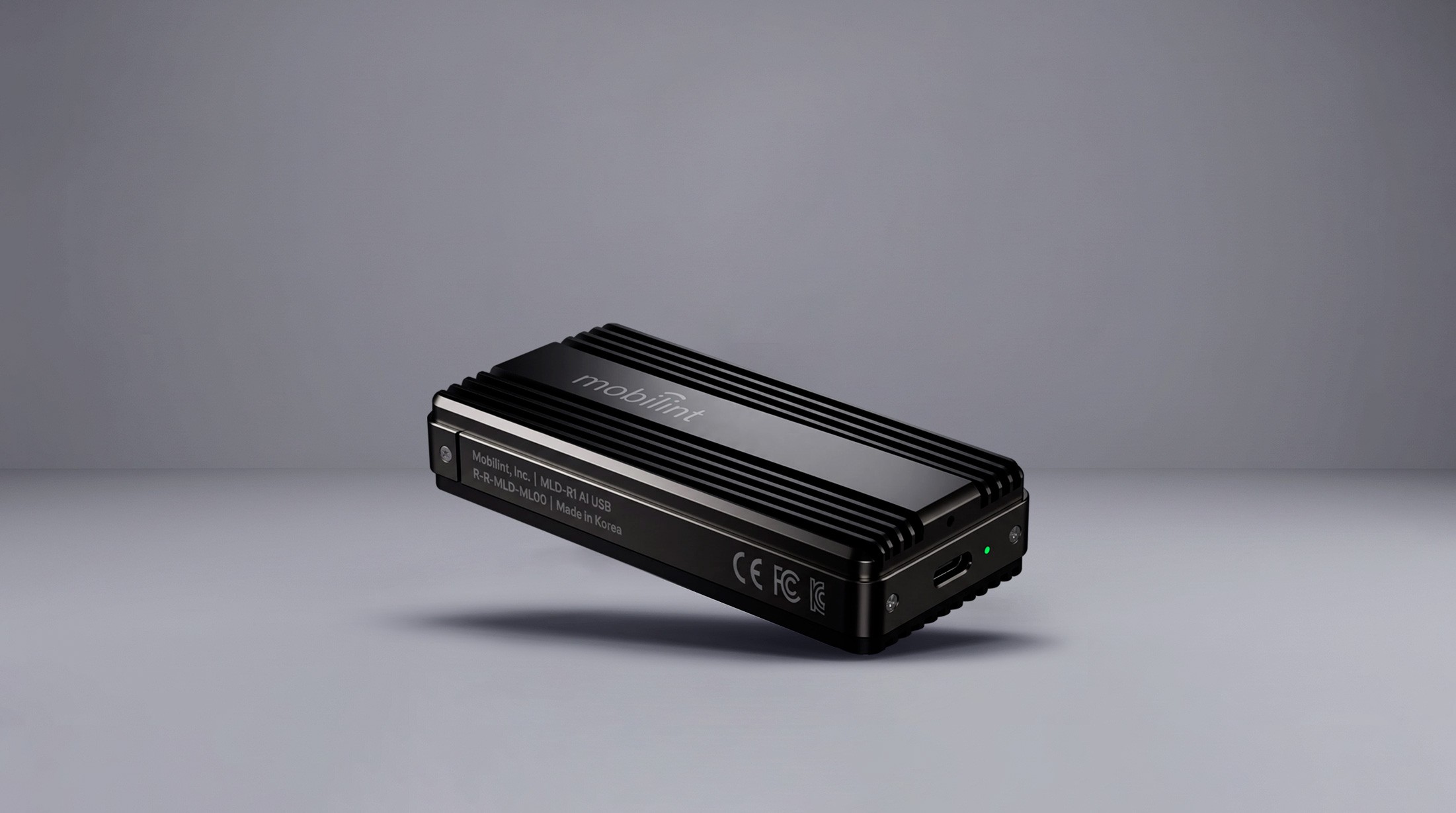
Mobilint’s MLD-R1 product specifications identify a USB-connected accelerator supporting Windows and Linux hosts, PyTorch, TensorFlow and ONNX workflows. Its current page lists approximately four watts for the finished USB device, not the under-three-watt rating of the underlying chip. Those two figures describe different hardware boundaries and should not be plotted as if they were identical measurements.
What Still Needs Independent Testing
The device was previewed at COMPUTEX 2026, before the November Ceva announcement. That chronology is important: the new milestone is the disclosed NeuPro production integration, not the first time Mobilint showed or sold an accelerator. Ceva’s separate physical-AI competition and emerging low-memory graphics hardware show how widely silicon designers are specializing their chips.
The next evidence to watch is independently reproduced model throughput, software support, operating temperature and battery-life measurements under continuous loads. Mobilint says its toolchain supports hundreds of model architectures; actual results will depend on model precision, memory movement and deployment settings. For robotics developers testing AI control systems, accessible evaluation hardware is useful—but it is not proof that every model reaches the headline TOPS figure.
BitcoinVersus.Tech
BitcoinVersus.Tech Editor’s Note: We volunteer daily to ensure the credibility of the information on this platform is Verifiably True. If you would like to support our work and help further secure the integrity of our research initiatives, please scan the QR code below to donate 5,000 sats. For best results, scan the QR code from a laptop or larger screen.

Bitcoin address: 3C9o19EH5HSiwEPyCTmEKzxhNCbo2X6TTb. On a phone, open the QR image on another screen or copy and verify the address in your wallet before sending.
BitcoinVersus.tech is not a financial advisor. This media platform reports on financial subjects purely for informational purposes.


Leave a Reply