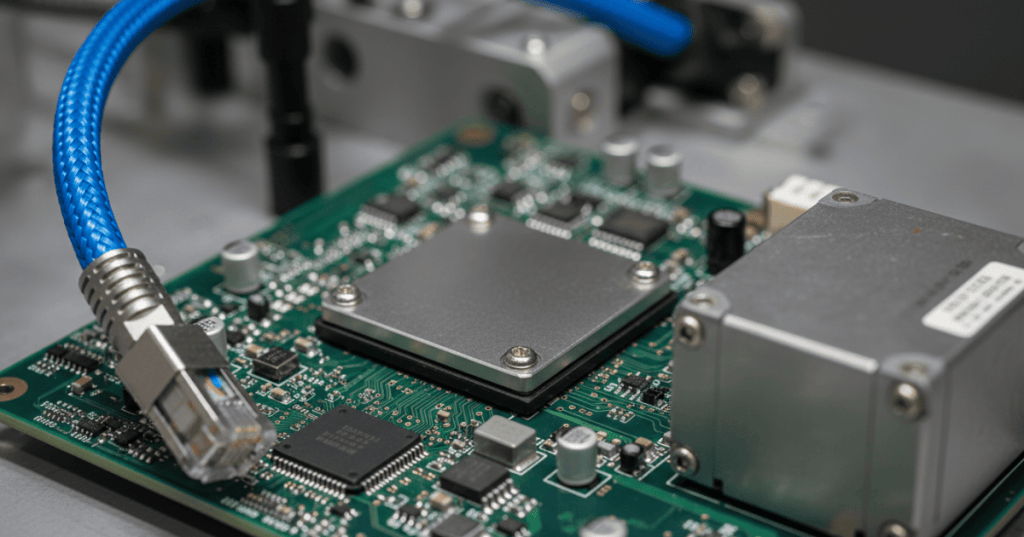
Japanese chipmaker Renesas Electronics introduced its RZ/T2N industrial microprocessor on November 5, 2026, combining precision motor control, industrial Ethernet and Linux-capable application processing in a single 64-bit device. The company is targeting factory automation, multi-axis servo systems and industrial robots, where separate processors have traditionally handled real-time motion and higher-level software.
According to the company’s November 5 announcement, the RZ/T2N can coordinate up to four motor-control axes and function as both a network controller and a networked device. Renesas plans a public demonstration at electronica 2026 in Munich, November 10–13. The launch is a product announcement; independent factory performance measurements were not supplied.
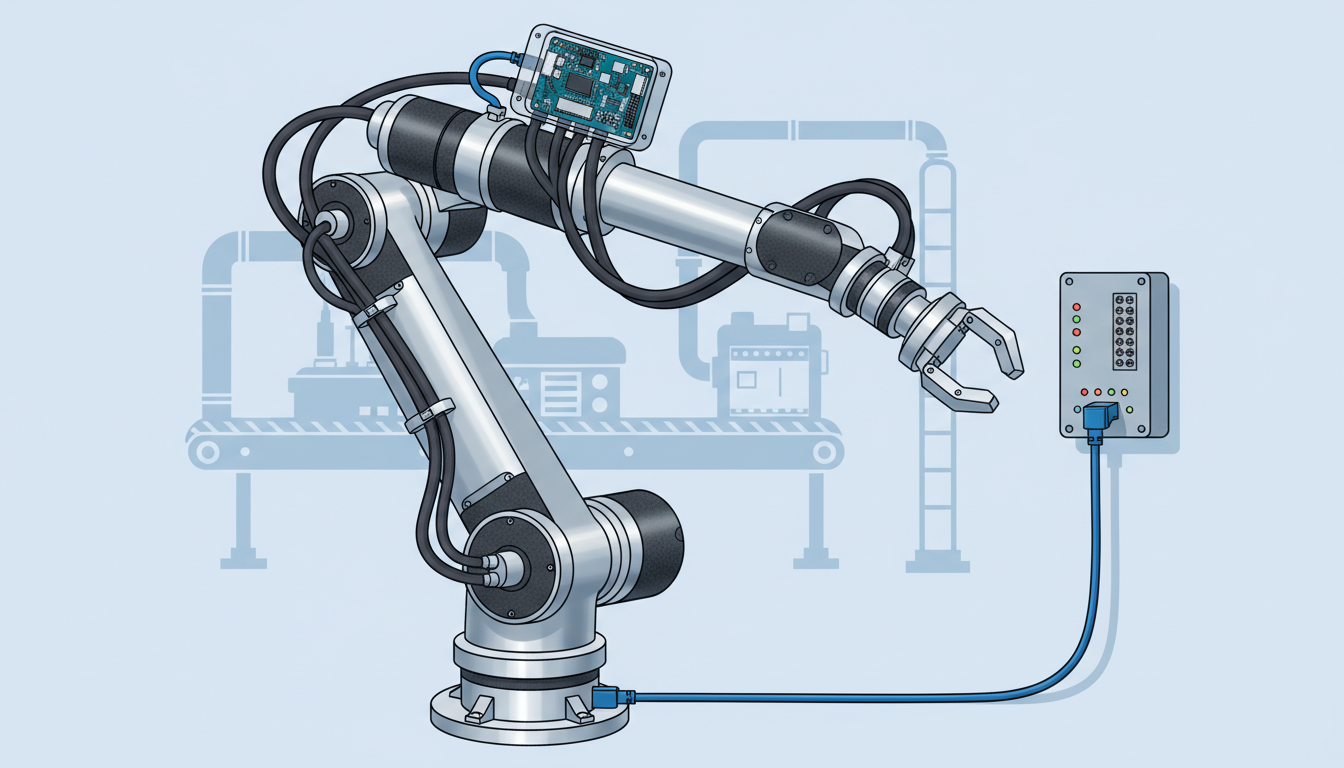
Why one processor matters
Industrial robots require deterministic control loops. A servo controller repeatedly reads motor position, calculates the required torque or velocity and updates electrical drive signals. Missing a timing deadline can reduce accuracy or trigger a fault. Linux applications, by contrast, often handle user interfaces, diagnostics, connectivity and equipment-management software without the same hard real-time guarantees.
Combining the workloads in one chip can simplify circuit-board design, reduce interprocessor communications and potentially cut component count. The design still needs careful isolation between time-critical motion tasks and less predictable software activity. Renesas has not established a universal board-area reduction or cost saving for every deployment.
The announcement follows other advances in industrial networking. BitcoinVersus.Tech recently reported Microchip’s EtherCAT and time-sensitive networking support and STMicroelectronics’ industrial controller update. Both address the need to move control information reliably between machines.
Factory networking and Linux
Industrial Ethernet connects controllers, drives, sensors and programmable logic controllers over networks built for manufacturing. The RZ/T2N is intended to participate in such systems while running application software locally. That arrangement can reduce the number of chips required in a servo-drive or robot-control board, although industrial Ethernet compatibility and Linux support do not by themselves guarantee safety certification or interoperability with every factory installation.
Software maintainability is equally important. Field equipment may remain deployed for a decade or longer, making driver availability, security updates, kernel support and replacement-part continuity material purchasing considerations. Earlier BitcoinVersus.Tech coverage explored Renesas’ industrial edge-AI methods and power devices for robotics, complementary technologies rather than direct substitutes for a motor-control processor.
What remains to be demonstrated
Renesas says the integration should simplify industrial equipment designs. Buyers still need benchmarks covering worst-case control latency, thermal behavior, power draw, Linux software support and network interoperability. The company has not demonstrated production savings across a representative range of commercial robots in the announcement reviewed.
The upcoming Munich demonstration offers an opportunity to inspect the hardware and development environment. For manufacturers, the decisive question is whether one device can deliver predictable motion control alongside application processing without sacrificing reliability, maintainability or machine safety.
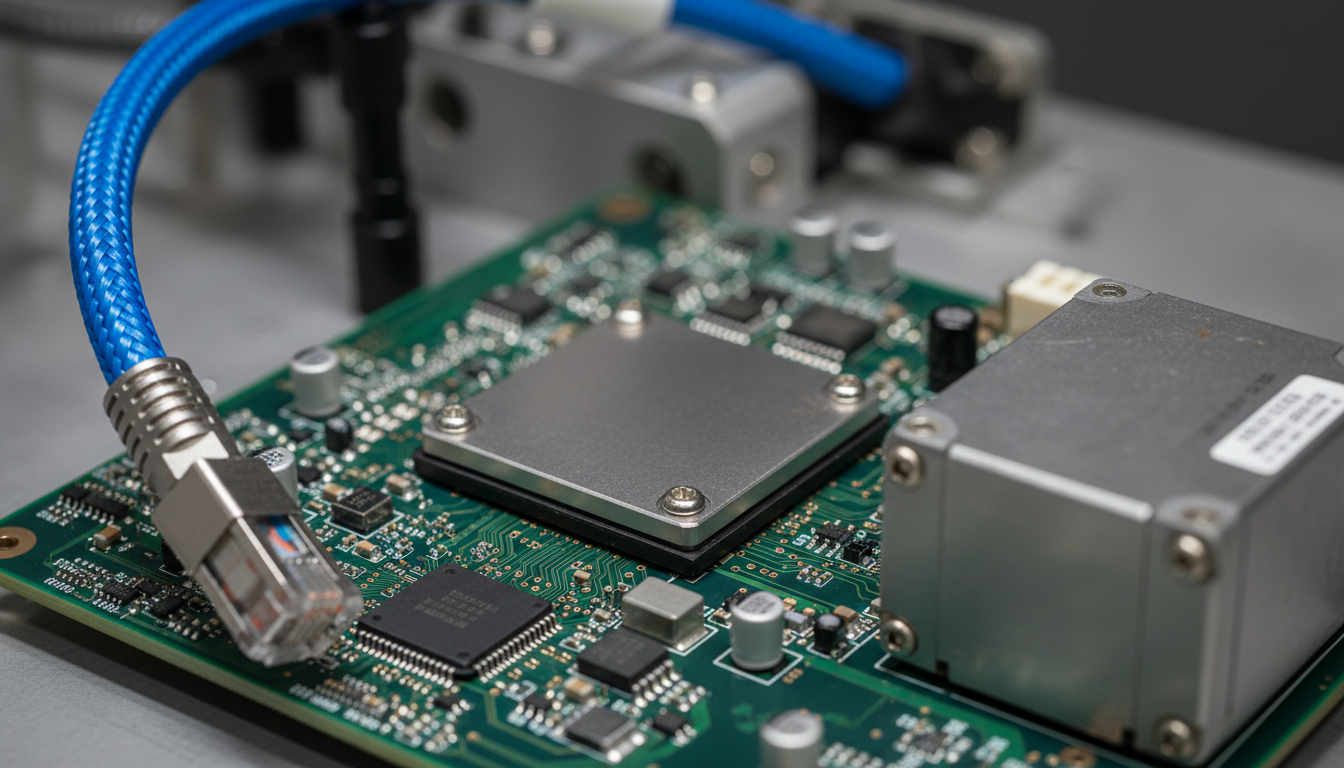
Editor’s Note: Product capabilities and exhibition plans are attributed to Renesas’ November 5 announcement. No independent performance testing or production savings are claimed. Both images are original editorial concepts, not official RZ/T2N product photographs.

We volunteer daily to ensure the information on this platform is Verifiably True. If you would like to support the research, please scan QR code.


Leave a Reply