The Democrats’ 2026 midterm victories are colliding with a growing argument over how fast the United States should build artificial-intelligence infrastructure. An episode of the All-In Podcast, titled “Midterm Blood Bath, $4T AI Sell Off, Data Center Freeze, What’s Next for Trump,” examines the political backlash and its possible implications for data-center growth. The show’s headline frames a market selloff and an infrastructure freeze; neither label establishes a nationwide construction halt or a fully audited market-loss total.
The Associated Press called Democratic control of the Senate on November 3 and the House early November 4. Remaining races had not all been certified by November 7. BitcoinVersus.Tech’s three-chart election report tracks the provisional seat counts. The larger technology question concerns the rules governing energy-intensive computing.
Official All-In Podcast episode examining the 2026 midterm aftermath, AI markets and data-center policy. Source: All-In Podcast / YouTube.
From election results to electricity bills
An AI data center is not merely a warehouse of graphics processors. Facilities require utility interconnections, transformers, substations, cooling, networking, backup systems and dependable power contracts. A planned campus may reserve hundreds of megawatts while actual operating demand rises over years. Announced electrical capacity, operational IT load and electricity consumed in megawatt-hours are different measures.
Electricity costs became a campaign issue because additional generation and grid upgrades must be financed. The Ratepayer Protection Act debate exposed disagreement over whether states should merely consider new cost-allocation rules or require developers to cover project-driven expenses. Local voters also want clarity on water consumption, tax incentives, noise and permanent jobs.
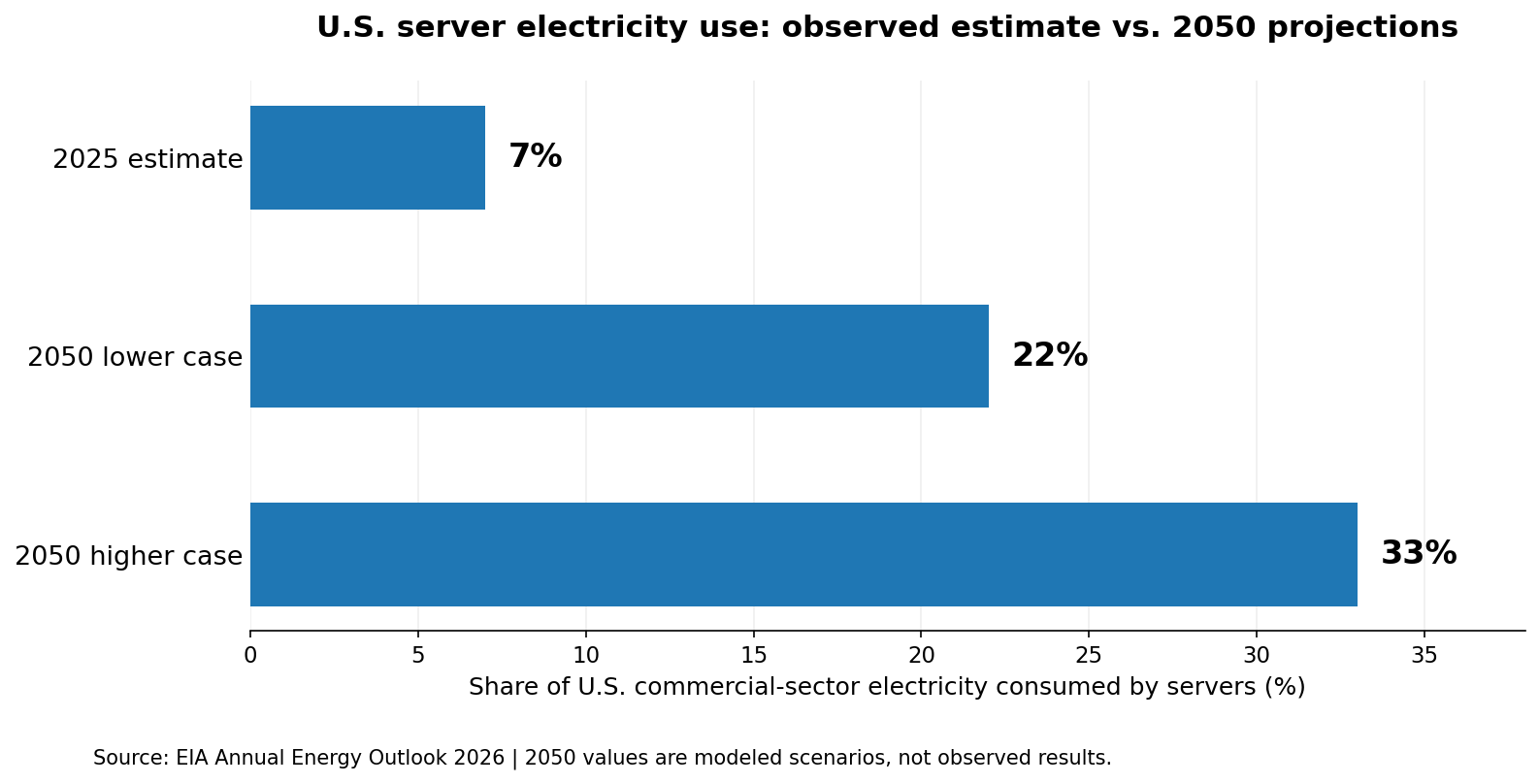
The U.S. Energy Information Administration estimated servers consumed 7% of commercial-sector electricity in 2025. Its 2026 modeling projects 22%–33% by 2050 across scenarios, equivalent to 446–818 billion kilowatt-hours annually. Those long-range figures are projections, not measured 2050 consumption or estimates of currently approved projects. BitcoinVersus.Tech separately covered data centers’ potential share of U.S. electricity-demand growth.
Regulatory risk is not a national freeze
New House and Senate majorities can investigate the AI industry and propose rules for model testing, liability, and electricity-cost disclosure. Yet proposed bills still confront Senate procedure, presidential veto power and the division of authority among governments. The White House AI safety accord illustrates an earlier federal preference for voluntary safeguards rather than a comprehensive new statute.
More immediate decisions may come from state utility commissions, zoning authorities and governors. A Brookings analysis identifies construction moratoriums, local approvals, utility protections and tax exemptions as potential pressure points. An individual project pause does not mean every U.S. campus is frozen.
The counterargument is substantial: data centers deliver computing capacity, construction demand, local tax revenue and infrastructure investment. Slowing viable projects could raise compute prices or push development toward other regions. As BitcoinVersus.Tech previously reported, Goldman Sachs still anticipated major U.S. capacity expansion despite community opposition.
The meaningful next indicators are actual enacted zoning changes, interconnection approvals, binding cost-allocation tariffs and revised construction schedules—not podcast predictions or political slogans. Each can be measured without confusing a proposed restriction with an operating shutdown.
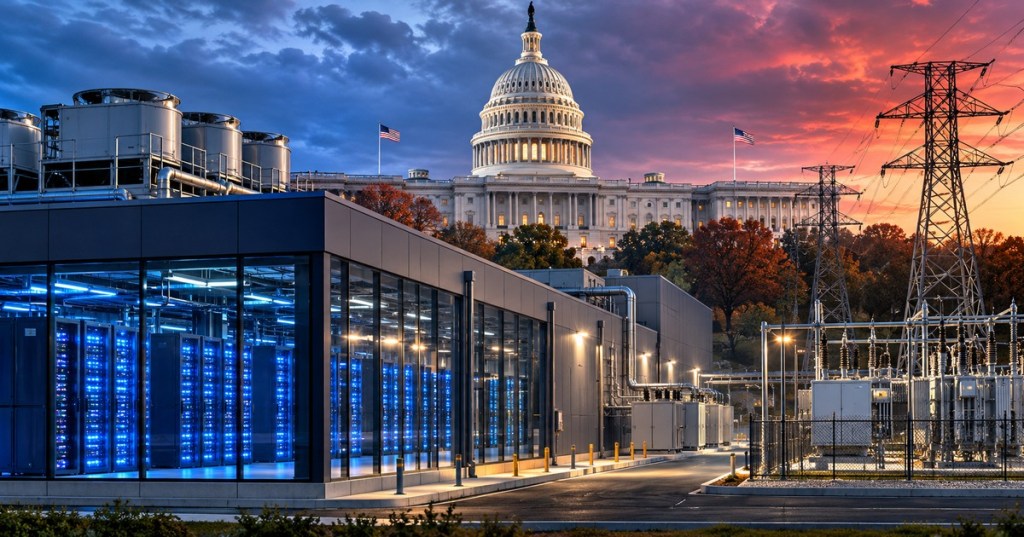
Editor’s Note: November 7, 2026. The episode title and topic summary were matched against the podcast’s official website, whose “Watch” link identifies video 2v8b062QzTI. Election-control calls were independently checked against the Associated Press. Electricity figures were checked against the EIA; regulatory possibilities were compared with Brookings analysis. The podcast’s $4 trillion selloff framing was not independently reconciled to defined securities, dates or market-cap methodology. The featured Capitol/data-center cover is an original conceptual illustration, not a photograph of a real facility. Video player playback and mobile rendering require live-device verification.

To donate 5,000 sats, open the article on a separate display and scan the original QR code with a compatible Bitcoin wallet. On mobile, use another screen or your wallet’s supported image-scanning feature. Verify the destination 3C9o19EH5HSiwEPyCTmEKzxhNCbo2X6TTb before sending.
We volunteer daily to ensure the information on this platform is Verifiably True. If you would like to support the research, please scan QR code.
BitcoinVersus.tech is not a financial advisor. Election and technology reporting is informational and does not advocate for a candidate or political party.


Leave a Reply