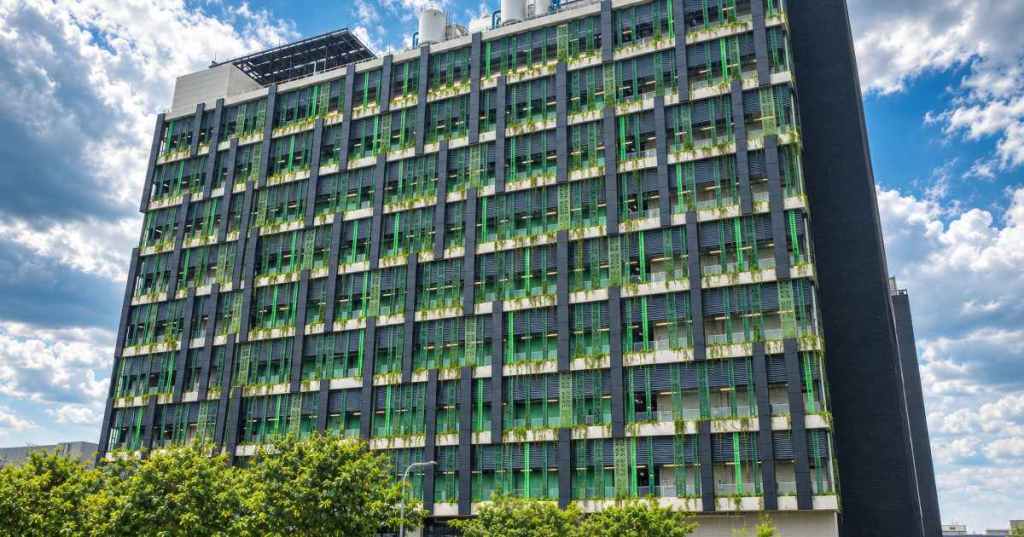
Equinix opened SG6, its sixth Singapore data center, on November 6, 2026, adding an initial 8 megawatts of reported capacity for AI and enterprise workloads. The company identifies approximately 1,550 cabinets in Phase 1 and an initial investment of around US$290 million. A larger 20 MW IT-capacity build-out remains a future target, not equipment confirmed operating today, according to Equinix’s investor announcement.
SG6 is an International Business Exchange, or IBX, facility where customers rent space, power and private network connections. The business model differs from a single-owner hyperscale training campus: colocated businesses connect to cloud providers and telecommunications carriers without running their own standalone buildings. Singapore’s dense regional connectivity makes the city a strategic exchange point for workloads moving among Asian markets.
Eight megawatts open, twenty megawatts planned
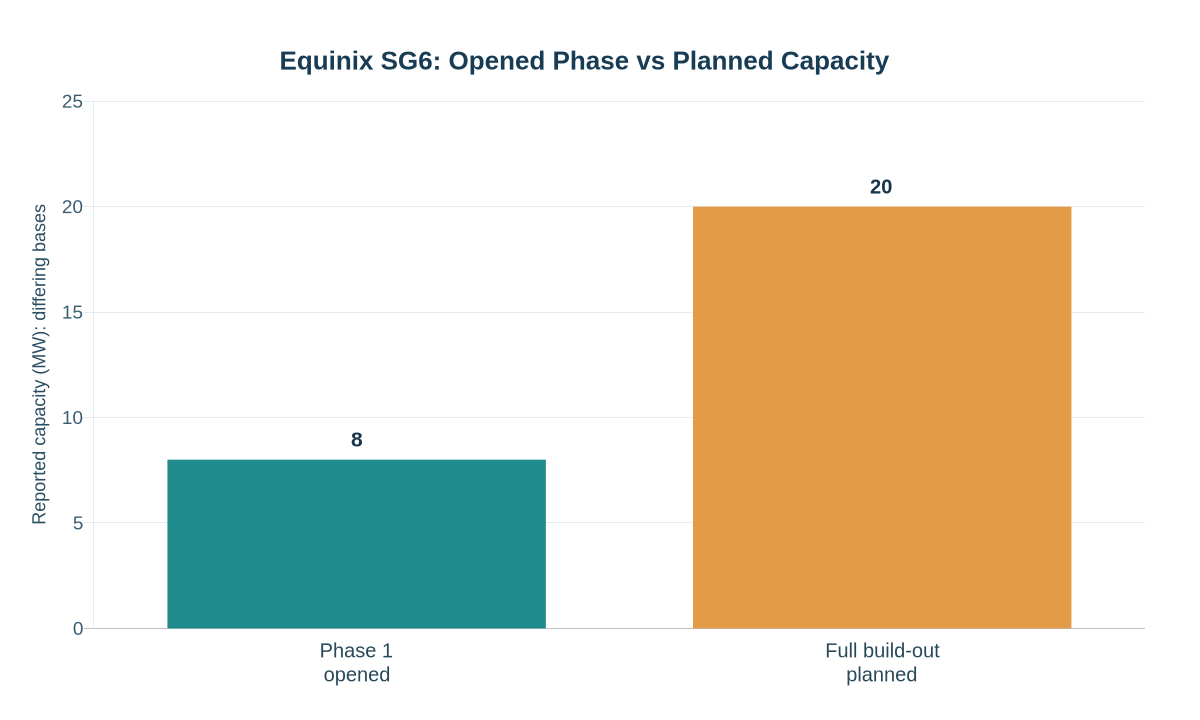
Equinix’s two releases describe Phase 1 as 8 MW of capacity, but specify the larger 20 MW figure as future IT capacity. The company does not expressly identify the 8 MW measurement basis as IT load or total facility load, so the figures should not be used to calculate verified utilization. Cabinet count is provisioned space, not confirmation that every cabinet contains powered equipment or paying customers.
That distinction matters when comparing projects: BitcoinVersus.Tech’s ranking of operating AI data centers uses actual online IT power where evidence permits, while its capacity-planning lesson distinguishes IT load, facility infrastructure and expansion headroom. Equinix has not announced SG6’s customer utilization rate or an exact delivery date for the remaining build-out.
Liquid cooling and the limits of a PUE target
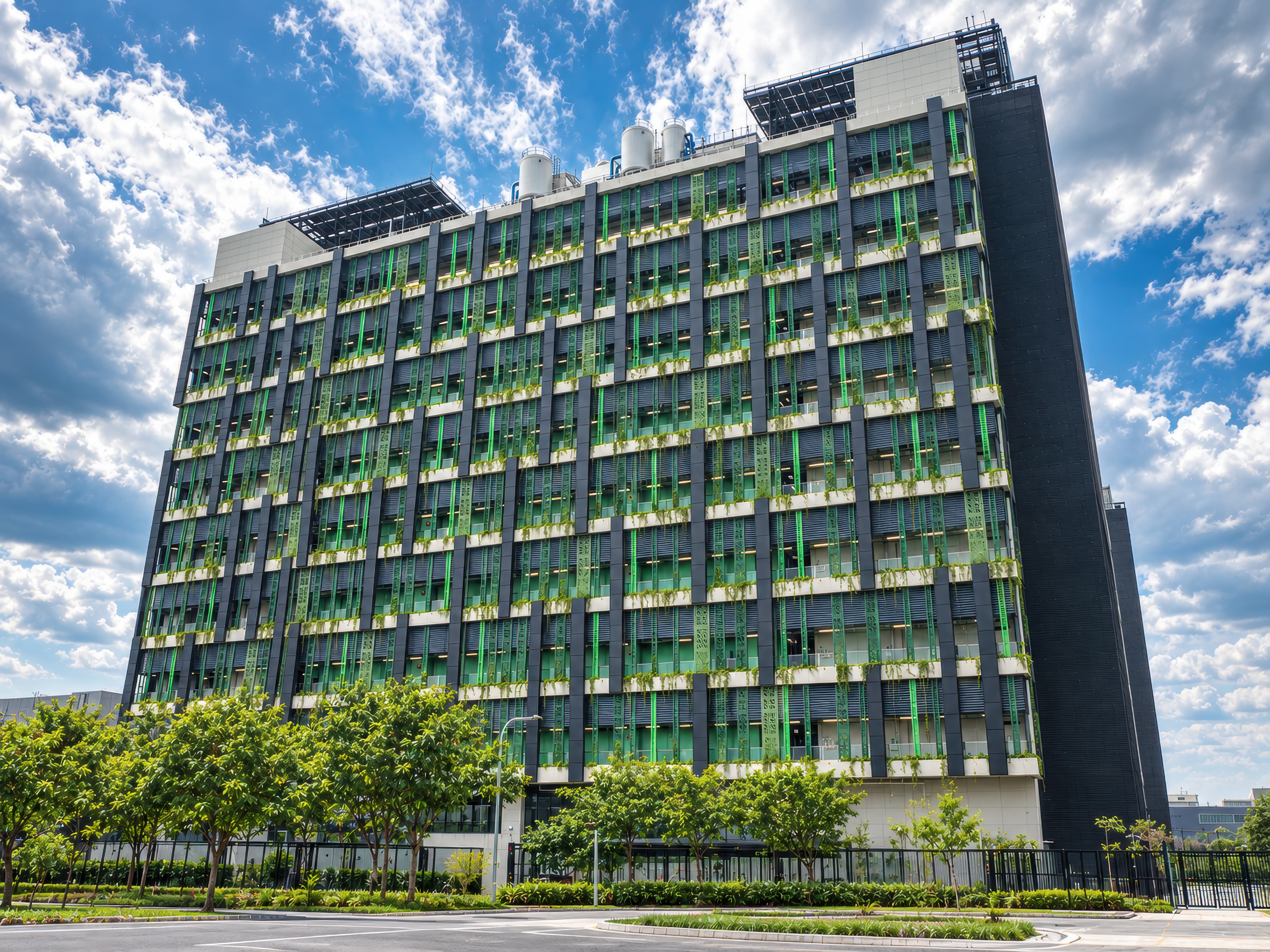
SG6 incorporates liquid-cooling capability for dense GPU installations, proprietary cooling systems, facade and rooftop solar panels, and rainwater collection. Equinix says the facility is designed for power usage effectiveness (PUE) of 1.20 and is seeking Singapore’s Green Mark Platinum certification. Neither statement establishes a measured annual PUE or completed certification as of opening.
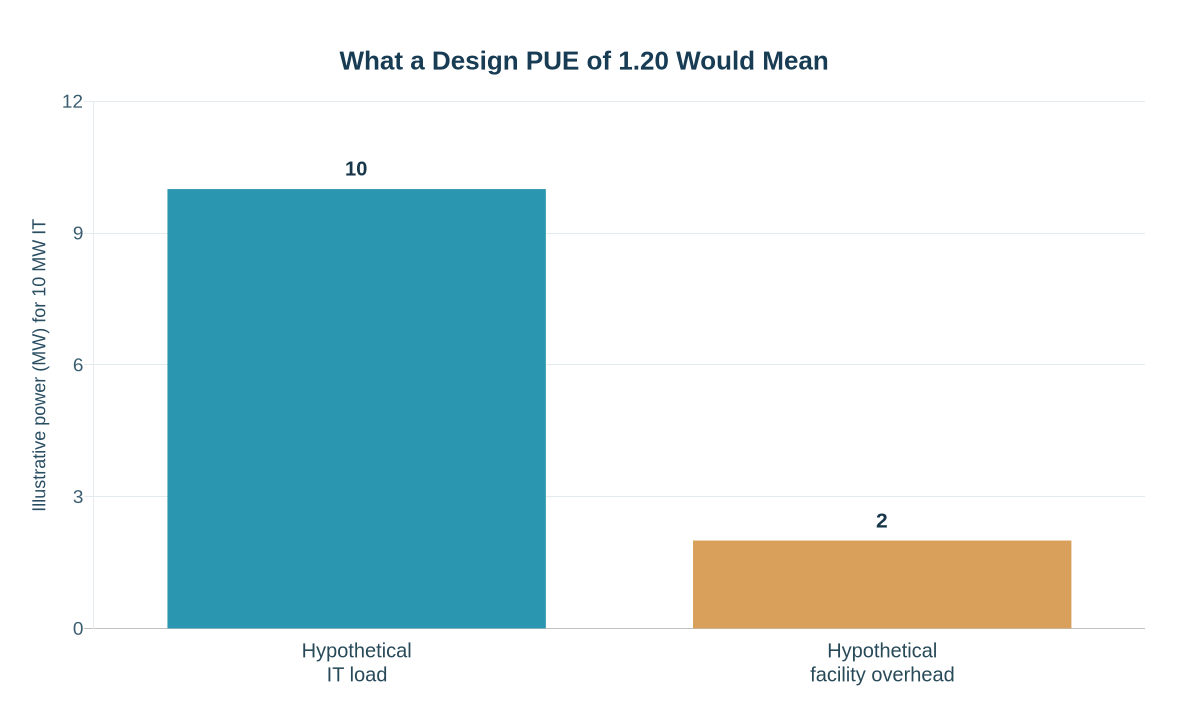
PUE is total facility energy divided by IT equipment energy over a defined reporting interval. At a hypothetical steady 10 MW IT load, a 1.20 PUE would correspond to 12 MW of facility power, including 2 MW for cooling and supporting systems. That example is mathematical, not SG6’s real electricity consumption. BitcoinVersus.Tech’s PUE and rack-density explainer covers the metric, while earlier liquid-cooling research examines how cooling choices influence overhead.
Singapore’s energy and water constraints remain
Singapore’s Green Data Centre Roadmap seeks additional computing capacity under stringent efficiency requirements. Equinix says its Singapore portfolio has had 100% renewable-energy coverage since 2020, supported by procurement arrangements. Coverage should not be interpreted as proof that solar panels supply SG6’s full demand every hour. Its four Singapore renewable-energy purchase agreements are expected to support a cumulative 215 MWp portfolio by 2028; MWp is generation nameplate, not the site’s operating load.
The project also uses NEWater and rainwater collection to reduce dependence on drinking-water supplies. Water reclamation and cooling-tower management require ongoing monitoring, as explained in BitcoinVersus.Tech’s data-center water-systems guide. Operators still face equipment reliability, temperature, humidity, water quality and energy-price risks.
Equinix plans a research facility with the National University of Singapore for 2027, focused on cooling, digital twins and energy storage. It is not part of a verified operating laboratory at the November opening. The company’s network-wide connections to more than 17 subsea cable systems also should not be mistaken for 17 cables physically terminating at SG6; the optical-networking context appears in BitcoinVersus.Tech’s transceiver guide.
The immediate development is an opened colocation facility with a documented first phase. Whether SG6 eventually reaches 20 MW of IT capacity while achieving its environmental targets will depend on expansion delivery, occupancy, verified metering and operating performance.
Primary sources: Equinix’s November 6 SG6 investor release; Singapore-specific opening announcement; and Singapore IMDA Green Data Centre Roadmap.
Editor’s Note: SG6’s 8 MW opened first-phase capacity is quoted as reported by Equinix; the 20 MW full-build figure is explicitly future IT capacity. The company does not state a directly comparable measurement basis for the first-phase figure. Its 1.20 PUE is a design target, Green Mark Platinum is being sought, and 2027 innovation facilities are planned, not verified operating assets. The PUE chart is hypothetical. The featured and in-body SG6 exterior images originate from Equinix’s official opening material; additional original charts are not field measurements.
Support BitcoinVersus.Tech
Support independent reporting using the original approved QR below for an optional 5,000-satoshi contribution. On a phone, open the article on a second screen and scan with a compatible Bitcoin wallet, or use the wallet’s supported image-scanning feature. Verify the receiving address and amount before confirming payment.

We volunteer daily to ensure the information on this platform is Verifiably True. If you would like to support the research, please scan QR code.


Leave a Reply