Bitcoin has a measurable 2026 low, but whether buyers can defend it is a market question—not a law of physics. The year’s observed intraday bottom was $57,747.77 on July 1, according to Yahoo Finance historical data and CoinGlass. Bitcoin fell below $65,000 again on November 14, placing the prior low back in focus. The case for its survival rests on three forces, ranked from the most theoretical to the most directly observable.
BitcoinVersus.Tech defines Physical Price as the lowest observed Bitcoin price within the chosen measurement window. Its Power Efficiency Index (PEI) is (ending network hashrate ÷ starting hashrate) × (starting ASIC J/TH ÷ ending J/TH). PEI Relative Price equals Physical Price multiplied by PEI. A Physical Price is an observed trading low, not an electricity bill or protocol-enforced minimum.
3. The longer PEI windows reveal substantial physical-network investment
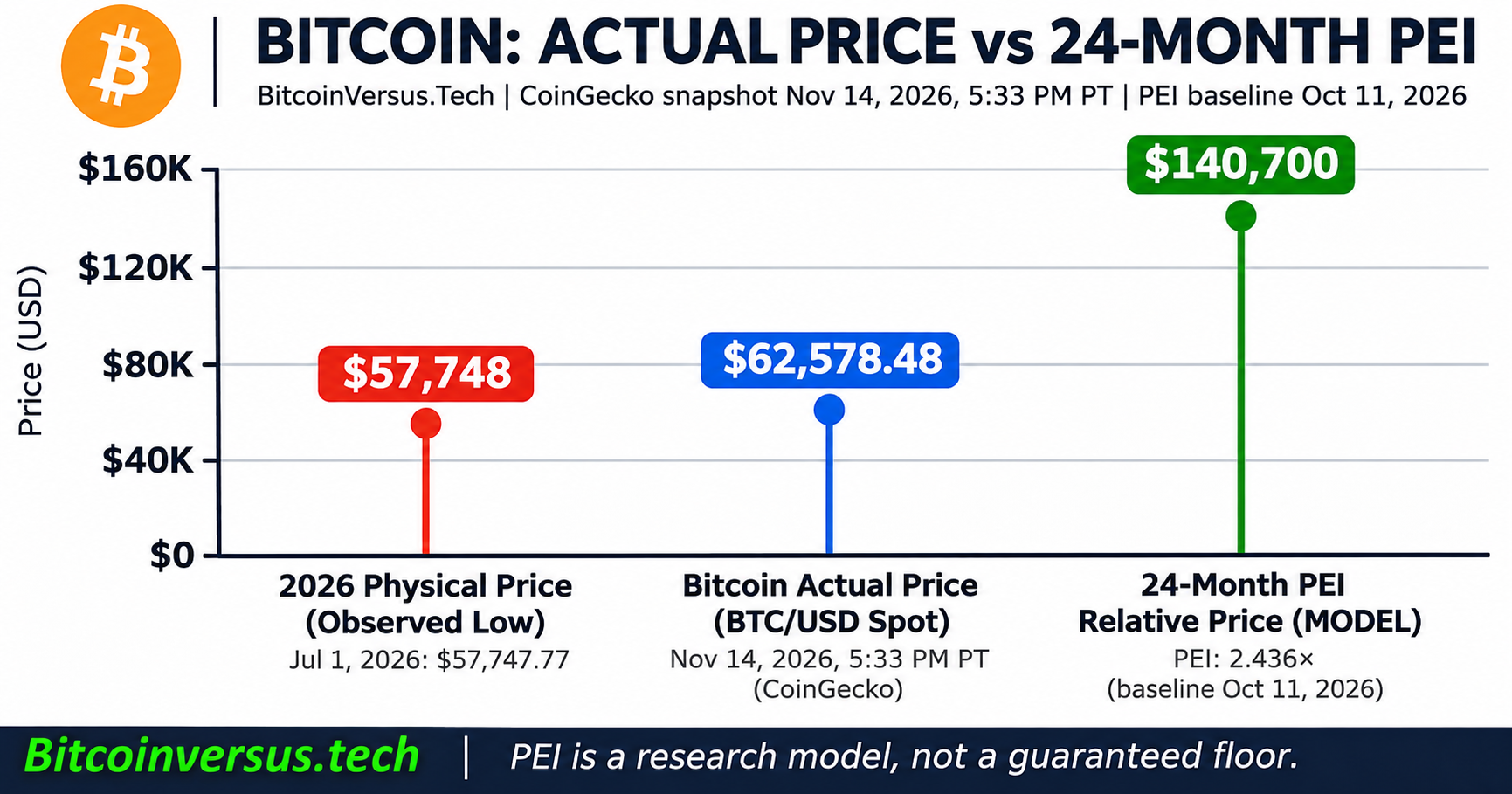
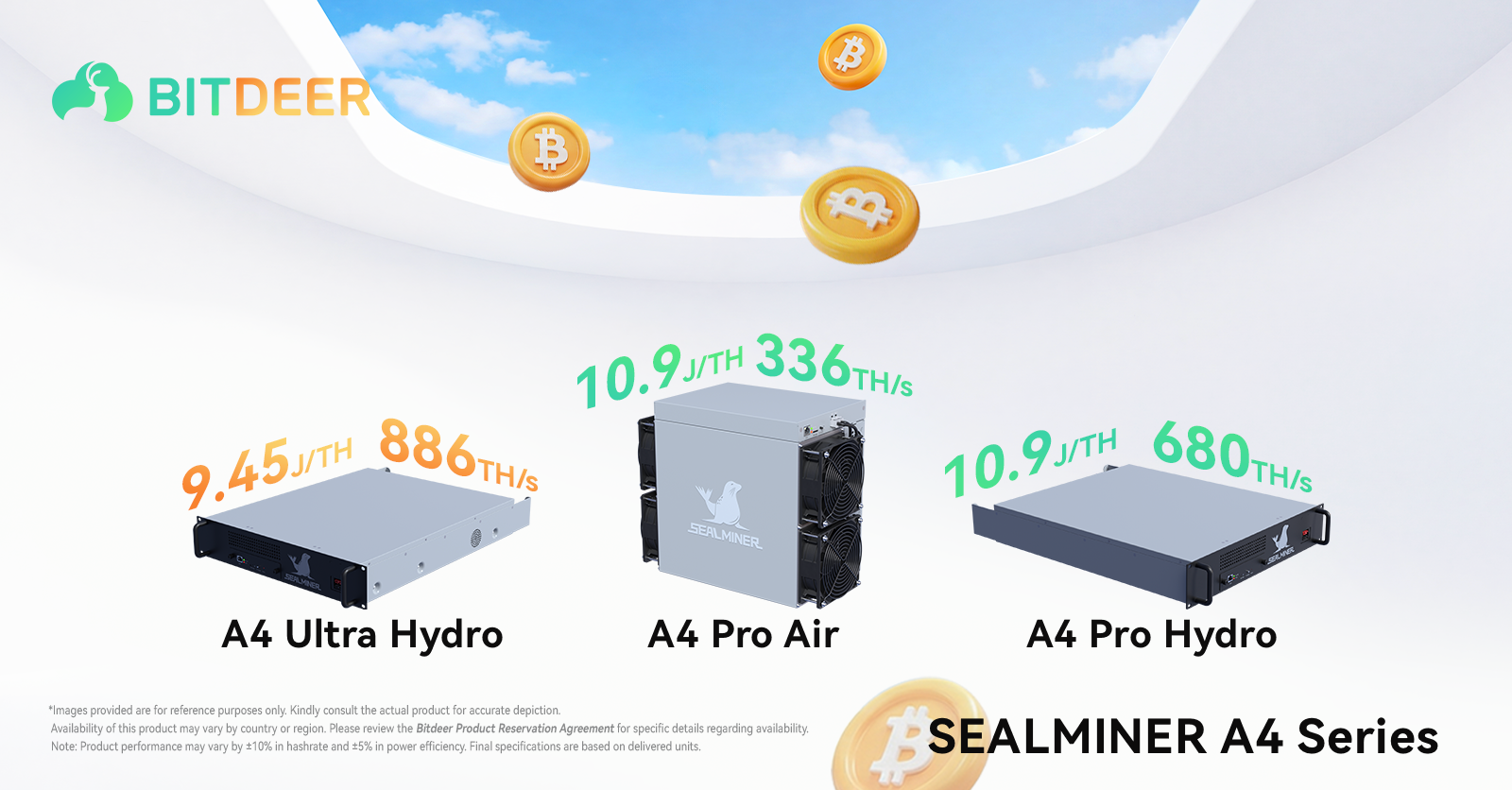
The 24-month PEI model published October 12 uses 640.61 → 1,029 EH/s network hashrate and leading manufacturer-rated ASIC efficiency improving from 13.5 → 8.9 J/TH. Its calculation, (1,029 ÷ 640.61) × (13.5 ÷ 8.9) ≈ 2.436×, produces a relative model valuation near $140,700 using the observed $57,747.77 physical-price anchor. Bitcoin was actually quoted at $62,578.48 on November 14, 2026, around 5:33 p.m. Pacific, on CoinGecko, approximately 8.4% above the July physical low and 55.5% below the 24-month PEI relative value. The new chart compares those three measured or modeled quantities on a common zero-based USD axis; the spot quote is a dated market snapshot, not a live feed.
The 24-month reading covers a broader ASIC replacement cycle than a single-year comparison and quantifies growth in network computation alongside improvements in leading machine specifications. The 8.9 J/TH endpoint is manufacturer-rated rather than deployed-fleet efficiency, while network hashrate estimates remain noisy. As BitcoinVersus.Tech’s earlier 18-month research also illustrates, a calculated relative price is a model comparison, not proof of an exchange floor: mining investment and protocol security do not create mandatory Bitcoin buy orders at $57,748.
2. Difficulty adjustment cushions the miners who remain
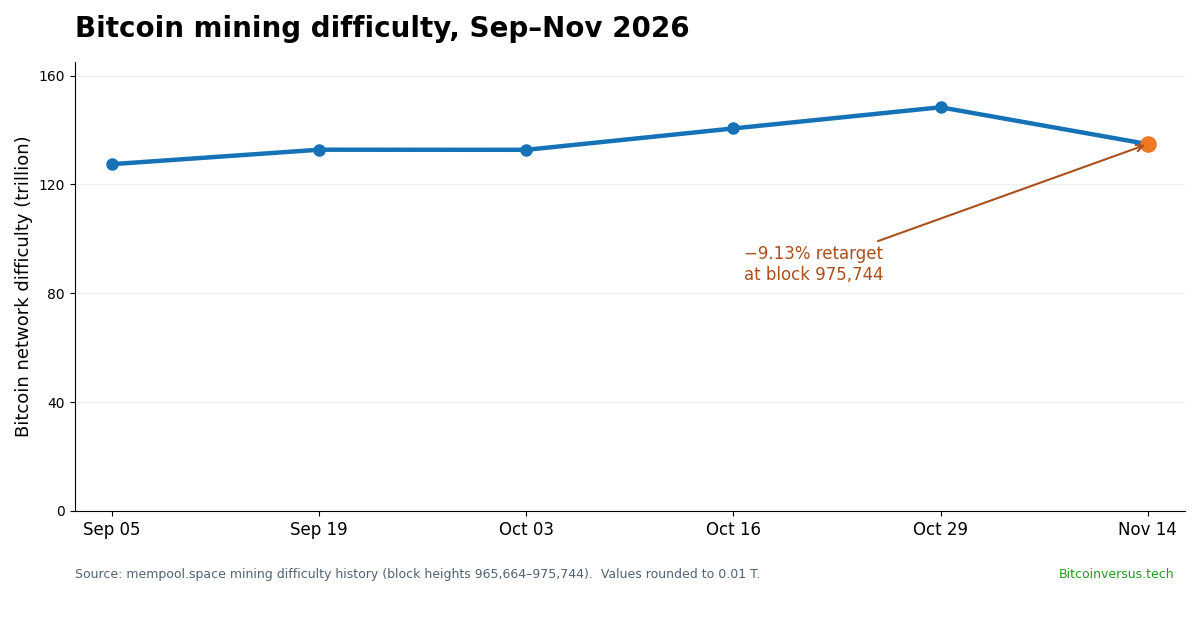
Bitcoin’s automatic difficulty retarget provides a more immediate stabilizing mechanism. On November 14, at block 975,744, difficulty fell 9.13% from approximately 148.36 trillion to 134.82 trillion, as recorded by mempool.space. At unchanged hashrate, a miner’s expected subsidy output per hash subsequently rose about 10.04%. Lower difficulty can help surviving operators withstand weaker dollar revenue.
A mining-cost illustration exposes the limit. At 13.5 J/TH, one PH/s requires about 13.5 kW of miner power, or 324 kWh daily. Electricity at $0.08/kWh costs $25.92 daily. Expected subsidy near 0.0004663 BTC per PH/s per day at the new difficulty implies an electricity-only break-even price around $55,600/BTC, before cooling, labor, pool fees, financing and depreciation. At $0.06/kWh, the same threshold falls near $41,700. Neither figure is a universal industry cost or exchange floor.
1. Buyers already defended the July low once
The strongest argument is observable trading behavior. Bitcoin reached $57,747.77 on July 1, but recovered toward $83,450 by October 12—roughly 44% above the low. A rebound after an identifiable capitulation point indicates that buyers were willing to absorb supply at higher prices following the drawdown. The 24-month PEI reading points to greater long-run network productive capacity, but neither that modeled value nor the rebound confirms buyers will defend the July low on another test.
However, one rebound cannot establish a permanent bid. November’s renewed selloff, ETF redemptions, tighter financial conditions, exchange disruption and leverage liquidations could overwhelm previously observed demand. No current order-book depth, funding position or buyer commitment proves that $57,747.77 will be defended on a retest.
What would invalidate the floor argument?
A sustained break below $57,747.77, especially alongside deteriorating spot demand and persistent forced selling, would invalidate the specific claim that the July low remains the 2026 floor. The Physical Price would then update to the new observed low; the PEI calculation would need corresponding revisions. A subsequent rebound would not retroactively restore the old annual minimum.
Conclusion: A July demand response, the November difficulty reset and multi-year mining-efficiency growth offer three reasons to watch $57,748 as potential support. They do not justify asserting Bitcoin cannot fall below it. The honest claim is conditional: the old low may hold if buying demand absorbs available sell orders. PEI identifies the reference level and network context; price discovery decides the outcome.
Sources and methodology: Yahoo Finance historical BTC-USD daily candles (July 1 low); CoinGlass 2026 history (year-to-date comparison); mempool.space difficulty history (November 14 retarget); BitcoinVersus.Tech corrected PEI windows (October 12); Bitdeer reported fleet performance. Hash-output and power examples are modeled, exclude transaction fees and site overhead, and are not a sample of miners’ audited cash costs. All market snapshots are dated; later prices may differ.
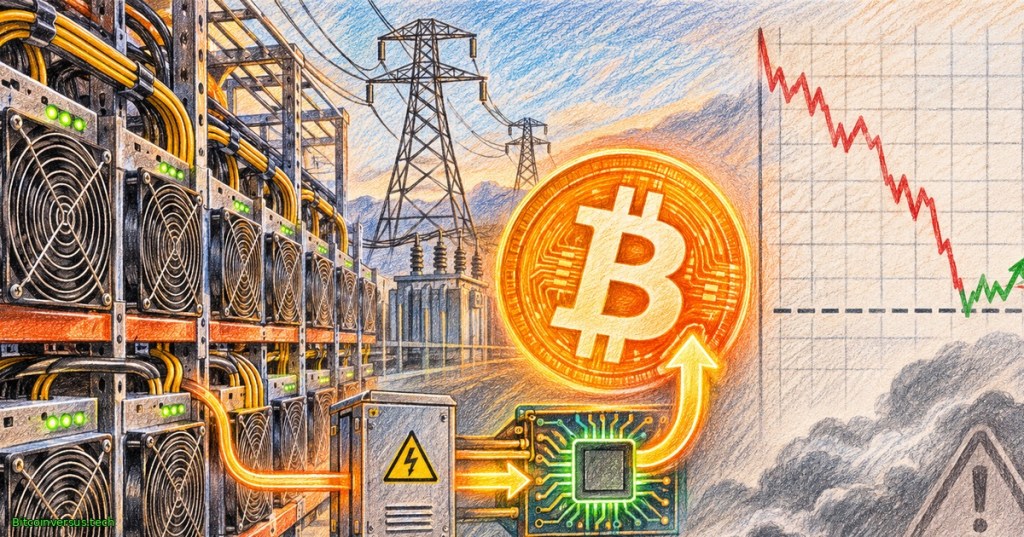
Editor’s Note: PEI is an experimental BitcoinVersus.Tech research framework, not an independently validated market-pricing model. Physical Price denotes a measured historical low, not a thermodynamic constraint or a guaranteed investment entry. The colored-pencil featured image is conceptual editorial art, not verified mine footage. Two in-story charts reuse source-labeled BitcoinVersus.Tech research and the ASIC photograph is manufacturer material. No video was presented as independently playback-verified.

BitcoinVersus.Tech is volunteer-run. Scan the original donation QR from another screen with a compatible Bitcoin wallet. On a phone displaying the QR, use a wallet’s supported saved-image scanning function. Independently verify recipient address 3C9o19EH5HSiwEPyCTmEKzxhNCbo2X6TTb and the optional 5,000-satoshi amount before sending. Bitcoin transfers are generally irreversible.
We volunteer daily to ensure information on BitcoinVersus.Tech is Verifiably True. All reporting is educational and informational, not individualized financial or investment advice.


Leave a Reply