Northern Sweden’s hydroelectric infrastructure is attracting another developer of sovereign artificial intelligence capacity. On November 10, Fossefall announced a grid connection agreement with Vattenfall Eldistribution for its proposed AI factory in Jokkmokk. The agreement reserves 65 MW, while a further 135 MW remains a possible expansion, not committed operating capacity.
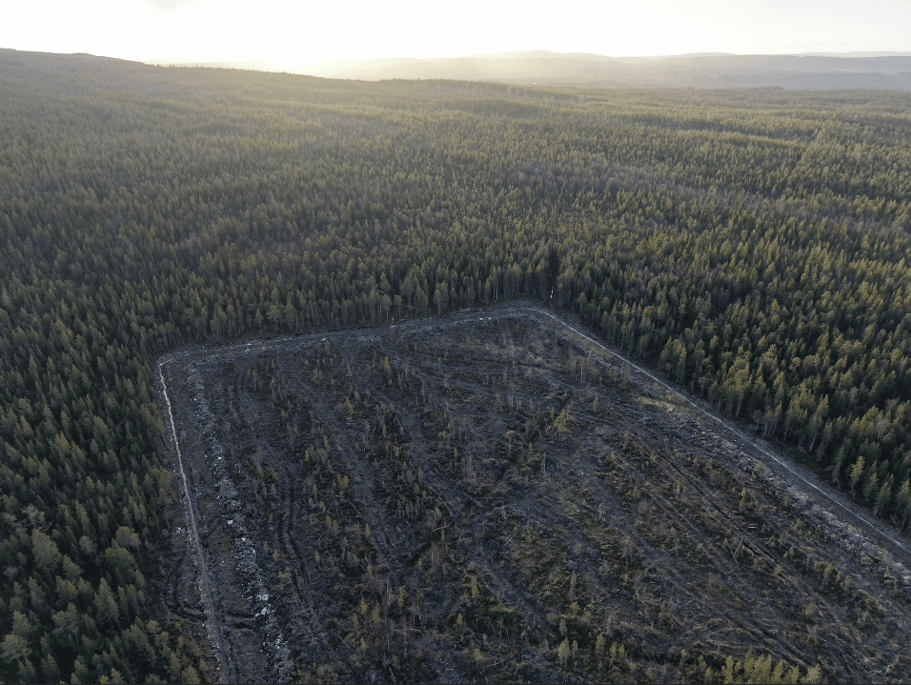
The Norwegian developer is pursuing a final investment decision and anticipates construction beginning in the second quarter of 2027. Its business model includes ownership and operation of graphics processors alongside the physical computing facilities. The proposed site occupies 350,000 square metres of industrially zoned land within Sweden’s northern SE1 electricity bidding zone. The featured aerial photograph supplied by Fossefall depicts the site before factory construction.
Hydropower and the electrical connection
Fossefall describes its Nordic infrastructure strategy as grounded in renewable hydroelectricity. Reservoir-based hydropower offers a degree of dispatchability because operators can regulate water flowing through turbines, subject to hydrology, reservoir constraints and environmental requirements. However, a connection agreement does not by itself certify the hourly source of every megawatt consumed. A dedicated Jokkmokk generation or supply contract was not identified in the November announcement.
At a hypothetical constant draw of 65 MW, the campus would consume 569.4 GWh per year. A 200 MW build-out at full continuous load would consume 1.752 TWh. Both figures are engineering scenarios calculated from 8,760 annual hours, rather than forecasts of actual consumption.
Grid capacity versus GPU capacity
A data center’s electricity connection supplies more than accelerators. Cooling equipment, pumps, fans, network switches, storage, lighting and electrical conversion consume part of the available power. Assuming a power usage effectiveness of 1.15, 65 MW of facility electricity could support approximately 56.5 MW of IT load. The assumed efficiency is illustrative; Fossefall has not published a verified operating PUE for Jokkmokk.
High-density GPU clusters additionally need coordinated thermal design, redundant network fabrics and electrical protection capable of handling rapid changes in demand. Cold outdoor temperatures can reduce mechanical refrigeration requirements, but pumps and other auxiliary systems still require electricity.
A modular development strategy
The company separately reported breaking ground in Fyresdal, Norway, on October 19, where five Armada modules with more than 9 MW of combined capacity are planned. That separate construction project illustrates Fossefall’s implementation approach without establishing the equipment design for Jokkmokk.
The milestones that will establish actual Swedish computing capacity include investment approval, construction contracts, completion of network works, utility energization and commissioning of accelerator clusters. A reservation represents meaningful progress, but an energized and tested facility is the stronger evidence.
Related coverage: Paraguay hydroelectric compute · Tasmania AI factories · Norwegian mining infrastructure · Geothermal AI power


Leave a Reply