Digital Realty announced on November 17, 2026, that its dedicated electrical connection serving Digital Park Fechenheim in Frankfurt, Germany, had entered operation. The company announcement describes a 110 kV underground connection stretching approximately 16 kilometers from Karben, designed for up to 300 MVA. The completed electrical link is distinct from the campus’s eventual 200 MW computing capacity. As with Egypt’s proposed 100 MW AI facility, usable computing capacity depends on more than announced power infrastructure.
Why 300 MVA does not mean 300 MW
Alternating-current equipment is commonly rated in volt-amperes, which represent apparent power. Real power, measured in watts, represents the rate of energy transfer available to perform work. For a balanced three-phase system, apparent power equals the square root of three multiplied by line-to-line voltage and line current. A hypothetical single equivalent 300 MVA circuit at 110 kV would carry approximately 1,575 amperes at its rated apparent power. The actual number of cables, circuit arrangement and individual current ratings were not disclosed.
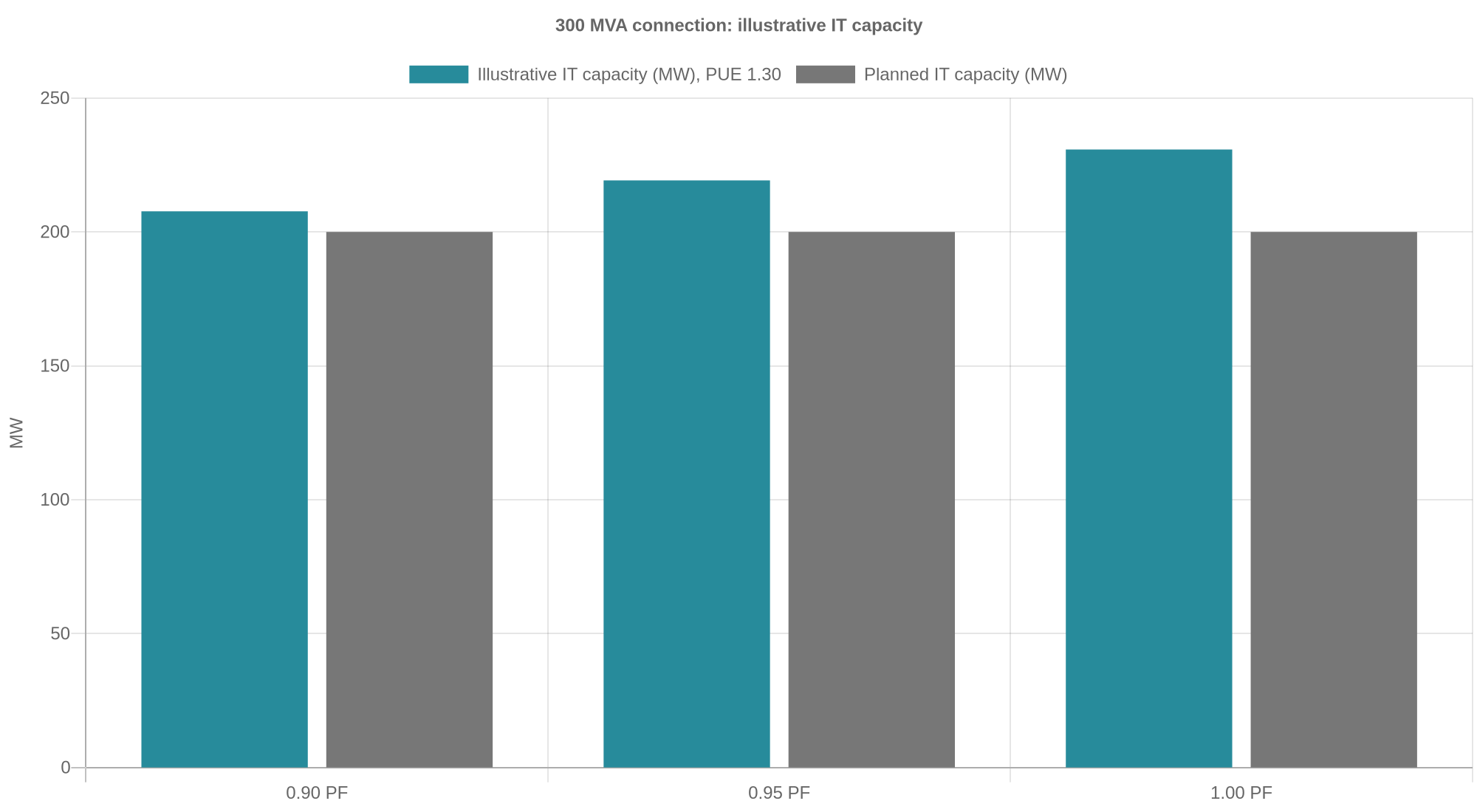
At a power factor of 0.95, 300 MVA corresponds to 285 MW of real power. Assuming an illustrative facility power usage effectiveness (PUE) of 1.30, approximately 219.2 MW would remain for IT equipment before separately imposed operational constraints. A 200 MW IT load at that PUE would require 260 MW of total facility power, or approximately 273.7 MVA at the same power factor. None of those assumptions represents a measured Fechenheim operating condition.
Our Santa Clara data center analysis illustrates how cooling and other facility loads affect the distinction between electrical supply and computing demand. Nameplate capacity cannot establish redundancy. Maintenance allowances, protection settings, transformer ratings and contractual limitations determine how much capacity can be delivered reliably.
An urban electrical construction project
Digital Realty says construction and commissioning required approximately 20 months. Within Frankfurt, trenchless construction accounted for more than 70% of the route, according to the operator. The company describes an investment in the hundreds of millions of euros without specifying an exact sum. Trenchless methods can reduce surface disruption when crossing existing roads or utilities, although cable installation still requires engineering for thermal conditions, insulation integrity and maintenance access. The November 25 trade report corroborates the announced milestone.
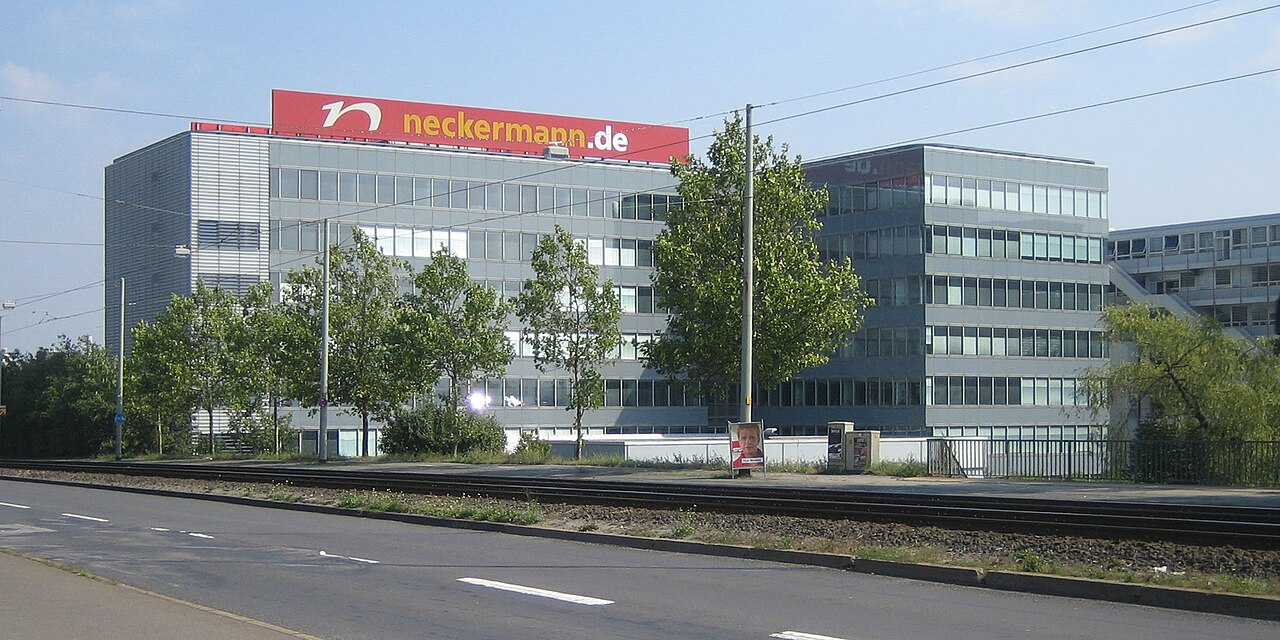
The campus occupies a former commercial property. DPR Construction’s project documentation describes conversion of the protected Neckermann building into a data center. Repurposing existing structures requires coordination between architectural constraints, electrical distribution, cooling systems and equipment access. A different development approach is examined in our Estonian solar and data center infrastructure report.
From grid connection to operational servers
Three of the planned eleven facilities are operational, Digital Realty reports, with a fourth scheduled for 2027. The full 200 MW IT target remains a development objective. Commissioning subsequent buildings requires energizing and testing downstream transformers, switchgear, backup power, cooling and network infrastructure. Optical equipment supply, examined in our 800G optical infrastructure report, is another independent dependency. The new electrical connection removes one development constraint; it does not establish that the entire campus is commissioned or operating at its design capacity.
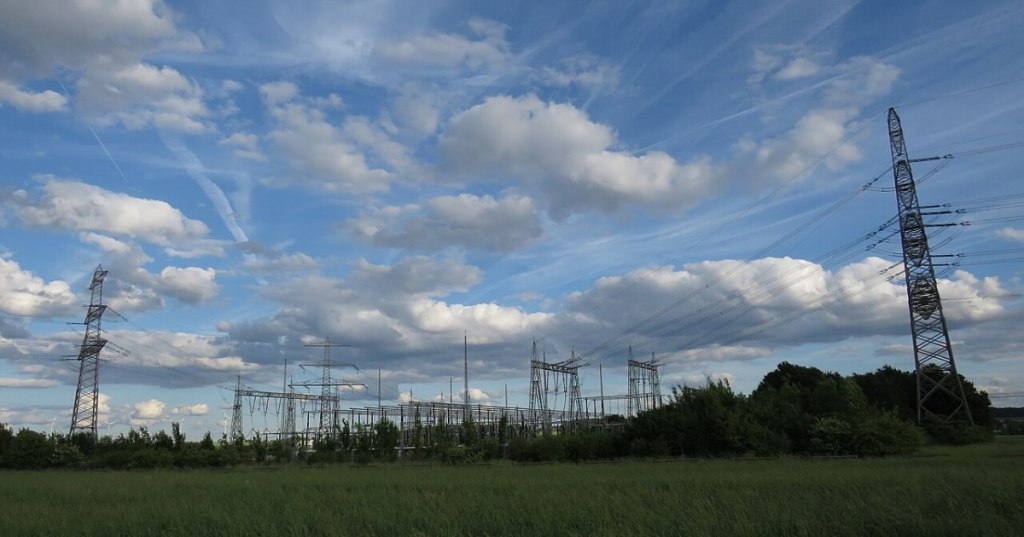
Featured photograph: Karben substation, May 25, 2022, Adl252 / Wikimedia Commons, CC BY-SA 4.0, cropped. Historical context, not footage of the new underground connection.
We volunteer daily to ensure the credibility of the information on our platform is Verifiably True. If you would like to support our independent research, please scan the QR code below.

BitcoinVersus.Tech Editor’s Note: BitcoinVersus.tech is not a financial advisor. The media platform reports on financial and technology subjects purely for informational purposes.


Leave a Reply