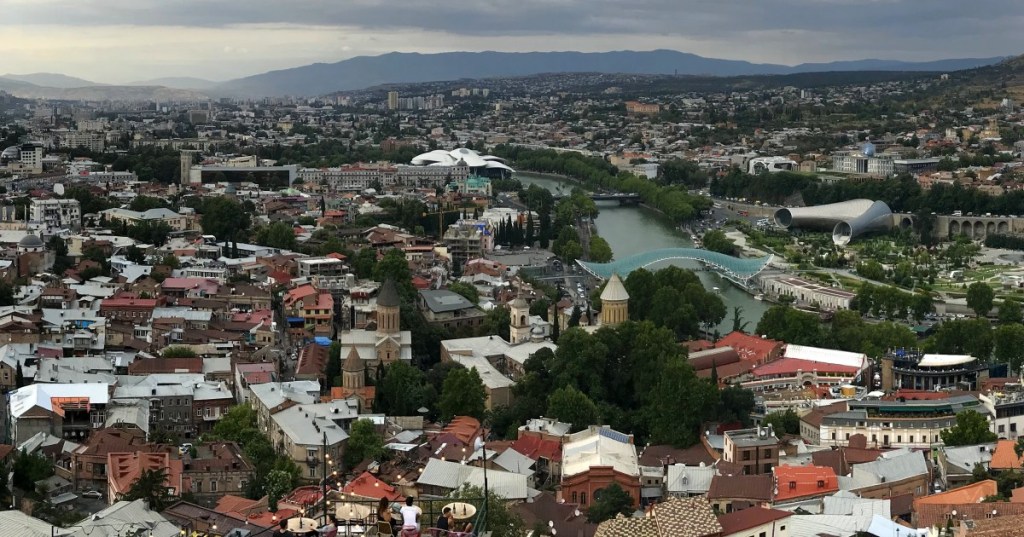
Silk Cloud, a subsidiary of Georgian telecommunications provider Silknet, signed an agreement to deploy NVIDIA Blackwell Ultra computing infrastructure supplied by HPE. Business Media Georgia reported the announcement on October 21, 2026, and Data Center Dynamics followed on October 24. The proposed cloud service is scheduled for 2027, contingent on authorizations. The project differs from the operational GPU installation examined in our Québec mining-to-AI infrastructure report: Silk Cloud has announced an agreement rather than demonstrated live compute capacity.
Eight GPUs form the basic compute node
Silk Cloud selected the HGX B300 platform. NVIDIA’s reference architecture describes an eight-GPU baseboard linked through NVLink. The high-bandwidth interconnect allows accelerators to exchange intermediate tensors during distributed model execution. A larger cluster connects multiple servers using a separate network fabric; the bandwidth and latency of that fabric affect synchronization during training. The reference architecture includes high-speed Ethernet interfaces and remote direct memory access, but the Georgian operator has not disclosed its final network topology.
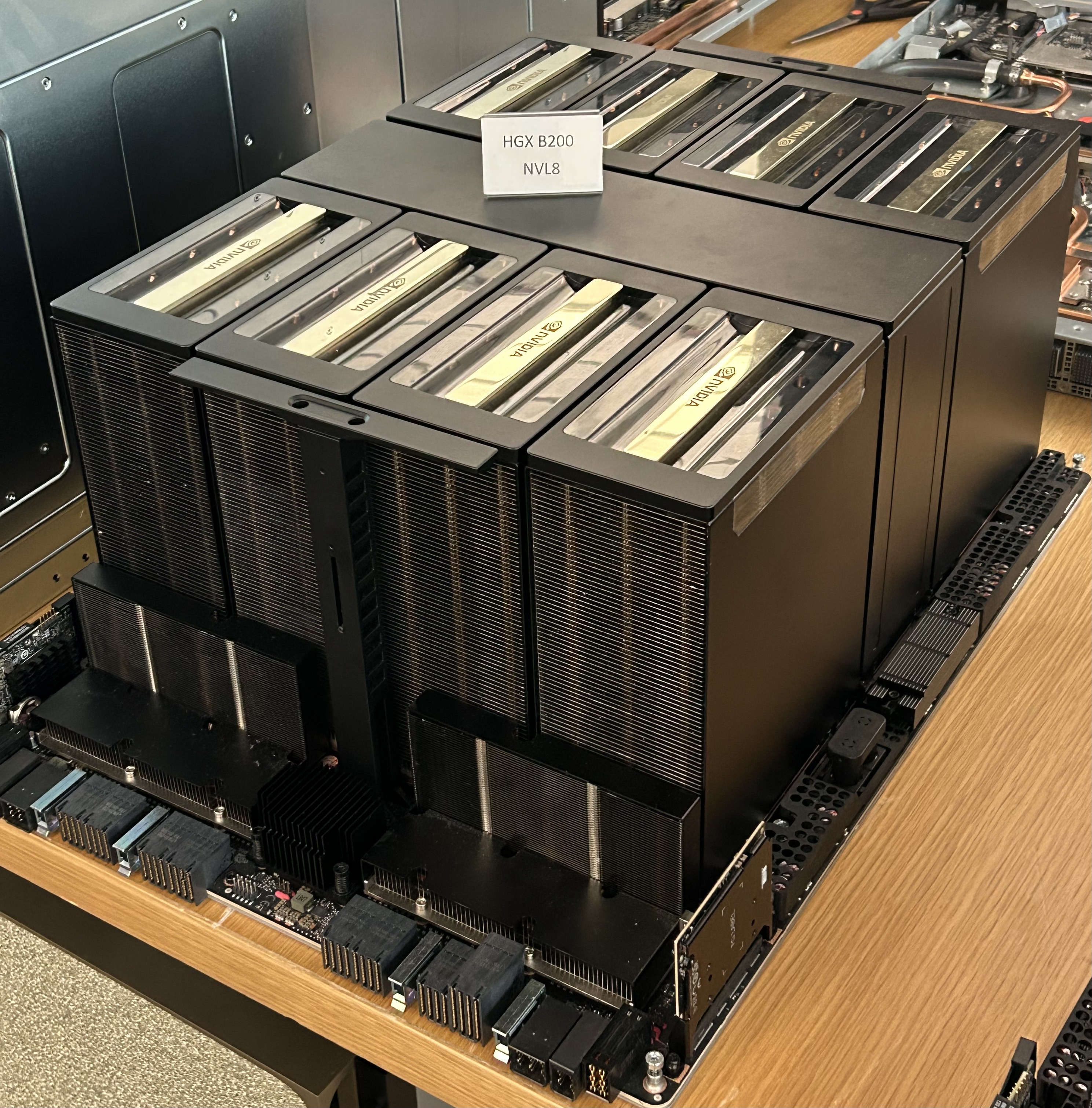
NVIDIA’s July 2026 reference design specifies up to 2,304 GB of aggregate GPU memory per HGX B300 node. Aggregate memory is distributed across accelerators rather than presented automatically as a single unrestricted allocation. Software partitions model weights, attention caches and intermediate activations according to the workload. As our Sakana model analysis explains, parameter count alone cannot establish inference throughput or memory requirements. Model precision, batch size and context length also matter.
The electrical and networking infrastructure
Silknet broke ground on a commercial data center in Tbilisi in August 2026. Data Center Dynamics reported that the facility is planned to offer 2 MW of compute capacity. The figure describes the planned facility, not a disclosed GPU-only allocation. Multiplying a power limit by the reciprocal of a GPU power rating would overestimate installation capacity because servers also contain processors, memory, network interfaces and power-conversion components. Facility cooling and electrical distribution introduce additional demand. The company has not disclosed the initial GPU count, rack density or measured power usage effectiveness.
Silknet’s existing fiber infrastructure supplies a foundation for customer connectivity. External fiber connects customers to cloud services, while internal accelerator networking carries distributed computation traffic. Each requires a separate capacity plan. Our CleanSpark AI campus analysis examines related power constraints in the US state of Georgia, a geographically distinct project.
Background video: Business Media Georgia, November 3, 2025: Georgia’s proposed data center and national prospects (Georgian-language reporting). Earlier national infrastructure context, not footage of an installed B300 cluster. The original broadcaster link is provided because in-page playback was not independently verified.
Local model development and data residency
Silk Cloud plans to provide training and inference services, including resources for Georgian-language models. Local processing can help organizations satisfy requirements concerning the physical location of stored data, but sovereignty also depends on access control, encryption-key custody, backups, software supply chains and contractual oversight. The presence of local GPUs does not alone guarantee compliance.
NVIDIA included Silknet in its October 21 telecommunications infrastructure announcement. Future commissioning evidence should establish installed equipment, available customer capacity and measured service reliability. The country’s earlier mining industry also warrants a distinction: Tbilisi Free Industrial Zone reported in August that crypto mining there had largely ceased. The planned Silk Cloud project is AI infrastructure rather than a verified conversion of those mines. As with The Gambia’s planned energy infrastructure, contractual milestones should not be confused with operational measurements.
Featured photograph: Dudva, Tbilisi panorama, August 8, 2019, cropped, CC BY-SA 4.0. City context, not the project site.
We volunteer daily to ensure the credibility of the information on our platform is Verifiably True. If you would like to support our independent research, please scan the QR code below.



Leave a Reply