Tech Docs
-

Networked hosts provide essential services that enable communication, resource sharing, and security within a network. One of the most fundamental services is web hosting, where web servers deliver websites using HTTP and HTTPS protocols, ensuring content is accessible globally. File hosting and sharing services, such as FTP (File Transfer Protocol), SMB (Server Message Block), and…
-

Network configuration involves assigning and managing how devices connect and communicate across a network. IP addressing is a fundamental concept—devices can be assigned static IP addresses (manually set and unchanging) or dynamic IP addresses (automatically assigned by a DHCP server). Static IPs are often used for devices like servers or printers to ensure consistent accessibility,…
-
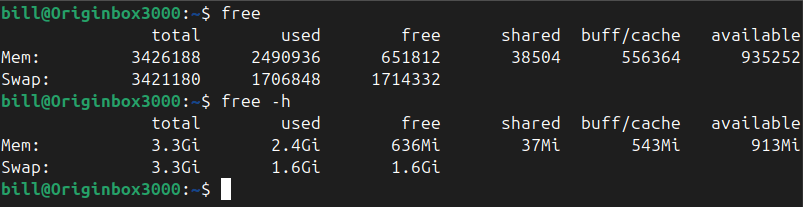
The free command in Linux is used to display comprehensive memory usage information, reporting the total, used, free, shared, buffer/cache, and available memory, including both RAM and swap space. It provides essential insights for system administrators and users to efficiently monitor and manage resources. By default, running the command free outputs memory details numerically in…
-

Transmission Control Protocol (TCP) and User Datagram Protocol (UDP) are two core transport-layer protocols that facilitate network communication, each serving distinct purposes. TCP is connection-oriented, meaning it establishes a reliable session between devices before data is transmitted. It uses a three-way handshake (SYN, SYN-ACK, ACK) to ensure that both sender and receiver are ready to…
-

Setting up network connectivity on a mobile device involves configuring Wi-Fi, cellular data, Bluetooth, and VPN settings to ensure seamless access to the internet and other devices. Wi-Fi networks must be set up using the correct security protocols, such as WPA2 or WPA3, to prevent unauthorized access. Users should also verify SSID visibility and ensure…
-
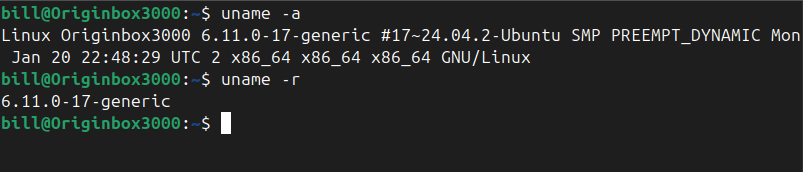
The uname command in Linux prints system information about the current machine. Specifically, it reports details such as the kernel name, kernel release, kernel version, machine hardware name, and the operating system. This command is commonly used by administrators and users alike to quickly determine system details for troubleshooting, software compatibility checks, or documenting system…
-
Understanding how to use networking tools in real-world scenarios is a core part of CompTIA A+ training. Each tool has a specific purpose, from diagnosing connection issues to testing cables or analyzing network traffic. Below is a breakdown of essential tools and how they would be used when given a practical situation: Cable Tester A…
-

Ensuring seamless network connectivity on mobile devices requires proper configuration of Wi-Fi, cellular data, and Bluetooth settings. Wi-Fi connections should be set up using the appropriate security protocols, such as WPA2 or WPA3, to prevent unauthorized access. When configuring cellular data, users must input the correct Access Point Name (APN) settings, which define how the…
-

Mobile devices rely on a variety of accessories and ports to enhance functionality and improve user experience. Properly setting up and configuring these peripherals ensures seamless connectivity and optimized performance. Common accessories include external keyboards, wireless headphones, docking stations, and styluses, each requiring correct pairing and settings adjustments. Bluetooth-enabled accessories must be paired through the…
-
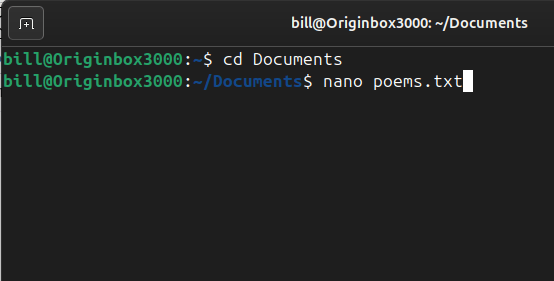
Nano is a simple and user-friendly command-line text editor for Unix-based systems, including Linux. It is designed to be easy to use, even for beginners, with a straightforward interface and on-screen shortcuts. Unlike more complex editors like Vim or Emacs, Nano does not require users to learn advanced keybindings or modes, making it an accessible…
-
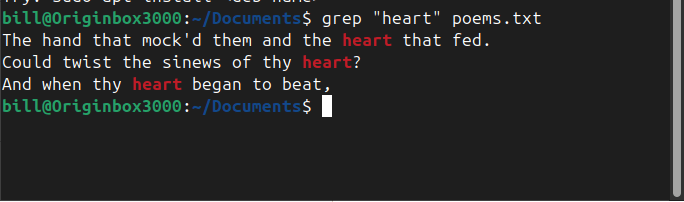
The grep command in Linux is a powerful text-search utility used to find specific patterns within files. In the screenshot, the command grep “heart” poems.txt was executed, instructing the system to search for the word “heart” inside poems.txt and display all matching lines. The output highlights instances where “heart” appears within the poem, helping the…
-

Links in Linux are essential for managing files efficiently, offering flexibility in how files are referenced and accessed. Two primary types exist: hard links and symbolic links (also called soft links). While both serve as references to files, they function differently in how they store and manage data. A hard link is a direct reference…

