
Weston Robot said on October 14, 2026 that an autonomous electric boat is collecting floating rubbish on Singapore’s Punggol Waterway in partnership with 800 Super Waste Management. The unmanned surface vessel (USV) takes over repetitive water-cleaning routes while crews supervise the system and empty its debris basket.
Operators designate a cleaning area; the vessel plans a route, navigates along banks and open water, and avoids obstacles and restricted zones. Weston says it can return to a charging station automatically and follow an unattended schedule. A 5G connection also lets a control-center operator monitor operations or take over when needed.
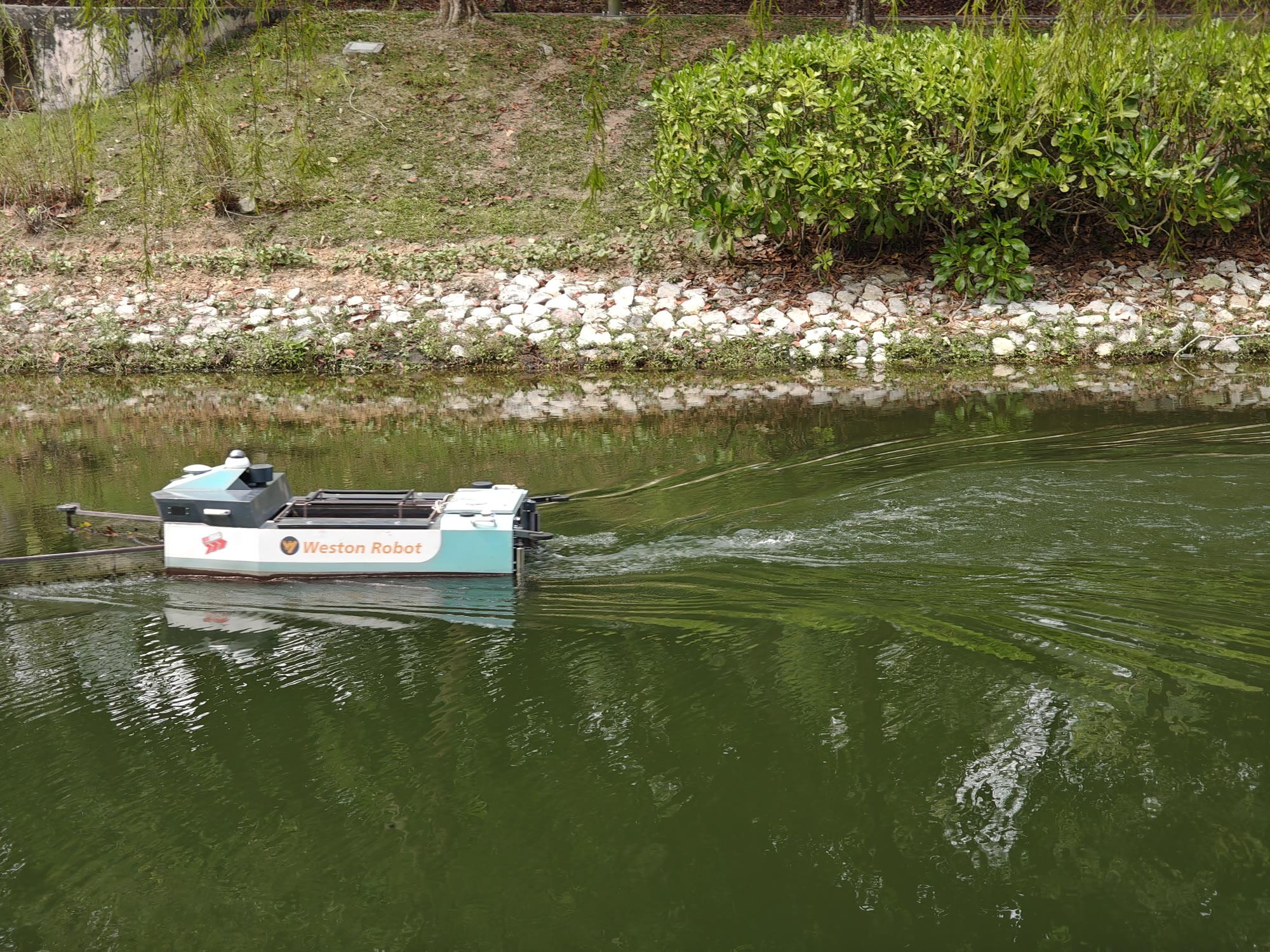
The deployment matters because much robotic cleaning still relies on a person controlling each movement. As with airport inspection robots, meaningful autonomy depends on reliable navigation, safe recovery and sensible human oversight—not merely a machine moving on its own.
Weston Robot’s official field video of the Singapore waterway deployment. Source linked by the manufacturer; player playback must be checked separately from saved markup.
How the Water-Cleaning Robot Works
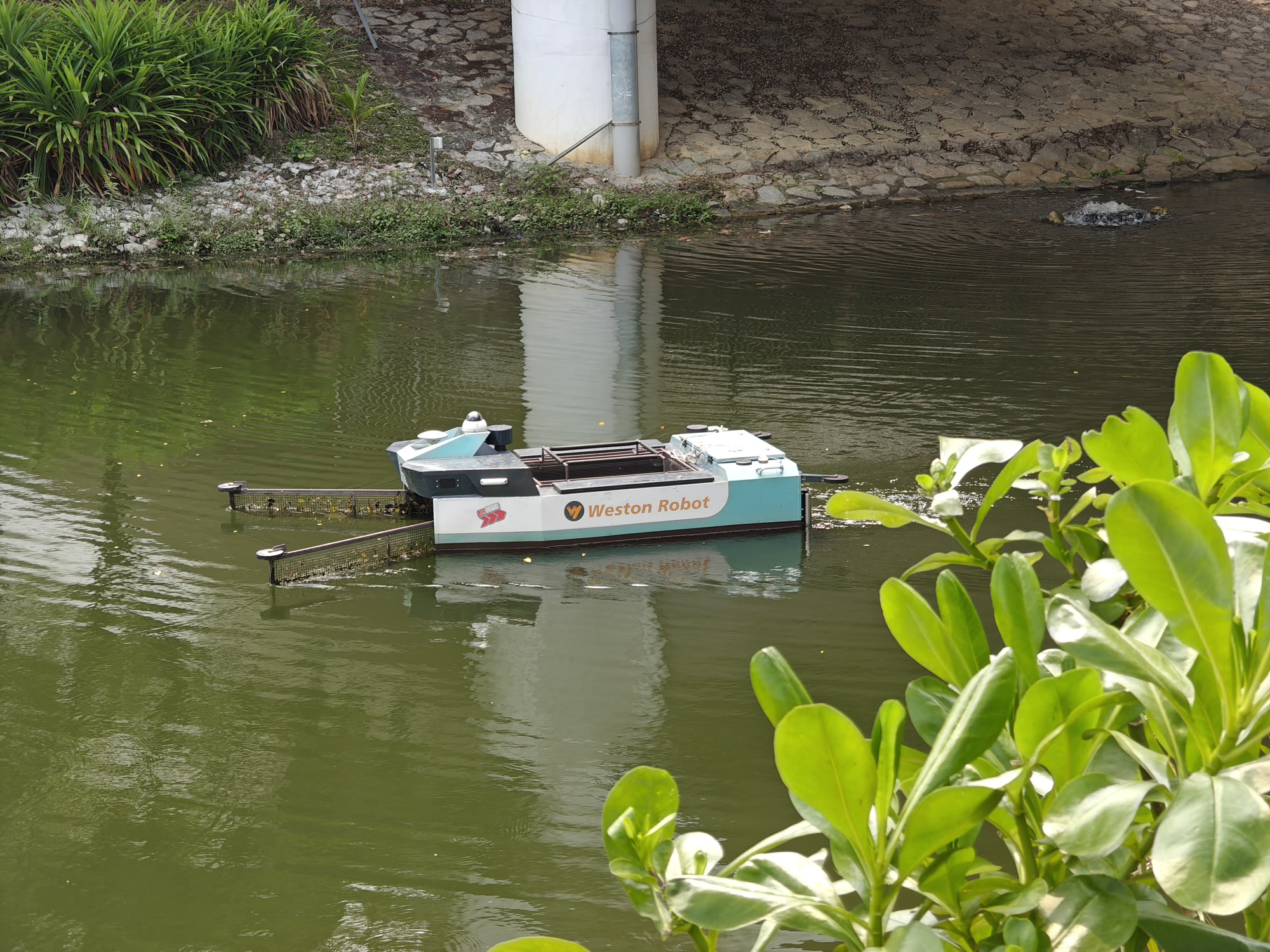
The company’s field photography shows a low-profile boat with two extended collection arms directing floating leaves and other litter toward a central container. This is a surface-debris collector, not a device that filters dissolved pollutants or guarantees the entire waterway is clean.
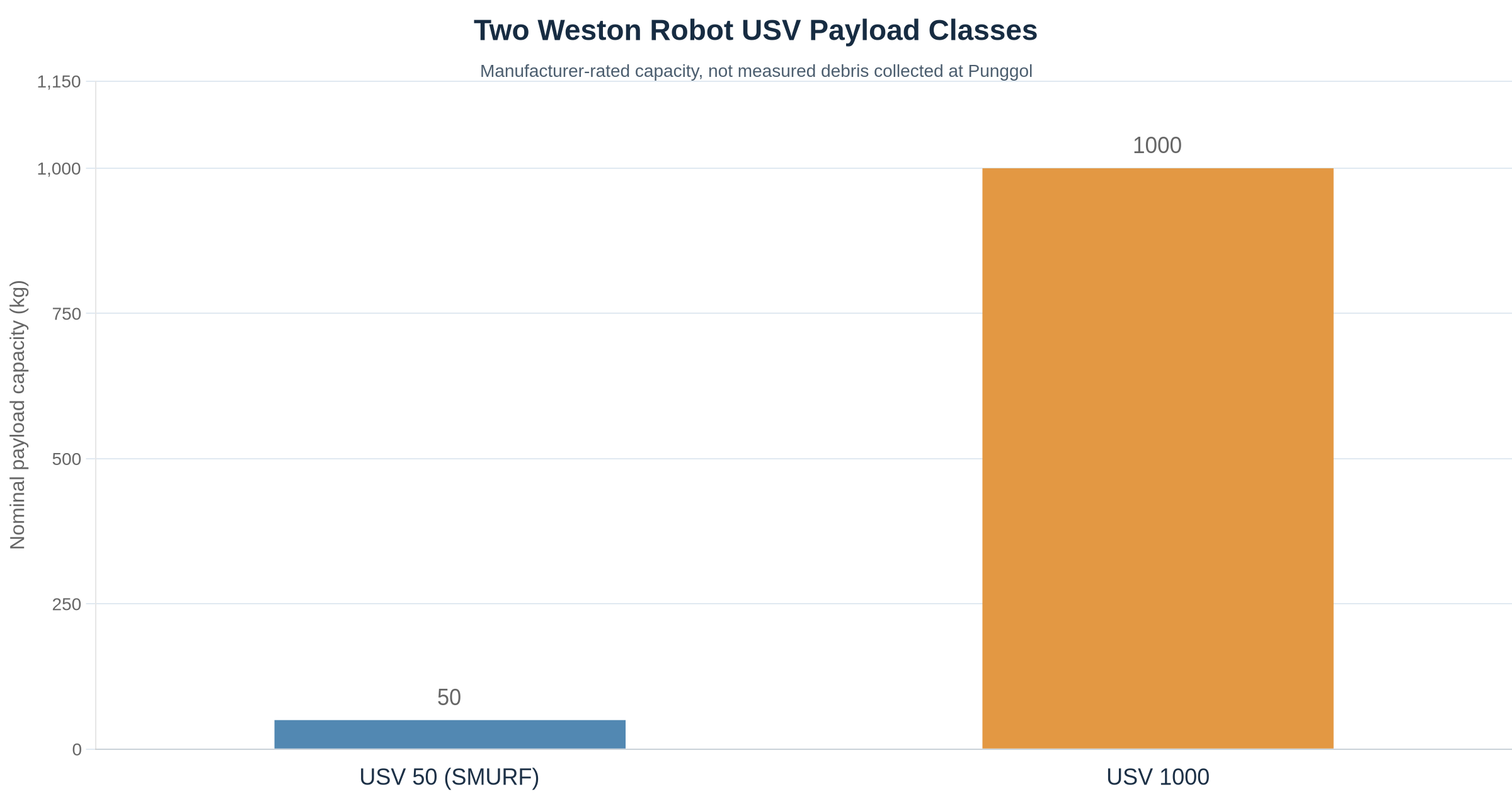
Weston’s SMURF product specifications describe two payload classes: approximately 50 kilograms for the smaller craft and 1,000 kilograms for its larger vessel—a 20-fold nominal capacity difference. These are product specifications, not measured rubbish collected at Punggol; the deployment announcement does not specify a total removed.
The manufacturer lists four to six hours of battery operation for the small model and six to eight hours for the larger one. Both use electric propulsion and real-time kinematic navigation. Actual endurance depends on route, conditions, load and charging access; no independently audited Punggol throughput or operating-cost figures were supplied.
From Demo to Routine Maintenance
The project fits a broader shift toward practical, specialized robots. Unlike experimental swimming robots or large autonomous naval craft, this vessel performs a routine municipal maintenance job. It resembles automated pool cleaners in purpose, but operates on public waterways with different hazards.
Weston says Singapore’s PUB, NEA and IMDA have tested its platform. That statement should not be mistaken for a newly published independent performance audit. The unanswered questions are debris recovered per day, intervention frequency, lifecycle costs and whether wireless connectivity remains reliable near bridges and shorelines.
For waterway operators, successful scaling will require repeatable daily cleaning, quick battery turnarounds and safe handling when boats, kayaks or pedestrians appear. The broader lesson mirrors robotics designed around complete workflows: a useful autonomous machine must finish the job, recover from interruptions and make human labor safer.
BitcoinVersus.Tech
BitcoinVersus.Tech Editor’s Note: We volunteer daily to ensure the credibility of the information on this platform is Verifiably True. If you would like to support our work and help further secure the integrity of our research initiatives, please scan the QR code below to donate 5,000 sats. For best results, scan the QR code from a laptop or larger screen.

Bitcoin address: 3C9o19EH5HSiwEPyCTmEKzxhNCbo2X6TTb. On a phone, open the QR image on another screen or copy and verify the address in your wallet before sending.
BitcoinVersus.tech is not a financial advisor. This media platform reports on financial subjects purely for informational purposes.


Leave a Reply