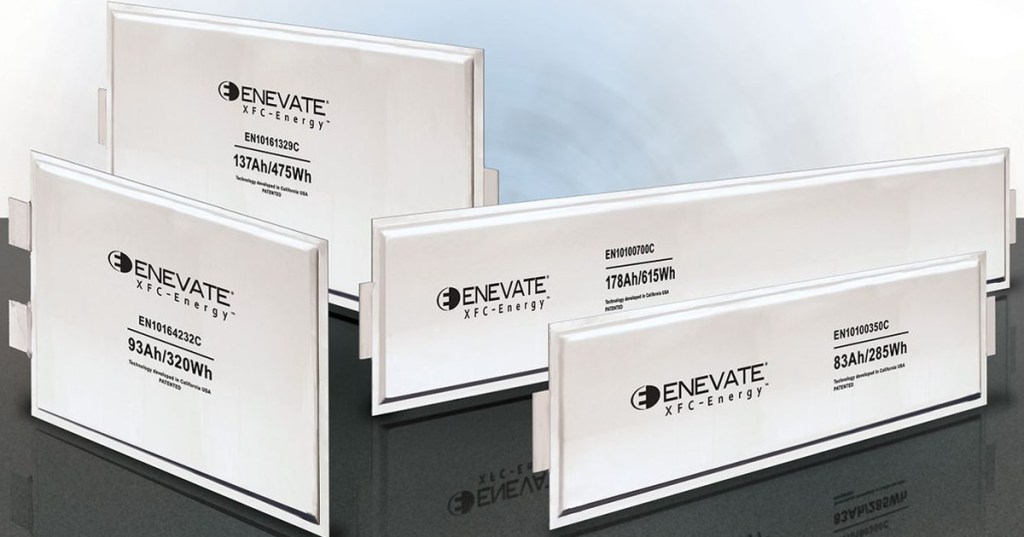
Battery developer Enevate Technologies has introduced five proposed lithium-ion cell configurations for drones, humanoid robots, racing vehicles and data-center power systems. Announced on October 27, 2026 and revisited in November 6 engineering coverage, the Trifecta platform advertises modeled energy densities from 400 to 545 watt-hours per kilogram (Wh/kg). The headline figures represent design models built on previous prototype work, not published measurements from commercial Trifecta batteries.
Battery designers balance three constraints: how much energy a cell stores relative to its mass, how quickly it can release or accept electrical power, and how many charging cycles it survives. Enevate says customers can select among distinct designs rather than force a single chemistry to maximize every performance measure simultaneously. No announced configuration combines the maximum energy density, maximum C-rate and maximum cycle life.
Five designs, different compromises
The Trifecta Surge design targets 400 Wh/kg, a 40C rate and 500 cycles for high-power applications such as racing or short-duration data-center buffering. Trifecta Prime targets 425 Wh/kg at 20C for 1,000 cycles, emphasizing repeat use in robots and commercial drones. A 20C rating denotes a theoretical current equivalent to twenty times the cell’s ampere-hour capacity; actual thermal limits and allowed duty cycles would require testing.
The highest-energy option, Trifecta Range, targets 545 Wh/kg but only 1C operation and 20–50 cycles. Trifecta Sprint targets 480 Wh/kg, 20C and 20–50 cycles, while Trifecta Endurance targets 475 Wh/kg, 1C and 1,000 cycles. Such figures imply different mission profiles rather than a universal battery breakthrough. The company does not publish independent full-cell test datasets demonstrating all five target combinations.
Why robots and data centers care
For a mobile robot or drone, higher Wh/kg could reduce pack weight or extend runtime. Cycle life, however, determines replacement frequency; 20–50 cycles would be a material operating limitation for regularly recharged fleets. BitcoinVersus.Tech previously examined a nine-minute recharge claim for Digit robotics and Enovix’s drone-battery manufacturing expansion, where physical deployment and production timing matter alongside specifications.
At data centers, high-rate batteries may help manage brief demand spikes, but power capability cannot substitute for adequate stored energy. A 40C rate describes rapid discharge potential, not forty hours of backup. Previous coverage of 300 MW/600 MWh grid batteries and New York’s long-duration storage grants illustrates why power in MW and energy in MWh must be evaluated separately.

Licensing remains ahead of production
Enevate Technologies formed in August after an affiliate of Quantum Valley Investments acquired assets from the liquidated predecessor, Enevate Corporation. The newer business retains research capabilities and intellectual property, according to its August launch announcement. Manufacturers are invited to commission design studies, test sample cells and license commercial manufacturing. The Trifecta launch identifies no named production customer, certified production line, shipment volume or independently verified mass-production cell achieving the largest published targets.
The technical promise is substantial: batteries combining high specific energy with rapid discharge could improve mobility and electrical buffering. Commercial significance will depend on independently repeated cycling, thermal safety, fast-rate durability, manufacturability and price. Until such results appear, Trifecta is best described as a licensable modeled battery platform supported by earlier prototype research, not a commercially proven 545 Wh/kg product.
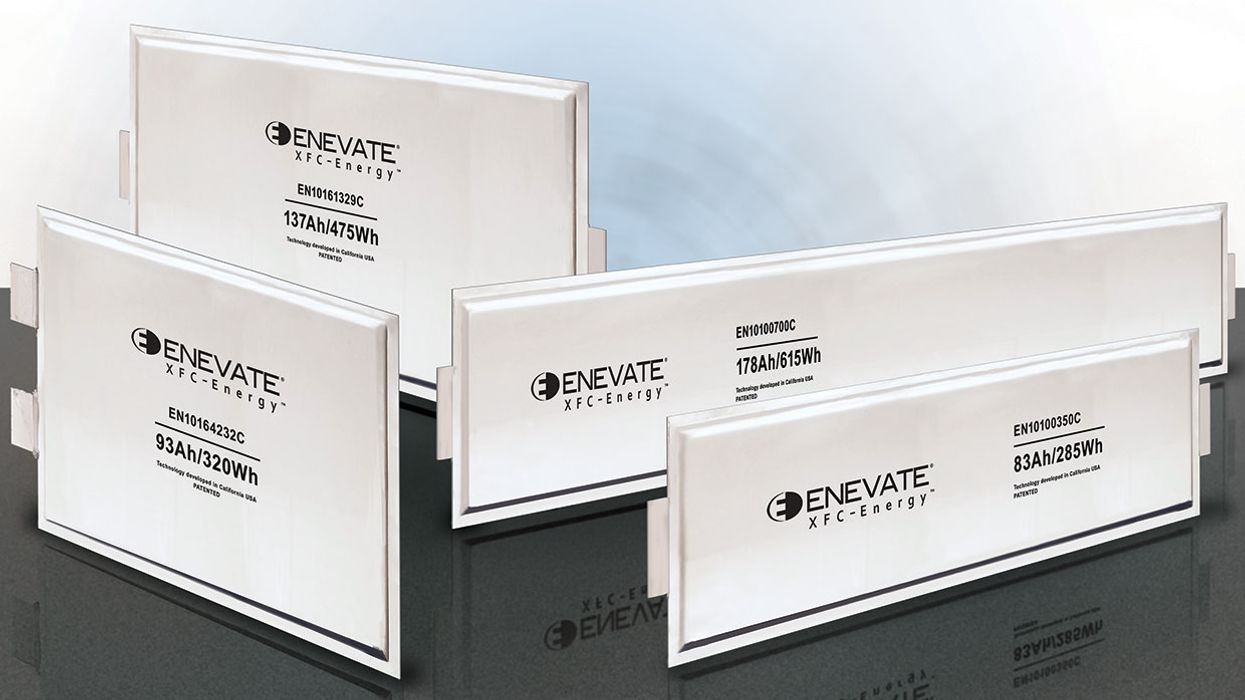
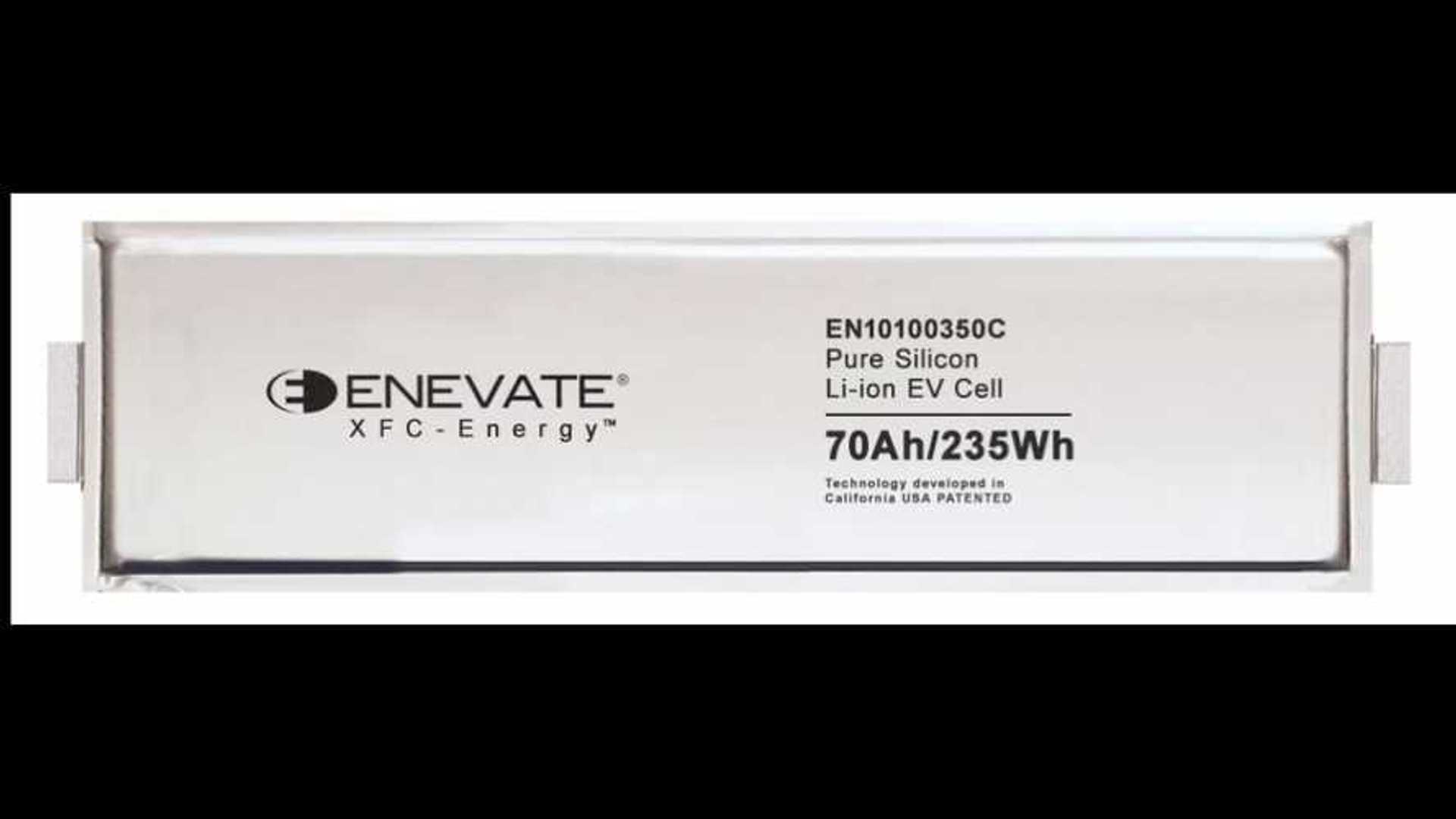
Editor’s Note: Figures and commercialization status were checked against Enevate’s October 27 announcement, the current Trifecta specifications, and the August corporate launch notice. All five Trifecta performance combinations are modeled targets; an earlier proof-of-concept does not validate each proposed cell. Physical battery photographs show earlier Enevate XFC products, not production Trifecta hardware. The featured image is a crop of archival Enevate-supplied battery photography. Independent browser and mobile rendering checks remain outstanding.

To donate 5,000 sats, open the article on a separate display and scan the original QR code with a compatible Bitcoin wallet. On mobile, use another screen or your wallet’s supported image-scanning feature. Verify the destination 3C9o19EH5HSiwEPyCTmEKzxhNCbo2X6TTb before sending.
We volunteer daily to ensure the information on this platform is Verifiably True. If you would like to support the research, please scan QR code.
BitcoinVersus.tech is not a financial advisor. Engineering and energy-market reporting is provided for informational purposes.


Leave a Reply