finance
-

SoftBank has raised $11.1 billion through dollar- and euro-denominated bonds as the technology conglomerate dramatically expands its investments across artificial intelligence infrastructure. The transaction is the largest high-yield corporate bond sale globally on record, according to Reuters and LSEG data. A major purpose of the financing is funding the final $10 billion tranche of SoftBank’s…
-
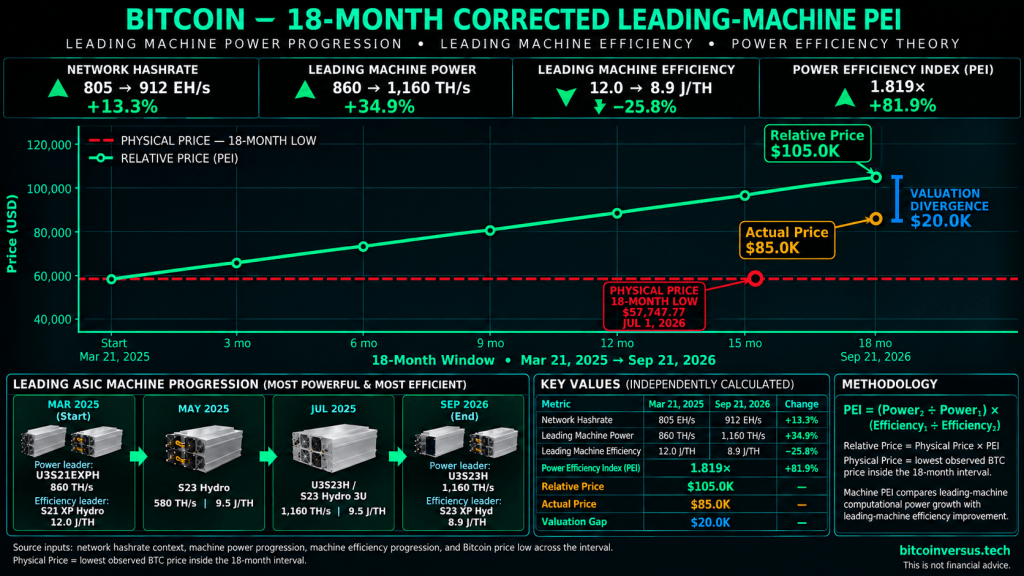
Power Efficiency Theory examines the relationship between computational growth, energy efficiency, and market valuation. Using the Power Efficiency Index (PEI), two independent calculations measure Bitcoin’s technological progress between March 21, 2025, and September 21, 2026. One evaluates total network hashrate, while the other measures advances in leading Bitcoin mining hardware. Both calculations provide efficiency-adjusted valuation…
-

AMD crossed a $1 trillion market capitalization for the first time as renewed AI-hardware demand lifted semiconductor stocks.
-

The ECB has launched Pontes, connecting tokenized financial markets with settlement in central-bank money.
-

Technology companies are increasingly using guarantees tied to AI chips and data centers to support large-scale infrastructure financing while keeping much of the associated debt outside their direct balance sheets.
-

Washington D.C. – August 3, 2026 – In a move that has sent ripples through the crypto derivatives market, the U.S. Securities and Exchange Commission has formally paused its approval of Nasdaq’s proposal to list cash-settled Bitcoin index options under the ticker QBTC. The decision, announced late last week, effectively freezes what would have been a…
-
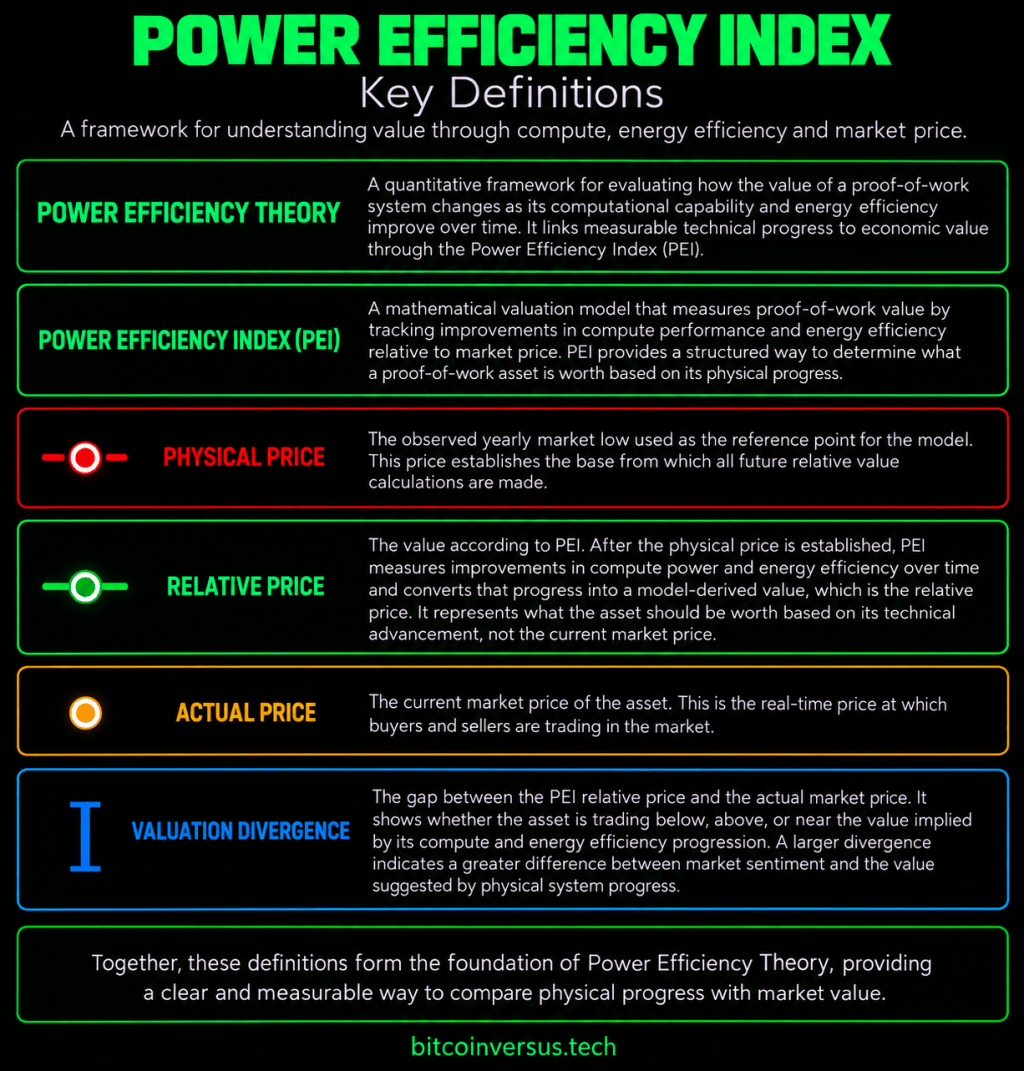
Power Efficiency Theory provides a framework for measuring the value progression of proof-of-work systems using observable changes in computational performance and energy efficiency. The Power Efficiency Index, or PEI, organizes that framework around several distinct price points: physical price, relative price and actual price. Physical price establishes the observed reference point, while relative price represents…
-
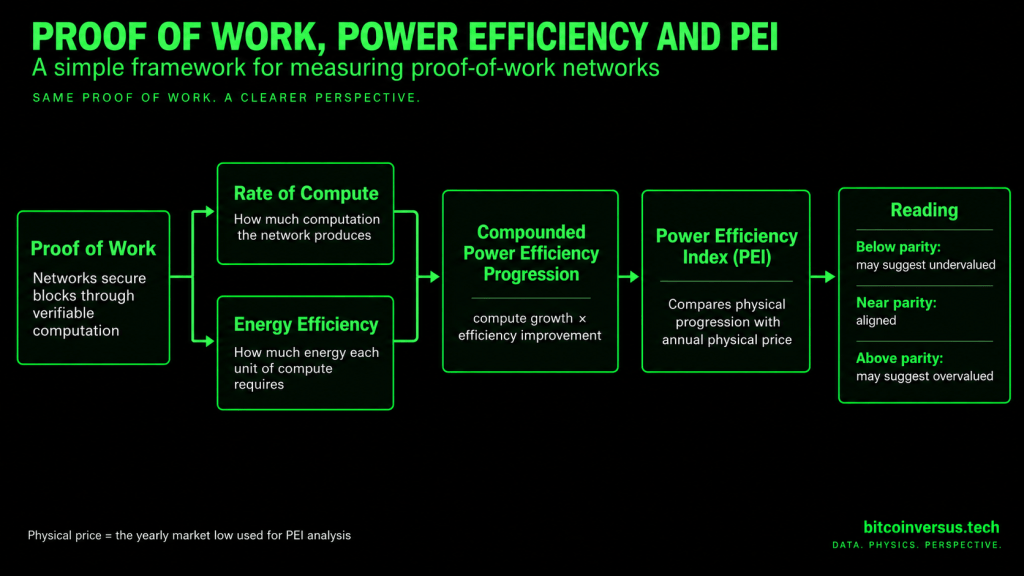
Proof of work is a consensus system in which computers compete to perform verifiable computational work in order to secure a blockchain, validate transactions, and produce new blocks. In practical terms, that work is expressed through the network’s rate of compute—such as hashes per second—and the amount of energy required to produce that computation. A…
-
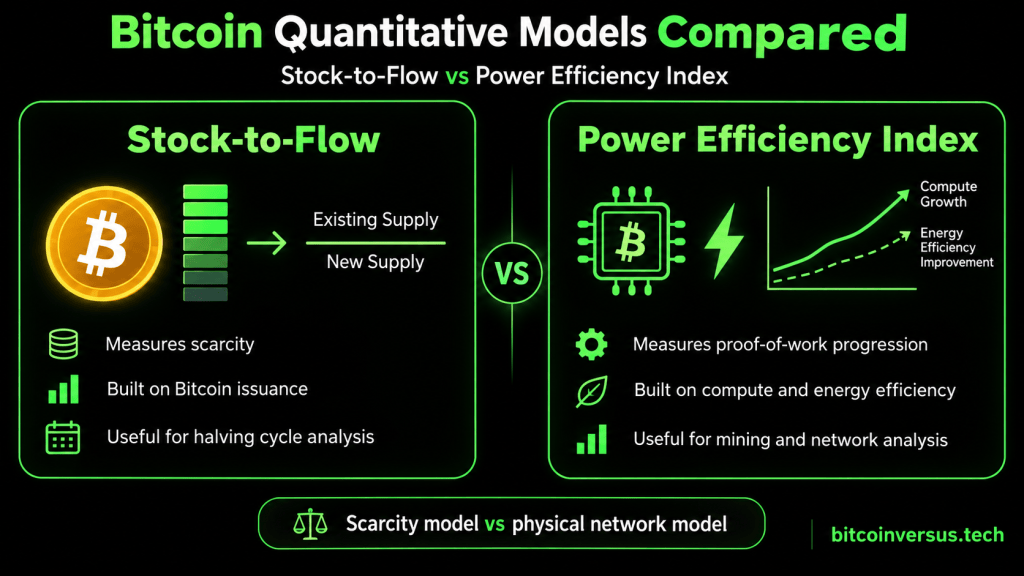
Bitcoin valuation models often begin with the same problem and arrive at very different answers. PlanB, known online as @100trillionUSD, introduced the Bitcoin Stock-to-Flow model in 2019 as a way to quantify scarcity and relate Bitcoin’s programmed supply schedule to market value. The Power Efficiency Index, developed by BitcoinVersus.tech, approaches valuation from the physical side…
-

The Power Efficiency Index (PEI) is a mathematical valuation model within Power Efficiency Theory that compares changes in computational performance and energy efficiency with the market price of a proof-of-work asset. Developed by bitcoinversus.tech, PEI measures the growth in a network’s rate of compute alongside improvements in the energy required per unit of computation. In…
-

Kaspa is trading near $0.0296 while a four year Power Efficiency Index analysis from BitcoinVersus.tech places its 2026 implied physical price near $0.1175. The gap puts the PEI reading at roughly 3.97 times the current market price, representing a divergence of about 297%. KAS also remains far below its August 2024 record of $0.2074, while…
-

Physical price is the lowest observed market price of a proof-of-work digital asset during a defined measurement period, typically a calendar year, and is used in Power Efficiency Index (PEI) analysis as the market’s closest observable expression of a network’s underlying digital-physical value at that time. Rather than representing the total replacement cost of mining…

