Tech Docs
-

Hashrate measures how many hash attempts a Bitcoin miner—or the entire network—can perform every second. It is expressed in H/s, TH/s, PH/s, EH/s, and beyond.
-

Ethereum’s Glamsterdam upgrade is live and finalized on Sepolia, testing proposer-builder separation, block-level access lists, gas repricing and higher Layer 1 capacity before any mainnet rollout.
-

A hash is a fixed-size digital fingerprint produced from data. In Bitcoin, SHA-256 hashes identify transactions and blocks, link the blockchain together, and give miners the target they must beat in proof of work.
-
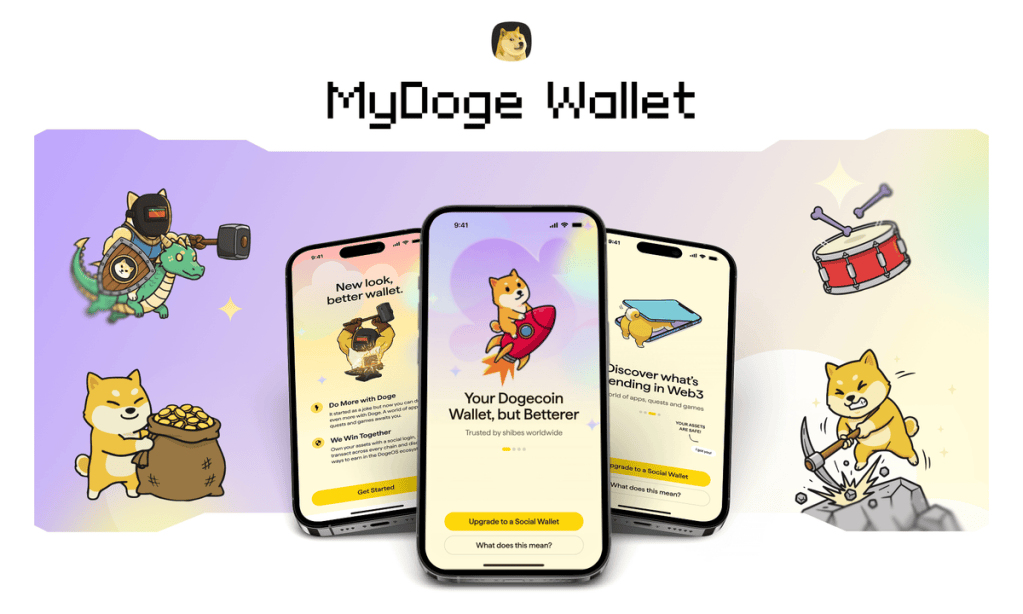
MyDoge V3 is live on iOS and Android with DogeOS apps, multichain support, swaps and a new Social Wallet. DogeOS itself remains a public testnet, giving DOGE an EVM-compatible application layer without changing Dogecoin Layer 1.
-
Cardano’s CIP-0113 programmable token standard is live on mainnet, letting issuers of regulated assets embed KYC, sanctions, transfer restrictions, freezes and seizure rules directly into native Cardano tokens. ADA itself is not affected.
-
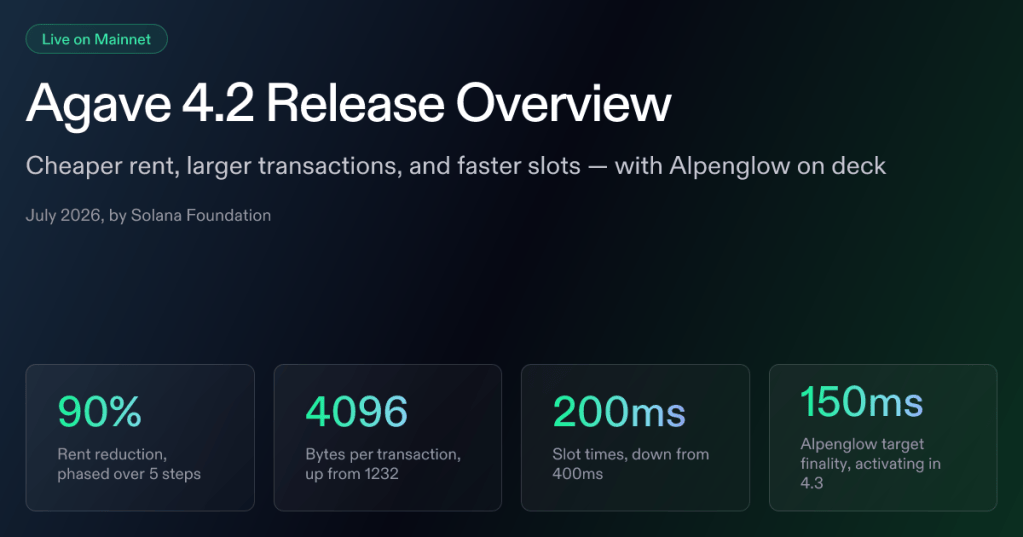
Solana completed SIMD-0525 and cut its target mainnet slot time from 400ms to 200ms. Blocks now arrive twice as often, while per-slot compute limits were reduced proportionally.
-

Bitcoin currently creates roughly 450 new BTC per day at the network’s target block pace: 3.125 BTC per block × about 144 blocks per day. Actual daily issuance varies because blocks do not arrive exactly every 10 minutes.
-
IREN says subsidiary Mirantis has completed NVIDIA-Certified Hypervisor validation for its k0rdent AI virtualization stack on Arm-based GB200 systems as the former Bitcoin miner continues shifting capacity toward AI Cloud.
-
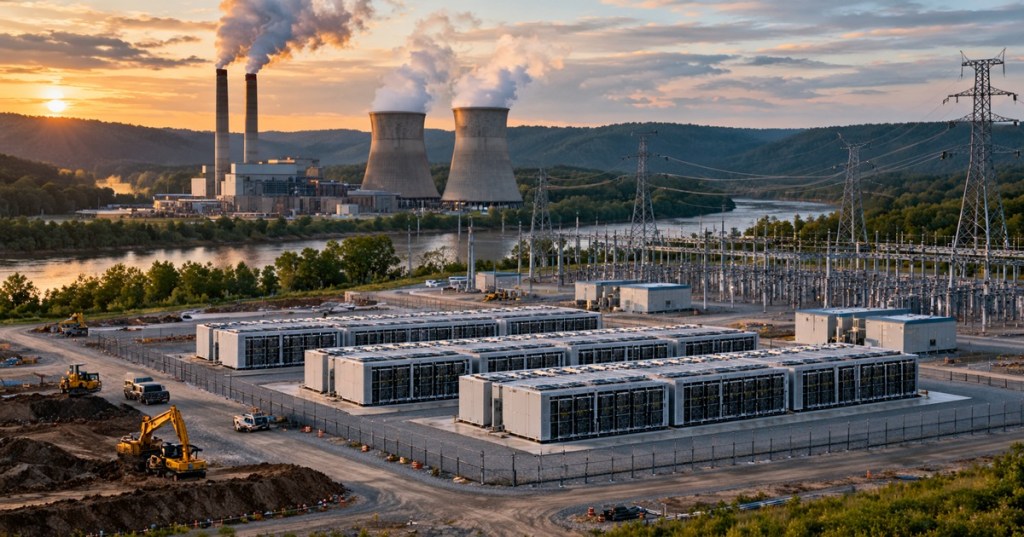
A recent SEC filing discloses a planned 100 MW Bitcoin-mining site in Pleasants County, West Virginia with a signed 10-year PPA at $0.048/kWh, but commercial operation has not yet begun.
-

Stratum V1 still connects much of today’s Bitcoin mining hardware to pools, while Stratum V2 adds a binary protocol, authenticated encryption, lower overhead, and optional miner-selected block templates. Here is the practical difference.
-

Learn semiconductor wafer probe testing: probe stations, probe cards, contact, IV/CV measurements, wafer maps, contact resistance, and technician troubleshooting.
-

Centralized pools smooth payouts, decentralized pool designs give miners more control over block construction and accounting, and solo mining gives one miner the entire reward—or nothing. Here is the practical difference.

