SNMP, short for Simple Network Management Protocol, is a standard way to collect health and performance data from network-connected equipment. In a Bitcoin mining operation, SNMP can help operators monitor the network switches, intelligent PDUs, UPS hardware, environmental monitors, and other infrastructure surrounding the miners.
The key distinction is important: SNMP usually monitors the infrastructure around the ASIC fleet, while the miners themselves often expose their own HTTP, REST, gRPC, CGI, or vendor-specific management interfaces. Together, those systems give a mining site visibility from the network port all the way down to the hashboard.
SNMP Turns Network Hardware Into Measurable Data
Cisco defines SNMP as an application-layer protocol used for communication between a management system and agents running on network devices. Instead of logging into every switch one at a time, an operator can poll many devices from one monitoring platform.
That matters when a mining site has dozens of switches and thousands of Ethernet endpoints. The physical fleet may be ASIC miners, but the management network still depends on ordinary IT hardware: switches, routers, firewalls, fiber uplinks, patch panels, network interfaces, PDUs, UPS systems, and monitoring servers.
The SNMP Manager Is the Monitoring System
The SNMP manager is the software that asks devices for information. It may be a dedicated network-management platform, a data-center monitoring product, or a general observability system.
The manager can poll hundreds or thousands of devices and convert the responses into dashboards, charts, alarms, and historical trends. Instead of asking, “Is switch 12 alive?” an operator can ask, “How many errors appeared on port 18 over the last six hours, and did traffic spike before the link dropped?”
The SNMP Agent Lives on the Device
The SNMP agent is software running on the managed device. A switch, router, PDU, UPS, environmental monitor, or other networked appliance can expose device information through that agent.
The agent answers requests from the monitoring system and can also send event notifications when something crosses a threshold or changes state. In a mining facility, that may mean a switch port drops, a rack PDU approaches a current limit, or a monitored power device reports an alarm.
MIBs Tell the Monitoring System What the Device Can Report
A Management Information Base, or MIB, defines the objects a device can expose. Cisco describes MIBs as hierarchical collections of managed objects identified by object identifiers, or OIDs.
An OID can represent a value such as interface status, interface error counters, device uptime, temperature, fan state, CPU utilization, or other platform-specific information. The monitoring system reads those OIDs and converts them into human-readable metrics.
Polling Means the Manager Asks for Data
SNMP commonly works by polling. The management server sends a request to a device and the device returns its current value. Repeating that process on a schedule creates a time series.
For a mining-site switch, that can mean polling every interface for link state, byte counters, discards, errors, or utilization. Over time, the data can show whether a problem is a one-time outage or a repeated degradation on the same cable, port, or uplink.
Traps Let the Device Speak First
SNMP also supports traps and informs. Instead of waiting for the next poll, a device can send a notification when an event occurs.
A monitored switch might send an event when an interface goes down. A smart power device might alert when current, voltage, temperature, or another threshold is exceeded. That helps a network operations team react faster than waiting for the next dashboard refresh.
Ports 161 and 162 Are the Classic SNMP Ports
SNMP traditionally uses UDP port 161 for manager-to-agent requests and UDP port 162 for traps and informs sent toward a monitoring system. CertBros and Cisco both teach those ports as part of the basic SNMP model.
Because SNMP is management-plane traffic, firewall rules and VLAN segmentation matter. A mining operation should not expose device-management services broadly when only the monitoring servers and administrative systems need access.
SNMPv3 Is the Version to Prefer When the Hardware Supports It
SNMPv1 and SNMPv2c rely heavily on community strings. SNMPv3 adds stronger authentication and privacy options. Cisco’s current SNMP security guidance recommends using the security capabilities available in SNMPv3 rather than treating legacy community strings like modern credentials.
For a production mining network, that means SNMP should be part of the same management-plane security model as SSH, switch administration, firewall management, and other sensitive infrastructure services.
Switches Are One of the Best SNMP Use Cases in a Mining Farm
A network switch can expose dozens or hundreds of useful counters. Operators can monitor whether a port is up, how much traffic it carries, whether packets are being discarded, whether errors are increasing, and how long the device has been running.
That is especially valuable at a mining site because one failed uplink can disconnect many miners at once. If 48 ASICs suddenly disappear together, the common switch, uplink, power source, or VLAN may be more suspicious than 48 simultaneous miner failures.
SNMP Helps Separate a Miner Problem From a Network Problem
Suppose a miner stops submitting shares. The control board might be fine, the hashboard might still be hashing, and the PSU might still be supplying power—but the network path could be broken.
SNMP data from the switch can show whether the miner’s port is down, whether the interface is flapping, or whether packet errors are increasing. That immediately narrows the troubleshooting path before a technician opens the machine.
Smart PDUs Can Expose Power Metrics Through SNMP
SNMP is also common in intelligent power hardware. Vertiv Geist monitored rack PDUs, for example, expose real-time power metrics and SNMP alarms for voltage, real power, apparent power, power factor, amperage, and kilowatt-hours.
That connects network monitoring directly to electrical operations. A mining site can use the same management network to watch switch health and power distribution, while the physical electrical system still follows the broader switchgear, switchboard, panelboard, and PDU hierarchy.
UPS Systems Can Send SNMP Events Too
APC network management cards provide remote UPS monitoring and event notification over the network. That means SNMP can help surface power events that are invisible at the miner itself.
BitcoinVersus.Tech’s UPS explainer covers why battery-backed systems bridge the gap between utility failure and generator startup in conventional data centers. Mining sites may use different redundancy designs, but the monitoring principle is the same: infrastructure state should be visible before a technician has to walk to the equipment.
Environmental Sensors Can Join the Same Monitoring Stack
Networked environmental monitors can report temperature, humidity, water detection, smoke, or door state. Vertiv’s Geist platform supports SNMP traps for abnormal environmental conditions alongside power monitoring.
For air-cooled Bitcoin mining, environmental visibility matters because inlet temperature and airflow can directly affect ASIC temperature, fan speed, stability, and efficiency. A site may therefore correlate network and environmental alarms with facility-level J/TH and miner telemetry.
SNMP Does Not Replace Miner-Specific APIs
SNMP is excellent for standard network and facility equipment, but ASIC miners often expose richer device-specific telemetry through their own management interfaces. Braiins OS, for example, exposes a REST API that can return miner statistics, power data, temperatures, errors, and detailed hashboard information.
Braiins Manager also exposes fleet-level telemetry and automation through its public API. In other words, a mature mine can use SNMP for switches, PDUs, UPS systems, and sensors while using miner APIs for hashrate, chip temperature, power target, pool state, and hashboard health.
The Best Dashboard Combines Both Worlds
A useful operations dashboard does not care whether every metric came from the same protocol. It cares whether the operator can see the whole failure chain.
Imagine one row for a mining container showing switch reachability, uplink errors, PDU amperage, ambient temperature, miner count, hashrate, power consumption, and alarms. SNMP can feed the network and facility side while miner APIs feed the ASIC side.
Monitoring Helps Catch Shared-Failure Problems
One of the biggest advantages of infrastructure monitoring is recognizing when many devices fail for the same reason. A sudden drop across an entire row of miners may come from a switch, PDU, upstream circuit, fiber link, or environmental event rather than individual ASIC failures.
That matches the operational complexity documented in BitcoinVersus.Tech’s Bitcoin mining site reports: large facilities are systems of power, networking, cooling, firmware, hardware, and people—not just rows of standalone miners.
Packet Loss, Jitter, and Errors Become Easier to Correlate
SNMP interface counters can help identify a link that is technically “up” but performing badly. That matters because a network can remain connected while still suffering retransmissions, errors, congestion, packet loss or jitter.
Operators can compare those counters with miner disconnects or stale-share events to determine whether the root cause is closer to the ASIC, the switch, or the upstream network.
MTU and Cabling Still Matter Underneath the Monitoring
SNMP can report symptoms, but it cannot fix bad physical infrastructure. Damaged copper, dirty fiber, wrong optics, incorrect VLANs, and mismatched MTU settings can still break connectivity.
That is why monitoring belongs beside good data-center cabling, labeling, port documentation, and physical inspection rather than replacing them.
SNMP Is Old, but It Is Still Useful
Modern networks increasingly use APIs, streaming telemetry, NETCONF/YANG, and other observability methods. Cisco notes that streaming telemetry can provide more scalable and higher-frequency data than traditional polling.
But SNMP remains useful because so many switches, routers, PDUs, UPS systems, and environmental devices already support it. In mixed-vendor industrial environments such as data centers and Bitcoin mines, that broad compatibility still matters.
The Simple Way to Remember It
SNMP is a common language for asking infrastructure, “How are you doing?”
The manager asks. The agent answers. The MIB defines the available data. OIDs identify individual values. Polling builds trends. Traps report events. SNMPv3 adds stronger security.
In a Bitcoin mine, SNMP is most valuable around the ASICs: switches, intelligent PDUs, UPS systems, sensors, and other managed infrastructure. Miner-specific APIs then fill in the details SNMP does not know—hashrate, chip temperature, power target, pool state, and ASIC startup diagnostics.
Editor’s Note
SNMP support and available OIDs vary by device, firmware, vendor, and software version. Use SNMPv3 where supported, restrict management-plane access, and follow the vendor’s current security guidance before enabling remote monitoring.
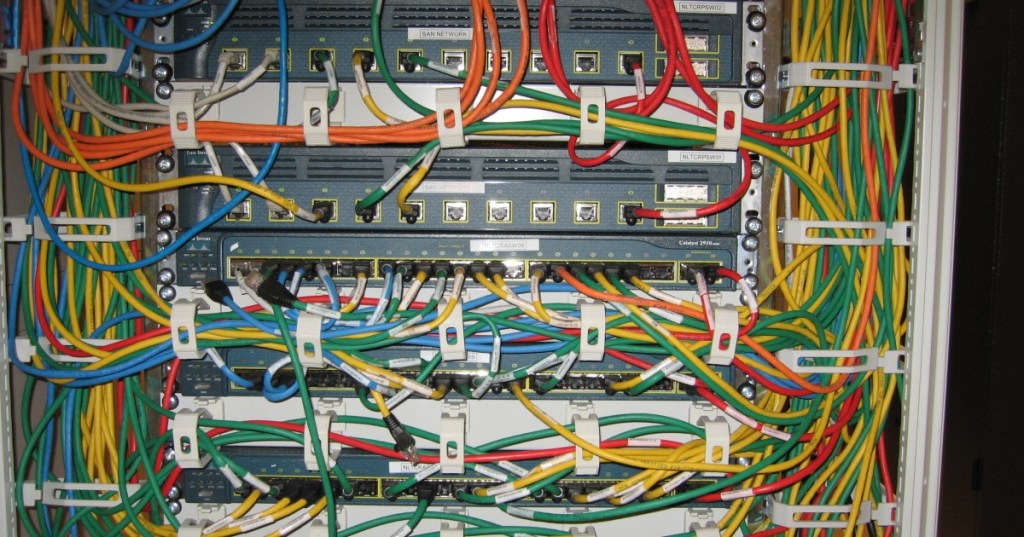
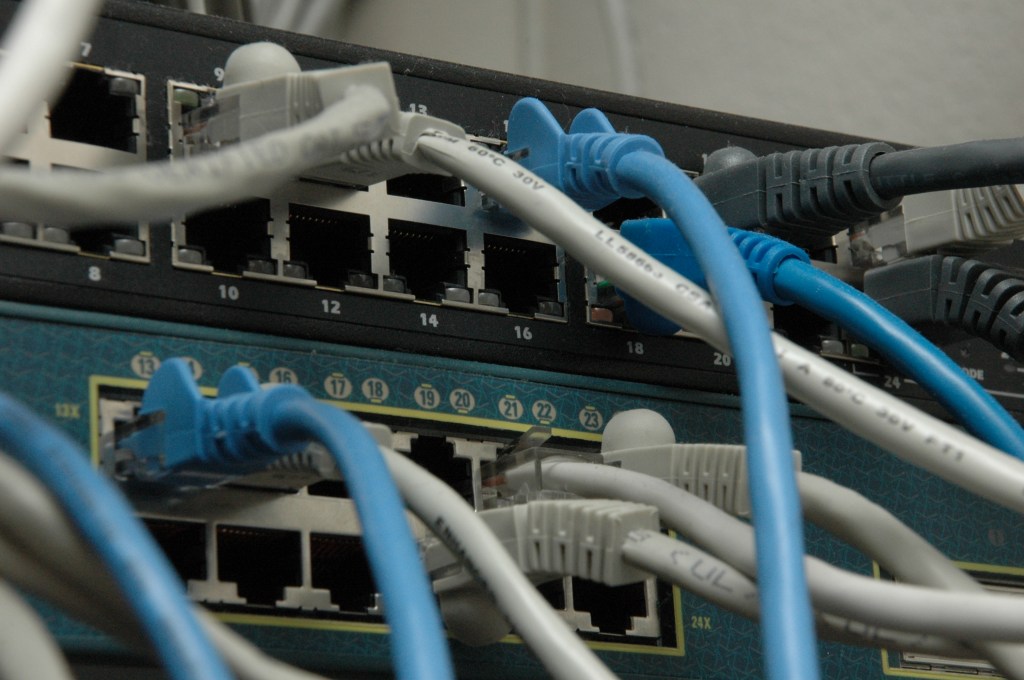
Featured image: Cisco Catalyst 2950 switches photographed by Jemimus, via Wikimedia Commons, CC BY 2.0; cropped to 1200×630 for BitcoinVersus.Tech. In-body switch image: Jon “ShakataGaNai” Davis, CC BY-SA 3.0.
Support and donation options are available through BitcoinVersus.Tech.
BitcoinVersus.tech is not a financial advisor. Content is provided for informational purposes.


Leave a comment